A major lawsuit filed in Nevada claims a state law designed to conserve water by removing so-called 'useless grass' has had a devastating environmental and financial impact, resulting in the death of an estimated 100,000 trees and causing roughly $300 million in damage.
The Core of the Legal Challenge
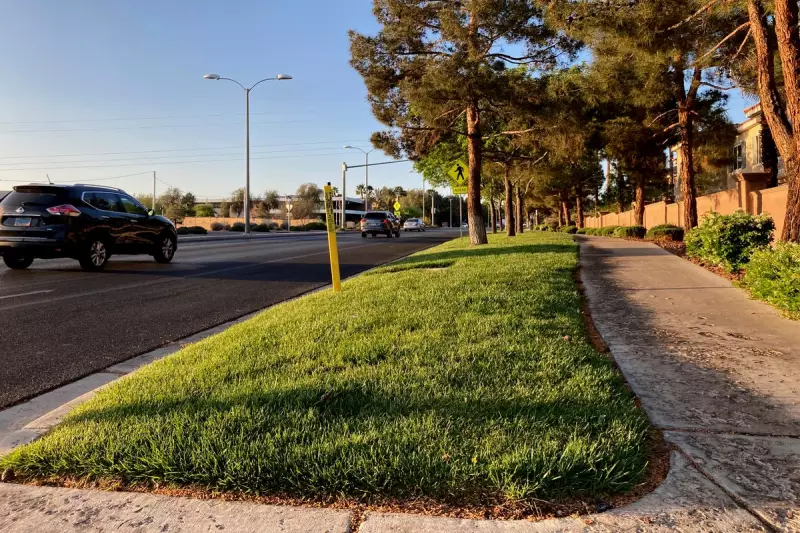
The legal action, lodged in Clark County, centres on Bill 356, legislation first passed in 2021. The law targets what the Southern Nevada Water Authority defines as 'non-functional turf'—grass areas that are rarely used, such as strips in office parks, housing development entrances, and turf within ten feet of a street. The legislation makes it illegal to irrigate these spaces with water from the Colorado River, effective from the start of 2027.
The plaintiffs argue that the enactment of this bill has directly caused the widespread death of trees across the Las Vegas Valley. They contend that the removal of surrounding grass has critically disturbed the root systems and micro-environments that sustained these mature trees, which also served as vital natural coolers in the region's extreme heat.

Staggering Costs and Lost Canopy
The lawsuit provides a detailed breakdown of the alleged damage. A declaration from Norm Schilling, a respected Southern Nevada horticulturist and owner of Mojave Bloom Nursery, supports the claim of 100,000 deceased trees and the monumental $300 million price tag.
Schilling emphasised that the loss extends far beyond mere financial value. 'Beyond monetary loss, the green mature canopy (and its heat mitigation benefits) cannot be replaced quickly,' he wrote in his statement. 'It will take decades for the Las Vegas Valley to recover, if it can at all.' This highlights a critical unintended consequence: destroying natural infrastructure that helped communities adapt to rising temperatures.
Community Backlash and Conservation Debate
Bill 356 initially aimed to replace approximately eight square miles of grass in the metropolitan Las Vegas area, a move officials believed would slash the region's annual water consumption by 15%. The targeted turf is supposed to be removed by the end of 2026.
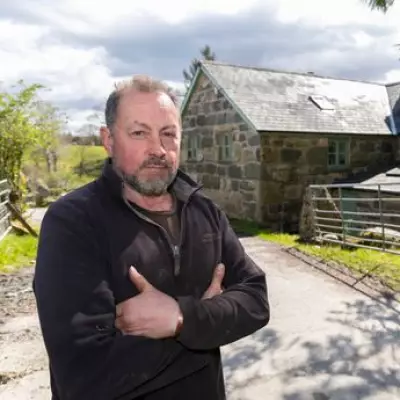
However, local residents have pushed back vigorously. Kim Snyder, one of the four plaintiffs, voiced a common frustration to The Review Journal: 'There have to be alternative ways to conserve water if we really are in jeopardy. Why are we paying the price to conserve when we are the most conservation-oriented city in the world? Why come after us?'
The law does provide specific exemptions for grass near single-family homes, public parks, and golf courses. Despite this, the lawsuit suggests the policy's implementation has been broadly destructive. The legal filing, obtained by The Las Vegas Review-Journal, now forces a re-examination of the balance between urgent water conservation and the protection of urban green spaces essential for liveability.