Potomac River Sewage Crisis: Millions of Gallons Spill Creates Public Health Emergency
A major environmental and public health emergency has unfolded in the Washington D.C. metropolitan area following the catastrophic rupture of a substantial sewage pipe. The incident has unleashed millions of gallons of raw wastewater directly into the Potomac River, creating what officials describe as a dire pollution situation just as a significant winter storm approaches the region.
Catastrophic Infrastructure Failure
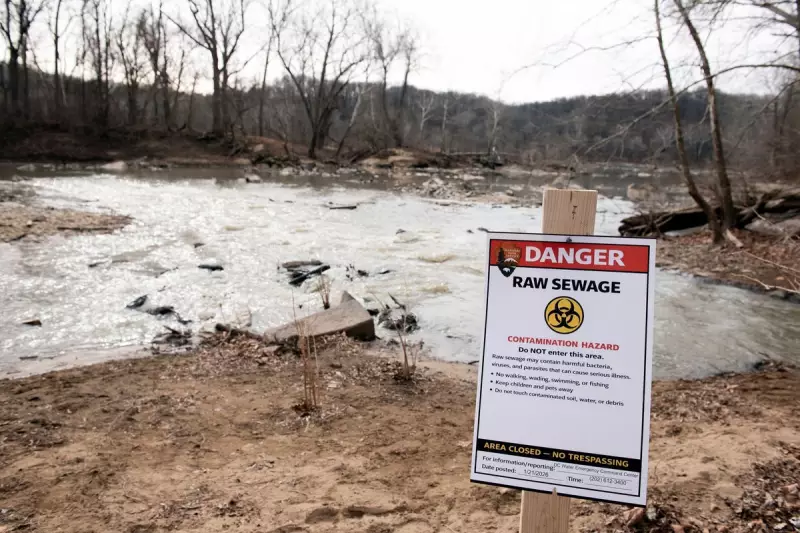
The crisis began late on Monday when a massive 72-inch (183-centimetre) sewer pipe collapsed completely. This critical infrastructure failure sent raw sewage erupting violently from the ground, with the contaminated water flowing unchecked into the nearby Potomac River. The rupture occurred in Montgomery County, Maryland, specifically along the Clara Barton Parkway near the sensitive ecological area of the C&O Canal National Historic Park.
DC Water, the system's operator responsible for managing the capital's water infrastructure, has confirmed that repair crews are now engaged in a desperate race against time. They are deploying powerful pumps in an attempt to divert the wastewater flow around the rupture site, a necessary preliminary step before permanent repairs can commence. The affected system normally handles an astonishing 230 million litres of water daily—equivalent to approximately ninety Olympic-sized swimming pools.

Horrific Conditions and Public Health Warnings
Environmental monitors who have visited the site describe truly alarming conditions. Dean Naujoks, the Potomac Riverkeeper representing an environmental non-profit organisation, provided a stark assessment after inspecting the location on Wednesday. "Oh my god, the smell is horrific," he reported with evident concern. "It's such high concentrations of sewage that just grabbing a sample is a public health risk."
Naujoks observed that sewage was bubbling up from the rupture "like a small geyser, maybe two, three feet into the air" and noted that contaminated water was "running in every direction." He highlighted the particular concern of the river's unusually low water levels at this time, which may concentrate the pollution effects. DC Water has issued explicit public health guidance, advising anyone who may have been exposed to the contaminated water to wash their skin thoroughly as a precautionary measure.
Emergency Response and Containment Efforts
Emergency crews are implementing an unusual containment strategy involving the historic C&O Canal. Workers are removing lock gates on the canal to facilitate a temporary rerouting of sewage upstream into the canal system. This diverted wastewater will then be directed back into the sewer system downstream of the rupture point, creating a bypass while repairs proceed.
Despite the complicating factor of approaching winter storms, authorities have confirmed that repair efforts will continue throughout the weekend. DC Water has provided reassurance that the region's drinking water supply remains completely unaffected, as it operates on a separate, independent system. The District of Columbia Health Department has not yet commented on whether comprehensive testing of the river's water quality is currently underway.
Broader National Infrastructure Concerns
This incident has thrown a harsh spotlight on the broader national challenge of aging water infrastructure across the United Kingdom and similar developed nations. Experts estimate that hundreds of billions in infrastructure investment will be needed over the coming two decades to address systemic issues like deteriorating sewer pipes. Without such investment, persistent breaks may become more frequent, potentially leading to home backups, regular flooding events, and repeated environmental contamination incidents.
The Potomac River sewage spill serves as a sobering reminder of the critical importance of maintaining and modernising essential public infrastructure. As repair teams work against both environmental contamination and impending winter weather, the incident raises urgent questions about preparedness, investment priorities, and long-term environmental protection strategies for vulnerable waterways.