A serious public health crisis has unfolded in the Indian state of Gujarat, with at least 133 suspected cases of typhoid reported after raw sewage leaked into the drinking water supply. The outbreak is centred in Gandhinagar, the state capital and home region of Prime Minister Narendra Modi.
Pipeline Failures Lead to Widespread Contamination
Local municipal authorities have confirmed that the contamination stemmed from failures in the water infrastructure. At least 21 separate leaks were identified in the drinking water pipeline network, allowing sewage to infiltrate the supply. The contaminated pipes are part of a major water project that cost approximately Rs 2.57 billion (£21 million) to build.
Officials admitted that the new pipes had been laid too close to existing sewer lines. A senior official from the roads and buildings department explained to the Times of India that "when high-pressure water began flowing, weak pipes developed leaks." The first complaints from residents about foul-smelling water were reportedly received on 29 December.

Residents' Ordeal and Official Response
For locals, the crisis has had severe personal consequences. Malti Kori told the Indian Express that her six-year-old son fell ill with fever and stomach ache about a week ago, shortly after they received foul-smelling water. The child was later diagnosed with typhoid. "That one day was enough to make my son ill," she said.
Another resident, Asha Pandya, whose 14-year-old son recently recovered from the infection, described the water as looking like "someone had mixed cement powder with it." She claimed her area had been receiving contaminated water since November, long before the official acknowledgment of the outbreak in a press release on 4 January.
In response, authorities have mobilised 75 health teams who, alongside municipal staff, are inspecting over 20,800 houses covering 90,000 people. Engineering teams have begun a process of super-chlorination to disinfect the system. Amit Shah, the Home Minister and local MP, has been in constant touch with the state government, directing immediate repairs.
Ongoing Health Concerns and Wider Context
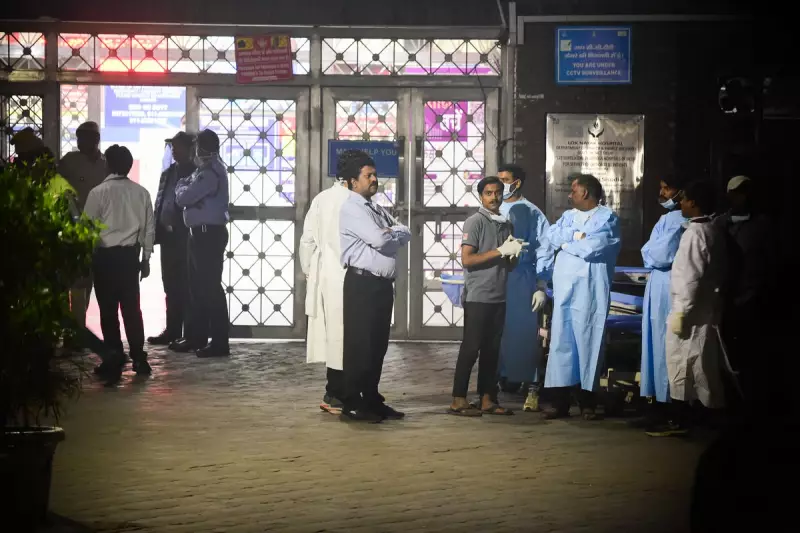
While 45 patients have been discharged, 88 remain under treatment. Municipal Commissioner JN Vaghela stated that all patients are stable and that water is now potable following chlorination. However, Dr Mita Parikh, superintendent of Gandhinagar Civil Hospital, warned that at least 10 fresh cases daily are expected until 20 January due to typhoid's 10-15 day incubation period, despite leaks being plugged.
The state has distributed 30,000 chlorine tablets and 20,600 ORS packets, advising people to drink boiled water. This outbreak follows closely on the heels of a similar incident in Indore, Madhya Pradesh, which was reported to have killed at least 10 people.