Water companies across England and Wales have confirmed that household water bills will rise by an average of 5.4 per cent from April this year. This increase translates to an additional £33 per year for the average household, a figure that stands two percentage points above the current rate of inflation. The announcement comes as the industry prepares to embark on a substantial £20 billion investment programme between 2026 and 2027, aimed at securing water supplies and putting a stop to sewage discharges into rivers and coastal waters.
Public Anger and Regulatory Framework
This bill rise occurs against a backdrop of sustained public outrage regarding the volume of sewage being released into the nation's waterways. This anger has been compounded by the perception that customers are being asked to pay for essential upgrades following decades of documented underinvestment in critical infrastructure. The water regulator, Ofwat, has sanctioned a framework allowing companies to increase bills by a total of 36 per cent over the period from 2025 to 2030. A significant portion of this increase—20 per cent, or an average of £86—was applied in last April's annual adjustment.
The Consumer Council for Water (CCW) has issued a stark warning, stating that customers are growing increasingly "impatient for change and need to see compelling evidence their money is being well spent." The council reported a worrying 51 per cent surge in complaints about water companies during 2025, primarily driven by affordability concerns and dissatisfaction with the scale of last year's price hike.

Significant Regional Disparities in Increases
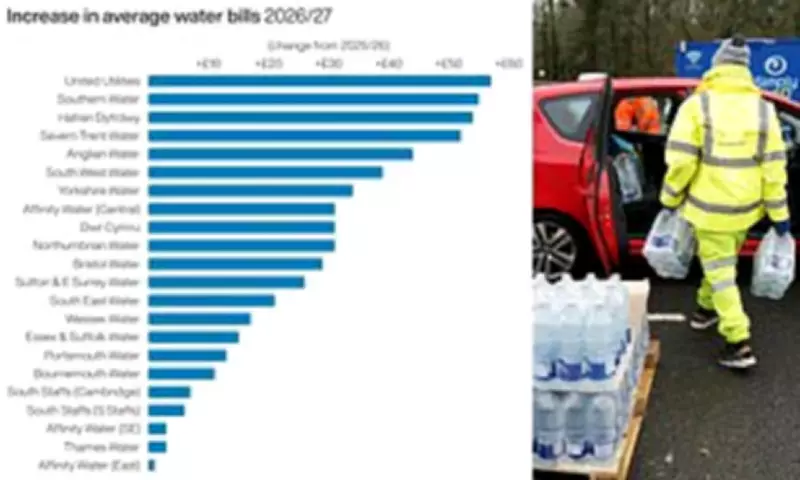
While the national average increase is set at 5.4 per cent, there is considerable regional variation, with some customers facing far steeper rises. Notable examples include Severn Trent Water imposing a 10 per cent increase, Sutton and East Surrey Water raising bills by 11 per cent, Bristol Water by 12 per cent, and Affinity Water's central region customers bracing for a 13 per cent jump.
South East Water is increasing its average annual bill by 7 per cent to £324. This follows a difficult period for its customers, who endured days of supply disruption this month due to burst pipes and power cuts caused by Storm Goretti. This incident came shortly after a similar event the previous month, which left 24,000 residents in Tunbridge Wells without drinking water for a fortnight.
Investment Promises and Customer Safeguards
Water UK, the industry body, has emphasised that the revenue generated from higher bills is strictly earmarked for funding infrastructure projects that have been independently verified as "new, necessary and value for money." The organisation also highlighted a money-back guarantee mechanism, whereby customer bills would be automatically refunded by the regulator if promised improvements are not delivered.
David Henderson, Chief Executive of Water UK, acknowledged the difficulty of bill increases but stressed their necessity. "We understand increasing bills is never welcome, but the money is needed to fund vital upgrades to secure our water supplies, support economic growth and end sewage entering our rivers and seas," he said. He pointed to expanded support, noting that more than two million households currently receive assistance through social tariffs and affordability measures, with an additional 300,000 households expected to benefit over the coming year.
Call for Systemic Reform and Affordability Concerns
Despite these assurances, campaign groups and consumer advocates are calling for more radical change. Mike Keil, Chief Executive of the CCW, warned that complaints about water bill affordability have almost tripled in the past year. "A stronger safety net is also needed for those who simply can't afford these bill rises," he stated, advocating for a universal single social tariff to replace what he described as an unfair "postcode lottery" of financial assistance.

Environmental campaigners have been particularly vocal. James Wallace, Chief Executive of River Action, argued that "bill payers, not water companies, are being forced to pick up the tab for decades of failure." Similarly, Rob Abrams of Surfers Against Sewage criticised the system, stating, "Water isn't a commodity. It's a necessity. Yet it's being milked for profit while sewage is pumped into our waters." Both groups called for a fundamental reset of the water sector to prioritise public and environmental benefit over profit.
Regulatory Targets and Future Outlook
Ofwat has outlined specific performance targets tied to the investment. By April 2027, the regulator expects water companies to have installed over eight million water meters in homes to help customers manage usage, replaced nearly 3,000 kilometres of ageing piping to reduce supply disruptions, and cut sewage spills from storm overflows by 30 per cent from 2024 levels.
Chris Walters, Interim Chief Executive of Ofwat, said, "These are just three examples that will help us reach our collective goal of cleaner rivers and seas, more resilient water supplies and better services for customers and the environment." He also noted the approval of a doubling of company support for struggling customers.
The coming years will be a critical test for the water industry, as it seeks to balance the essential need for massive infrastructure investment with the growing financial pressure on households and escalating demands for tangible environmental improvements.