An invasive mollusc is wreaking havoc in Switzerland, crippling university infrastructure and devastating the ecology of one of its largest lakes. The quagga mussel, a prolific freshwater species, has infiltrated pipes and colonised the depths of Lake Geneva with alarming speed, prompting warnings of irreversible damage.
An Open Invasion: Infrastructure Under Siege
The Swiss Federal Institute of Technology in Lausanne (EPFL) became an early casualty. Like cholesterol blocking an artery, quagga mussels clogged the institute's 5-kilometre network of pipes within just a couple of years. These pipes draw cold water from 75 metres deep in Lake Geneva to cool buildings.
By the time the invasion was discovered in 2022, it was too late. The power of some heat exchangers had dropped by a third, choked by ground-up shells. Air conditioning faltered, leaving buildings at 26-27°C during summer instead of the intended 24°C.

"It's an open invasion," stated Mathurin Dupanier, utilities operations manager at EPFL. The threat extended beyond comfort. The university's data centres and long-running scientific experiments, which cannot tolerate temperature swings, were at risk. Crucially, the institute's experimental nuclear fusion facility, Tokamak, also relies on the same cooling system. Without it, the equipment could melt, forcing a shutdown.
Dupanier admitted to initial denial about the scale of the problem, given the mussels were only detected in the lake in 2014. The only solution is a new, closed-loop cooling system, with construction set to begin in 2027. "Research is one of the things we do; if it stops, then the school closes," Dupanier emphasised.
Ecological Collapse: A Lake Transformed
The damage reaches far beyond campus. From a floating research station, Professor Bastiaan Ibelings of the University of Geneva paints a grim picture. Hauling a chain from the depths reveals it encrusted with mussels, demonstrating a complete overturning of the lake's base food chain.
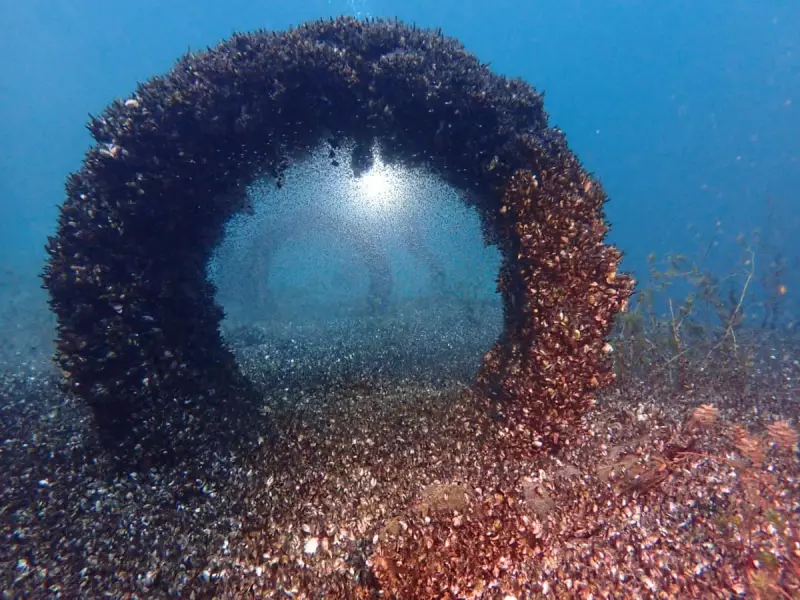
"It is too late for this lake," Ibelings declared. "It's like a meadow of quaggas down there. Every spot is taken." Native snails, shrimps, and mussels have vanished. Surveys in 2022 found quaggas made up 98.9% of samples, and by 2024, they constituted 100%.
The mussels have colonised record depths of 250 metres, surviving in near-zero oxygen conditions where almost nothing else can live. Their filtering activity—each mussel can process up to two litres of water a day—strips the water of phytoplankton, the foundation of the aquatic food web. This has cascading effects, threatening fish populations and the livelihoods of 120 professional fishers on the lake.
Furthermore, clearer water allows light and warmth to penetrate deeper, potentially increasing toxic algal blooms. "Going back is a fairytale," Ibelings said, citing the combined impact of quagga mussels and climate change. "We need to accept... this is a different lake, now."
A Global Threat with Local Consequences
Originating in the Ponto-Caspian region, quagga mussels have spread globally via shipping. They invaded North America's Great Lakes in 1989, where they now dominate, making up over 99% of invertebrate biomass in some areas and causing fish population collapses.
The Swiss experience mirrors this. The highest density in Switzerland is in Lake Geneva, with an average of 4,000 mussels per square metre across the entire lake, and over 35,000 in some spots. The biomass now rivals that found in the Great Lakes.
The public is now noticing the change. Beaches are littered with sharp, dead shells, crayfish are dying under the weight of attached mussels, and boat owners face constant scraping. Critical infrastructure is also threatened: drinking water systems for Geneva and Lausanne and Geneva Airport's cooling are at risk.
This week, the mussels were detected for the first time in Northern Ireland, prompting environment minister Andrew Muir to call for "increased vigilance and surveillance." Once established in a water body, eradication is impossible; efforts can only focus on preventing spread to new lakes via cleaned boats and equipment.

As a key driver of global biodiversity decline, the quagga mussel's rapid conquest of Lake Geneva stands as a stark warning of how quickly an invasive species can permanently alter an ecosystem and threaten the infrastructure that depends on it.