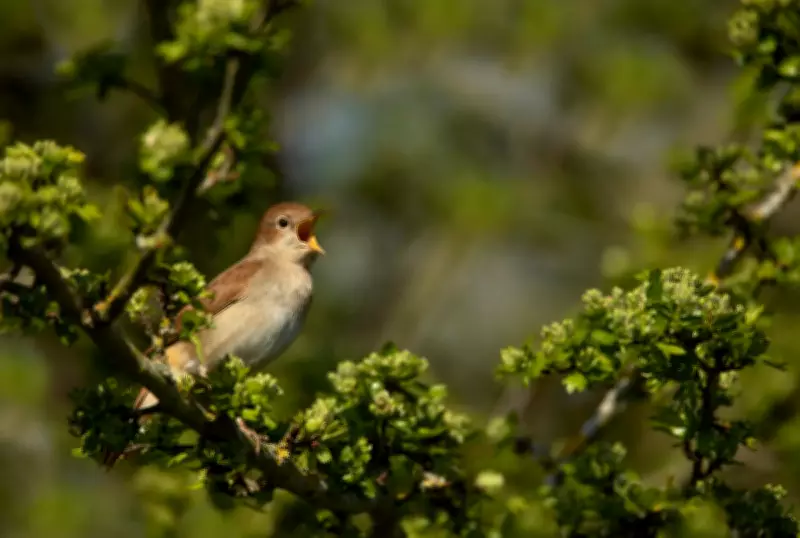
For a few weeks after arriving from West Africa, the nightingale spends the night and early morning in complex song, captivating listeners with its melodic and sometimes frantic calls. The elusive bird, celebrated by poets and artists, has seen its UK population decline by 90% since the 1970s, but recent data offers a glimmer of hope.
Population Increase at Northward Hill
The RSPB has cautiously welcomed a slight increase in the UK nightingale population, particularly at Northward Hill in Kent, where 47 singing males were recorded—the highest for any RSPB reserve in over a decade. This site, once arable land in the 1990s, has been transformed into a mix of woodland and scrub through planting and natural regeneration, creating ideal habitat for the birds.
Alan Johnson, the RSPB’s manager for Kent and Essex, noted that the nightingale is "doing really well" at Northward Hill, with numbers rising from around 15 to nearly 50 birds. He emphasized that coppicing and the creation of low-growing scrub have been key to the bird’s recovery. However, he warned that overall numbers remain low and long-term threats persist.

Challenges and Threats
Nightingales favour dense thicket and scrub, habitat that has suffered from reduced coppicing, increased deer populations, insect decline, and climate change. Their low nests make them vulnerable to predation by domestic cats, and potential housing developments near sanctuaries, such as Lodge Hill and Highnam Woods, are of concern. Rising deer numbers also pose a threat.
As migratory birds, nightingales spend winters in West Africa, making them vulnerable to environmental conditions there. The British Trust for Ornithology (BTO) found that UK nightingales winter in a region around the Gambia, isolated from European counterparts. Improved conditions in West Africa may have contributed to the recent uptick, but data is still emerging.
Broader Implications
Johnson described a healthy nightingale population as "a proxy for the health of the wider countryside," indicating that woodland scrub habitats are in good condition. However, he cautioned that long-term declines in woodland birds remain a concern due to insect decline, agricultural intensification, land-use changes, and climate change. The BTO warns that the dawn chorus is becoming a "much-diminished event" as overall bird numbers fall.
Despite these challenges, Johnson remains optimistic. "There’s an increased understanding of what nightingales need, and there’s a lot of good habitat around the Thames. If we can create habitat around the Thames and create a stronghold, they might have a secure future," he said.