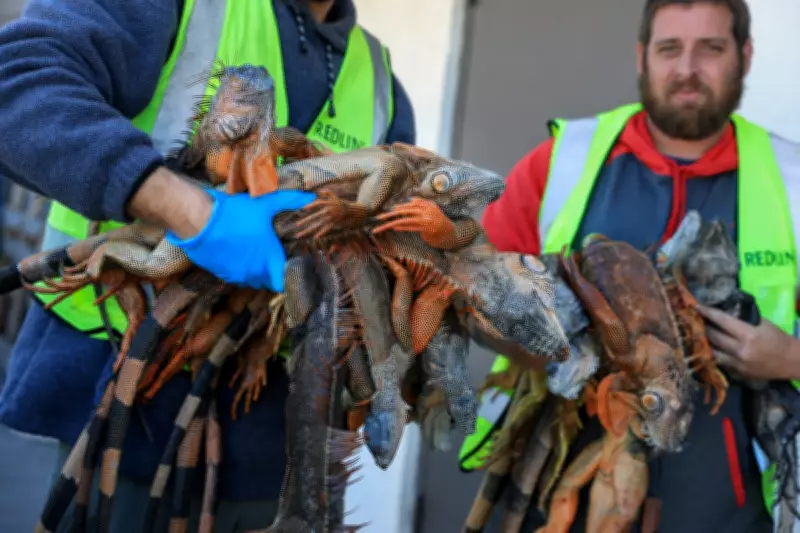
Wildlife trappers in Florida have been engaged in a remarkable operation, collecting thousands of cold-stunned iguanas after a sudden cold snap caused the invasive reptiles to fall from trees across the state. The unusual phenomenon occurred as temperatures dropped significantly, affecting the cold-blooded animals' ability to regulate their body temperature.
Mass Collection of Stunned Reptiles
Blake Wilkins and Andrew Baron, trappers for Redline Iguana Removal, have been at the forefront of this extensive collection effort. Working in Hollywood, Florida, they reported gathering an astonishing 2,500 iguanas over just two days during the cold spell that struck on February 02, 2026. Wilkins expressed amazement at the scale of the event, noting he had never witnessed anything comparable throughout his years of professional trapping experience.
Why Iguanas Fall From Trees
The green iguanas, an invasive species originally introduced to Florida during the 1960s, become stunned and immobile when temperatures fall too low for their cold-blooded physiology. This condition, known as torpor, causes them to lose their grip on branches and literally rain down from trees across affected areas. The reptiles can weigh up to 10 pounds, creating potential hazards as they fall from considerable heights.

Expert Warnings for Public Safety
Wildlife authorities have issued important safety guidance regarding the stunned iguanas. Shannon Knowles from the Florida Fish and Wildlife Conservation Commission emphasized that while the reptiles appear helpless, they can recover from torpor surprisingly quickly. "Wild iguanas can be defensive when not able to escape," Knowles explained to National Geographic. "They sometimes use their sharp teeth and nails, and their long tails that whip in self-defense."
Important Safety Precautions
Experts strongly advise against attempting to "save" or handle the fallen iguanas, and recommend keeping pets at a safe distance. The combination of the reptiles' potential for rapid recovery and their defensive capabilities when threatened creates genuine safety concerns for both humans and domestic animals encountering them.
This mass iguana collection event highlights the ongoing challenges Florida faces with invasive species management, particularly during unusual weather events that disrupt the state's typically warm climate patterns.