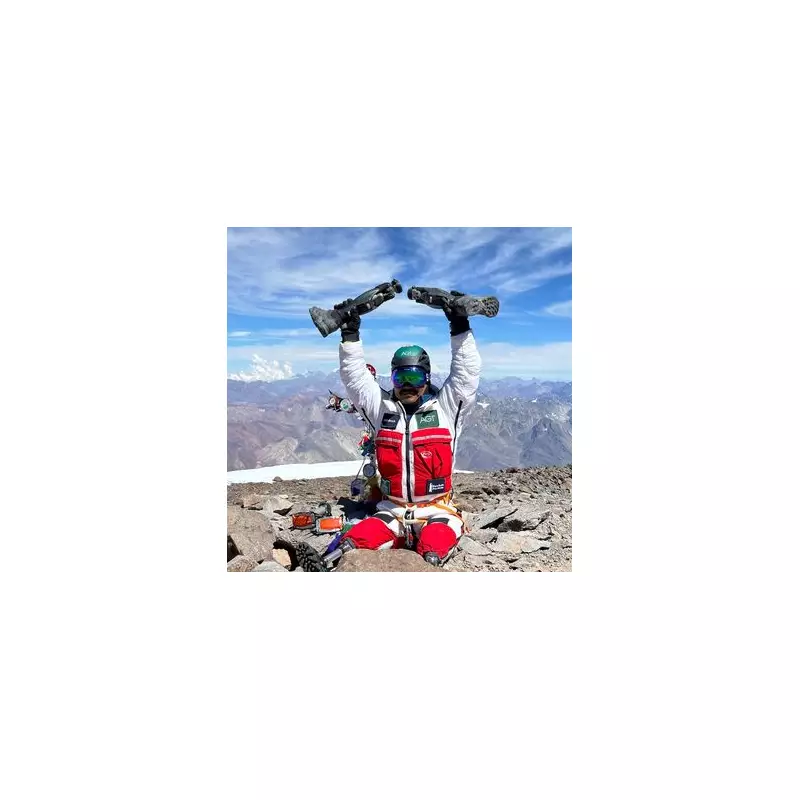
From the foothills of Nepal to the summit of Everest, Hari Budha Magar MBE has forged a path of extraordinary resilience. Now, the former Gurkha soldier and double above-knee amputee is on the brink of a new global achievement: climbing the highest peak on every continent.
From a Nepalese Cowshed to the Battlefields
Born into poverty in a remote village, Hari's early life was defined by hardship. He walked barefoot to school and became a father at 17. Seeking a better future, he joined the Gurkhas during Nepal's civil war, a conflict he describes as a time when "brothers turned on brothers." His exemplary service led to selection for the British Army, where he served across five continents for 15 years.
Tragedy struck in 2010 during a foot patrol in Afghanistan. An IED explosion took both his legs. "I looked down and saw one of my legs was gone. The other was hanging by the skin and bone," Hari recalls. Evacuated by helicopter, he survived but faced a profound physical and psychological battle back home in Canterbury, Kent, with his wife Urmila and their three children.

A Descent into Darkness and a Leap of Faith
Plagued by PTSD and alcoholism, Hari entered what he calls "two years in the wilderness," even attempting to take his own life. A turning point came in 2012 with a skydiving trip. "When I was about to jump, I felt something - fear. I realised I didn't want to die," he says. That spark of fear ignited a forgotten feeling: hope.
He immersed himself in Paralympic sports, growing stronger in body and mind. Then, a childhood dream resurfaced: to climb Mount Everest. Initially, he kept the ambition secret, fearing people would think him mad. Yet, when he shared his vision, support flooded in from sponsors and charities.
Overcoming Legal Barriers and Conquering Everest
A significant obstacle stood in his way. Nepalese law at the time banned double amputees from climbing peaks above 6,500m, including Everest. Hari campaigned against this discrimination, taking the case to Nepal's Supreme Court and winning. "Disabled people are always being told what they can't do," he states.
After pioneering ascents of other major peaks, including Mera Peak and Kilimanjaro, he tackled Everest in May 2023. The climb was brutal. It took him 25 hours from Camp Four to the summit, using three times more energy than an able-bodied climber. He passed bodies on the route and grappled with dwindling oxygen supplies. Upon reaching the top, he wept with joy, but the danger was only half over.
The Final Summit: A Mission for Global Change
Now, Hari's focus is on the Seven Summits challenge. Having already scaled Denali, Aconcagua, and Puncak Jaya, his final expedition is to Mount Vinson in Antarctica. He departs the UK on December 24th, begins trekking on January 1st, and aims to summit around January 6th or 7th.
He aims to raise £884,900 – the height of Everest plus two zeros – for five charities: the Gurkha Welfare Trust, BLESMA, Pilgrim Bandits, On Course Foundation, and Team Forces. His broader mission is to shift perceptions for the world's 1.3 billion disabled people. "I want to show that anything is possible," he asserts. "I'm still a human being - I just have a couple of limbs missing."
Hari's remarkable journey has been recognised with a Pride of Britain Award in 2024 and an MBE for services to disability awareness. He is also writing a book about his life. He dedicates his achievements to the soldiers who saved him, proving their bravery was worth the risk. His story is a powerful testament to the indomitable human spirit.