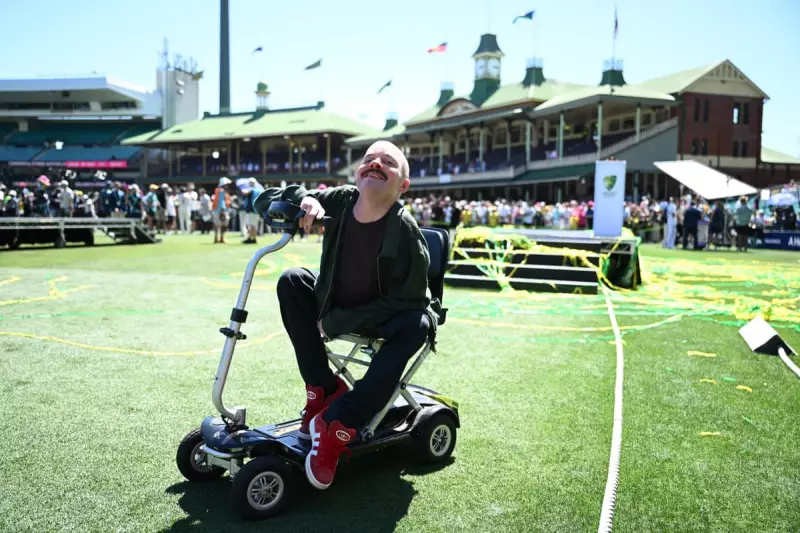
For freelance journalist Charles Reynolds, the 2025-26 Ashes series in Australia presented a dual narrative: a personal triumph in accessibility against the backdrop of a familiar English cricketing catastrophe. Starting the new year at the Sydney Cricket Ground (SCG), he found solace only in the "reassuring embrace" of yet another Test defeat for England.
A Daunting Prospect Made 'Too Easy'
Reynolds, who was born with a form of muscular dystrophy, admitted to initial trepidation about the physical demands of an eight-week tour Down Under. The words of England captain Ben Stokes – "Australia is not for weak men" – heard earlier in Brisbane might have given him pause. Yet, as a journalist entering his 13th year, the call of an away Ashes was impossible to resist. Having witnessed the 2006-07 series as a fan, he reasoned it couldn't be worse.
The reality of travelling with a disability in Australia, however, proved to be a revelation. After a gruelling 20-hour journey, first stop Perth initially felt like paradise. In a bid to assimilate, Reynolds embraced local culture, consuming "industrial quantities of smashed avocado" and growing a moustache, though he drew the line at the ubiquitous phrase "too easy".

The accessibility of public transport across Australia was, he found, "phenomenal" compared to the UK. With most infrastructure built more recently, features like ubiquitous lifts and level boarding were standard. On trams and trains, he could often drive his mobility scooter straight on; where he couldn't, staff were invariably on hand to deploy a ramp without fuss. In Melbourne, he discovered the simple process of going to the front of the train where the driver would personally assist him. "Perhaps 'too easy' has its uses after all," he conceded.
Friendly Banter Turns to Patronising Sympathy
The only downside, for a self-described "miserably cynical and reserved Englishman", was the relentless upbeat and chatty nature of Australians. This became particularly acute as the series unravelled for England, with friendly Ashes banter eventually morphing into something worse: "patronisingly sympathetic" interactions.
England's performance was a relentless disaster. An unthinkable two-day catastrophe in Perth was followed by day/night humiliation in Brisbane. The Australian tabloid press, meanwhile, spun controversies from minor events, prompting a loud laugh from Reynolds when a journalist asked Stokes if England owed Queenslanders an apology after players were photographed riding e-scooters without helmets.
In Adelaide, an elderly woman's well-meaning comment, "Good on ya for getting out of the house," nearly elicited a grumpy retort about having travelled 10,000 miles. But, watching England's batting, he internally agreed that every England supporter was doing well to even get out of bed.
Christmas Highlights and a Fleeting Melbourne Victory
A brief respite came during a Christmas Day spent in Melbourne with fellow journalists, hosted by three press box doyens. Culinary highlights included The Guardian's Ali Martin's barbecue grilling skills and Barney Ronay's potatoes. To universal surprise, England then managed to win the Melbourne Test, only for Australians everywhere to immediately justify why it "didn't count".
The tour concluded in Sydney with a new year and another defeat, leaving only the promise of young player Jacob Bethell and the wistful hope that in four years' time, it might be different – a hope tempered by the suppressed fear that England may never win a series in Australia again.
For Reynolds, however, one final challenge remained: a 23-hour flight home. After navigating a continent with remarkable ease and witnessing a sporting disaster, this was, as Stokes might say, no time to be weak.