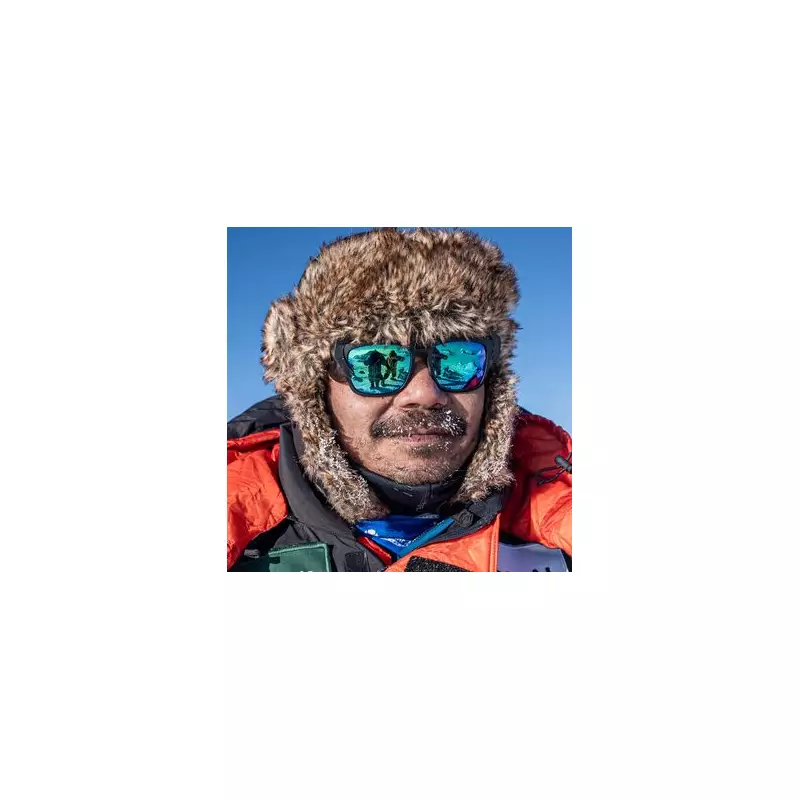
In an extraordinary feat of human endurance, a former Gurkha and Pride of Britain award winner has made mountaineering history. Hari Budha Magar, a double amputee, has become the first person to complete the legendary Seven Summits challenge, summiting the highest peak on every continent.
From Despair to the Peak of the World
The 46-year-old hero called The Mirror from the summit of Mount Vinson in Antarctica on Wednesday 7 January 2026, after a gruelling climb to 4,892 metres. There, he planted a Mirror flag to mark his historic achievement, accomplished on specially designed prosthetic legs built for ice and snow. "It’s just an amazing feeling," Hari said. "I don’t know how we did it - but the Seven Summits are complete. As someone with a disability - with double over knee amputation - I have done the impossible."
His journey to this point is one of profound resilience. In 2010, just two weeks into a tour in Afghanistan, Hari stepped on an improvised explosive device (IED) during a foot patrol. The blast took both his legs, and his life was saved only by the quick actions of fellow soldiers and a nearby helicopter. In the depths of despair that followed, he turned to drink and even attempted to take his own life.

Conquering the 'Impossible' for Charity
Hari’s turnaround began with a chance skydiving trip, which gave him the courage to try other adaptive sports, including climbing. He has now channeled that spirit into a monumental fundraising effort. His Seven Summits quest aimed to raise £884,900 for five charities: the Gurkha Welfare Trust, BLESMA, Pilgrim Bandits, On Course Foundation, and Team Forces.
The Seven Summits challenge is revered as the world's most coveted mountaineering achievement. It involves conquering:
- Mount Everest, Asia (8,848m)
- Mount Kilimanjaro, Africa (5,895m)
- Denali, North America (6,194m)
- Aconcagua, South America (6,962m)
- Mount Vinson, Antarctica (4,892m)
- Carstensz Pyramid, Oceania (4,884m)
- Mount Elbrus, Europe (5,642m)
Due to current geopolitical restrictions making Mount Elbrus in Russia inaccessible, Hari scaled France’s Mont Blanc (4,808m) instead—a substitution officially recognised by Guinness World Records.
A Message of Hope from the Top of the World
The final climb on Vinson Massif was perilous. Hari described battling high winds, freezing temperatures, and treacherous terrain riddled with crevasses. "Every couple of minutes, I doubted myself," he admitted. "It was so hard. So painful... I don't believe in God but I was praying we’d make it." Upon reaching the summit, he was overcome. "My goggles became foggy with tears. You could see what felt like the whole of Antarctica... It was majestic. Otherworldly."
Now living in Canterbury, Kent, with his wife Urmila and their three children, Hari’s life has transformed. After summiting Everest in 2023, this latest success cements his legacy. In 2024, he was awarded an MBE for services to disability awareness and a Pride of Britain Award, meeting Prime Minister Sir Keir Starmer at 10 Downing Street.
His message is clear: "Hopefully, our historic climb... will send a positive message around the world that anything is possible. I was told ‘no’, ‘you can’t do it’... so many times - as many disabled people are. But look at me now!" He plans to continue inspiring others, with Mirror Books set to publish his autobiography later this year. "I want to inspire people to climb their own mountains," Hari stated. "This challenge - the glory - it’s for them."