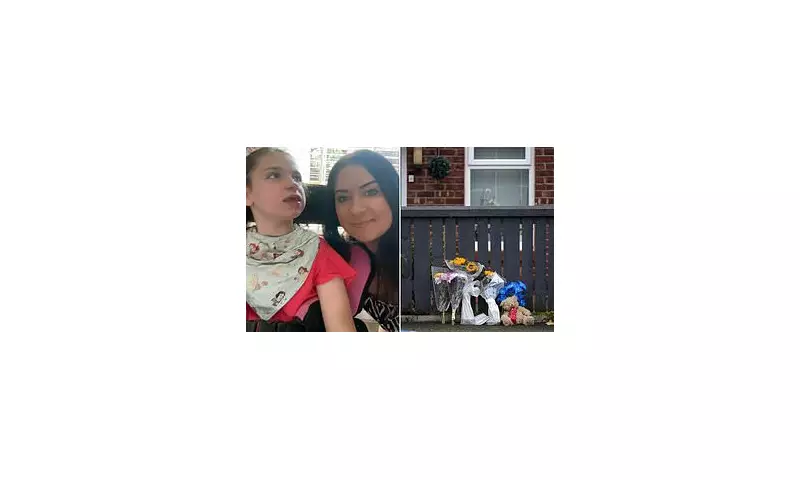
A coroner has detailed the heartbreaking circumstances surrounding the deaths of a single mother and her severely disabled young daughter, who were found at their Salford home after the child failed to attend school.
A Tragic Discovery in Greater Manchester
On 23 September 2024, police were called to a property in Salford, Greater Manchester, after eight-year-old Eleni Edwards did not arrive at her special school. Inside, they discovered the bodies of Eleni and her 40-year-old mother, Martina Karos. A pathologist later confirmed both died from carbon monoxide toxicity.
Officers found a series of poignant notes left by Ms Karos. In one, addressed 'to whom it may concern', she wrote: 'I just couldn't live my life like this anymore'. She referenced a recent relationship breakdown, stating: 'Loneliness, sadness and isolation have just taken over my life.'

The most devastating note explained her actions regarding her daughter: 'I love my daughter truly, but that's why I have taken her with me.' She elaborated that due to Eleni's severe disability—which included blindness, limited mobility, and multiple health conditions—she believed her child would never have an independent life and feared she would become an 'unwanted' child in care.
Overwhelmed by Isolation Despite Support
At Bolton Coroner's Court, Area Coroner Peter Sigee concluded that Eleni was unlawfully killed by her mother, who then died by suicide. The inquest heard that Ms Karos, originally from Poland and a translator by profession, was a 'devoted' mother. Her own mother, Malgorzata Karos, said Eleni was 'the reason Martina would get out of bed in the morning'.
However, caring for Eleni alone left Ms Karos feeling profoundly socially isolated and lonely. She had given up work and struggled when her daughter was at school, as most people she knew were working. The court was told she had confided in a friend that she felt life was not worth living and had at times become emotionally distant.
Despite extensive support from Salford City Council and health services, including a Child Protection Plan initiated in January 2024, daily carer visits, respite care, and therapy, Ms Karos's feelings of isolation 'overwhelmed' her. Social workers had even accompanied her to activities to help her build friendships, but she struggled to engage. Coroner Sigee stated the core issue was not a lack of time, but a lack of social connections.
A Plea for Change from a Grieving Family
Coroner Sigee recorded that Ms Karos had deliberately placed herself and Eleni in a toxic environment with the intention of ending their lives. He concluded that 'this tragic incident could not reasonably have been foreseen', as she had denied any thoughts of harm to herself or her daughter.
Following the inquest, Martina's mother issued a powerful statement, describing her daughter as talented and intelligent, who 'loved her child more than life itself'. She added: 'We want their deaths to change the way disabled children, but also their parents, are perceived. A child is better off with happy parents... May their tragic deaths change some things that will help save others before they make a drastic decision.'
The case has cast a stark light on the intense pressures faced by parents caring for severely disabled children and the crushing impact of loneliness, even when formal support structures are in place.
For confidential support, call the Samaritans for free from a UK phone on 116 123 or go to samaritans.org for more information.