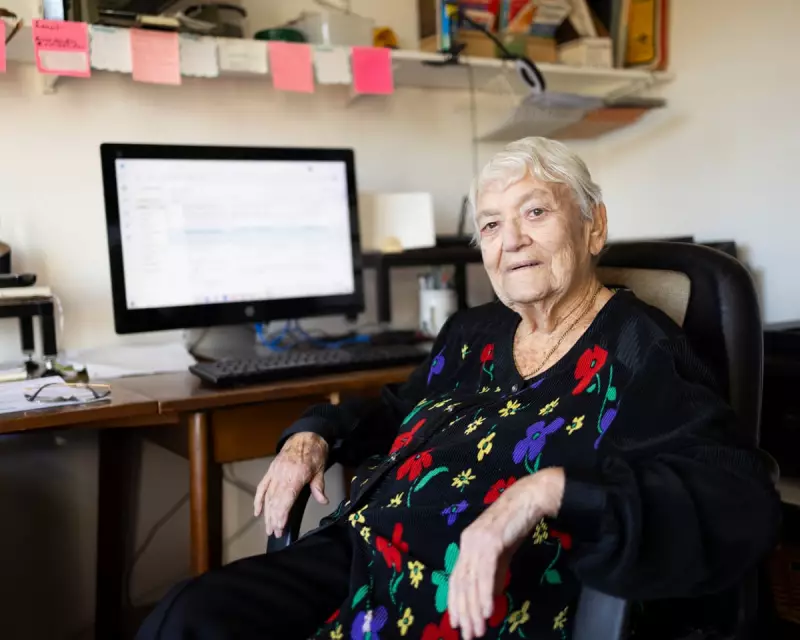
For Diane Munday, the landmark passing of the 1967 Abortion Act was a moment of tempered triumph. Standing on the terrace of the House of Commons with fellow campaigners, the then-young activist raised a glass of champagne but drank only half. "The job is only half done," she declared. Now aged 94, Munday's prophetic words echo down the decades as she continues her relentless campaign for the full decriminalisation of abortion in the United Kingdom.
A Personal Crusade Born from Tragedy
Munday's passion is deeply rooted in personal experience. In 1961, already a mother to three young boys, she sought an abortion. Her decision was shaped by the tragic death of a neighbour, a dressmaker and mother of three, who died after visiting a backstreet abortionist. "We raised £90, I went to Harley Street and I was alive," Munday recalls. "The unfairness, the injustice of that, is I think what drove me all those years. I've never forgotten her."
This injustice propelled her into activism. She became a leading member of the Abortion Law Reform Association and later co-founded the British Pregnancy Advice Service (BPAS). In the 1960s, she embarked on a mission to build public support, a necessity highlighted when Prime Minister Harold Wilson dismissed abortion as "a petty middle-class reform" and told her to prove the country wanted change.

Breaking the Silence: "I have had an abortion"
Munday took her message to Women's Institute meetings, Rotary clubs, and Townswomen's Guilds, where she would stand before respectable, gloved-and-hatted audiences and state plainly: "I have had an abortion." The response was transformative. "One after another... they came up to me," she says, recounting how women privately shared their own hidden histories of abortion during economic depressions or family crises. "It became obvious that this was common, that it was a thing that women did, but didn't talk about." This nationwide silence, broken in hushed confessions, became the fuel for her campaign.
Her home office remains a testament to this lifelong work, filled with filing cabinets of press cuttings, parliamentary bills, and a folder of "crank letters" branding her a "murderer." Yet, she remains undeterred.
The Unfinished Battle: From 1967 to a New Century
While the 1967 Act was a watershed, Munday argues it left the work incomplete. Abortion remained within the criminal law, leading to a series of high-profile prosecutions of women in recent years. This June, however, saw a significant step. Parliament passed an amendment to the Crime and Policing Bill, tabled by Labour MP Tonia Antoniazzi, aimed at ending the criminal investigation of women who end their own pregnancies.
Hailed as the most important advance since 1967, Munday still will not drink a full glass of champagne. She demands more: the complete removal of abortion from criminal statute and the abolition of restrictive requirements, such as the need for two doctors' signatures. "Parliamentarians need to get rid of the restrictions... make it readily available," she insists.
She watches global developments with concern, particularly the overturning of Roe v Wade in the United States. "It's going backwards, and that worries me hugely," Munday states, adding a rallying cry: "American women have got to get up and fight for what they want." Closer to home, she notes with apprehension calls from figures like Nigel Farage to reduce abortion time limits.
Yet, hope persists. She welcomes recent progress on access to emergency contraception and believes a younger, more progressive parliament may defend existing rights. While she is "not very optimistic" that a modern, fit-for-the-21st-century Abortion Act will pass in her lifetime, it remains the goal she has aimed for since the early 1960s. For Diane Munday, the fight she began over sixty years ago endures, a testament to her belief that women must never stop fighting for control over their own bodies and lives.