Across the United States, a quiet revolution is unfolding as small, dedicated groups work to mend the nation's frayed social fabric. They are confronting what former Surgeon General Vivek Murthy has termed an "epidemic of loneliness and isolation," a public health crisis comparable to smoking or obesity in its severity.
The Scale of the Disconnection
By numerous metrics, Americans are more socially disconnected than at any point in recent history. Membership in civic groups, clubs, and religious congregations has plummeted to generational lows. Polling indicates trust between citizens is waning, and people report having fewer close friends. Approximately one in six adults feels lonely most or all of the time, a figure that rises to one in four among young adults. This isolation is not just a personal sorrow; it carries significant health risks, including heightened chances of cardiovascular disease, dementia, depression, and premature death.
"We need to build a movement centered around connection," Vivek Murthy told The Associated Press. "The good news is that that movement is already starting to build... What we have to do now is accelerate that movement." His 2023 advisory report formally framed loneliness as a critical public health threat.

Grassroots Solutions Across the States
In response, diverse local initiatives are making community repair their core mission. In Akron, Ohio, organisations like The Well Community Development Corporation are fostering affordable housing and small businesses while deliberately creating spaces for social gathering. Their work in a marginalised neighbourhood has even revived traditions like trick-or-treating, which had lain dormant for years.
"It’s not just a safe, dry roof over your head. It’s the personal connections," explained Zac Kohl, The Well's executive director. Nearby, the revitalised Summit Lake waterfront now draws residents together for recreation, strategically designed to encourage interaction.
Baltimore's 'Intentional' Community
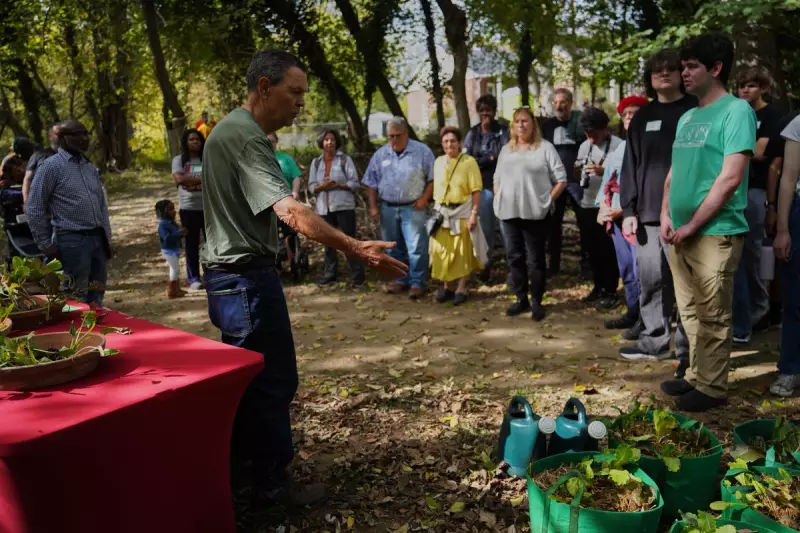
On the outskirts of Baltimore, a different model thrives. On Collins Avenue, neighbours have cultivated an "intentional" community based on mutual aid and relationship-building. They have transformed an abandoned lot into a "Peace Park," host regular feasts, and run a backyard farming initiative.
Resident Ulysses Archie, who co-founded the Baltimore Gift Economy, emphasises a philosophy of gifting over transactional charity. "'Free' is really transactional," Archie said. "When we present it as a gift, it’s really relational." The project encourages everyone to recognise they have something to give, fostering dignity and interdependence.
Kentucky's Cooperative Cure
In rural New Castle, Kentucky, the fight against isolation is tied to the land. The Berry Center launched a farmers' cooperative to help small-scale cattle producers market their grass-fed beef. This provides a stable income, helping families remain on their farms and, in turn, strengthening the social bonds of rural life.
"With just a little help, people and land can heal," said Mary Berry, the centre's director. Farmer Kylen Douglas noted the broader cultural shift, stating, "We’re disconnected not only from where our food comes from, but just the center of life." The cooperative's events, like their "Beef Bash," actively rebuild a sense of shared purpose and community.
Pittsburgh's Trauma-Informed Outreach
In Pittsburgh's Hill District, the Neighborhood Resilience Project takes a trauma-informed approach to community development. Fused with St. Moses the Black Orthodox Church, it runs a food pantry, free clinic, and deploys community health deputies to offer practical and emotional support.
Founder Reverend Paul Abernathy sees isolation as a societal infection. "In our work, community building is absolutely the core intervention," he said. The project connects with isolated individuals like Tricia Berger, who battles multiple sclerosis and depression. For her, the personal connection with a health deputy provides crucial support against loneliness.

Healing Person by Person
There is no single, simple solution to an epidemic driven by powerful cultural forces. Yet, from Baltimore to Pittsburgh, Kentucky to Ohio, a common thread emerges: healing happens through consistent, personal effort. As Reverend Abernathy concluded, "It has to be healed person by person, relationship by relationship, block by block." These modest, local efforts are chipping away at isolation, proving that reconnection is both a vital goal and a powerful means of repair.