Average Person Conceals Nine Significant Secrets, University Study Reveals
Groundbreaking research from the University of Melbourne has uncovered that the typical individual harbours approximately nine deep, dark secrets. The study, which involved 240 participants, delved into the hidden aspects of personal lives that people deliberately keep from others. The findings provide a comprehensive look at the nature of secrecy and its profound effects on mental wellbeing.
Most Common Types of Secrets Identified
The investigation revealed a clear hierarchy among concealed truths. Lies emerged as the most prevalent secret, reported by 77.59% of participants. This was closely followed by secret dissatisfaction with physical appearance, which affected 70.69% of those surveyed. Financial secrets ranked third, with 69.54% admitting to hiding monetary matters, while secret romantic desires were confessed by 62.64%.
Notably, more than half of the participants—57.47%—disclosed engaging in secret sexual behaviours. Other frequently reported secrets included:

- Physically or emotionally harming another person
- Using illegal drugs
- Stealing property
- Disliking a friend
- Not enjoying one's job
- Planning a marriage proposal
Psychological Impact of Secret-Keeping
Lead author Dr Val Bianchi explained to New Scientist that secrets often intrude upon consciousness unexpectedly. "You might think about secrets when you're showering, when you're doing your dishes or when you're heading to work," Dr Bianchi noted. "Having these thoughts pop into your mind when you don't necessarily want them to is often unpleasant, and people seem to get caught in vicious cycles of thinking spontaneously about their secrets as they go about their life, and feeling worse about them."
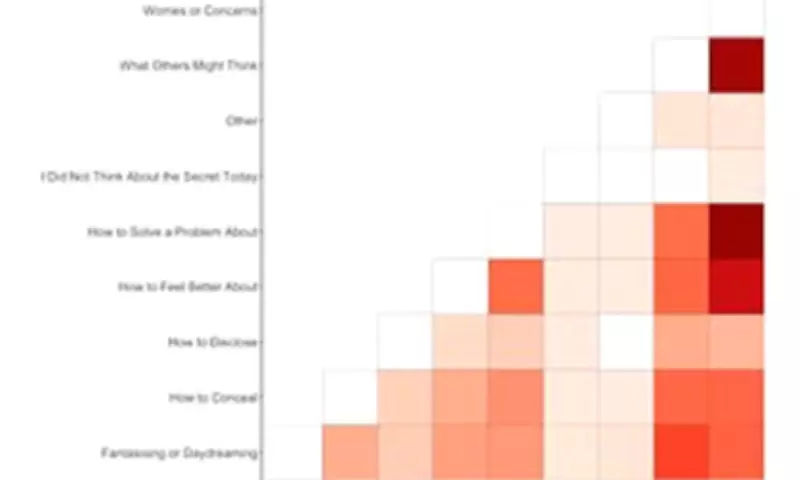
The research demonstrated that when secrets surface involuntarily, individuals experience immediate negative emotions that can persist for up to two hours afterwards. Most participants expressed significant concern about how others might perceive their hidden truths, focusing more on social repercussions than on strategies to control information disclosure.
Management Strategies for Secret-Bearers
The study team proposed practical approaches to mitigate the wellbeing costs associated with secrecy. For spontaneous mind-wandering to secrets, they recommend consciously redirecting attention to break the cycle of rumination. When deliberately contemplating secrets, individuals should engage in purposeful reflection and constructive processing rather than unproductive worry.
Dr Bianchi suggested that secrecy may have evolutionary benefits, protecting both the secret-keeper and others from potential harm. "For example, if you find out a colleague is being investigated at work, you might choose to stay silent about it, rather than gossiping with others, to safeguard their reputation within the organisation," she explained.
Context and Further Research
The study, which has not yet undergone peer review, is scheduled for publication in the Journal of Personality and Social Psychology: Attitudes and Social Cognition. It was funded by the Australian Office of National Intelligence, whose operatives frequently handle sensitive information requiring discreet management.
Contrasting previous research, a 2023 study from Columbia University found that keeping positive secrets—such as surprise proposals or pregnancies—could actually enhance wellbeing by generating excitement and energy. Lead author Michael Slepian questioned whether secrecy itself is detrimental or if negative effects stem primarily from concealing negative information.
Separate research on regrets conducted by Dr Shai Davidai and Professor Thomas Gilovich identified that deepest regrets often stem from failing to pursue ambitious dreams related to one's "ideal self." Examples from their studies included:

- Not pursuing a loved one
- Abandoning musical aspirations
- Not travelling the world
- Selling investments prematurely
- Weight regain after significant loss
- Missing educational opportunities
The University of Melbourne study concludes that while secrecy is a universal human experience with potential protective functions, its psychological toll requires mindful management strategies to preserve mental health.