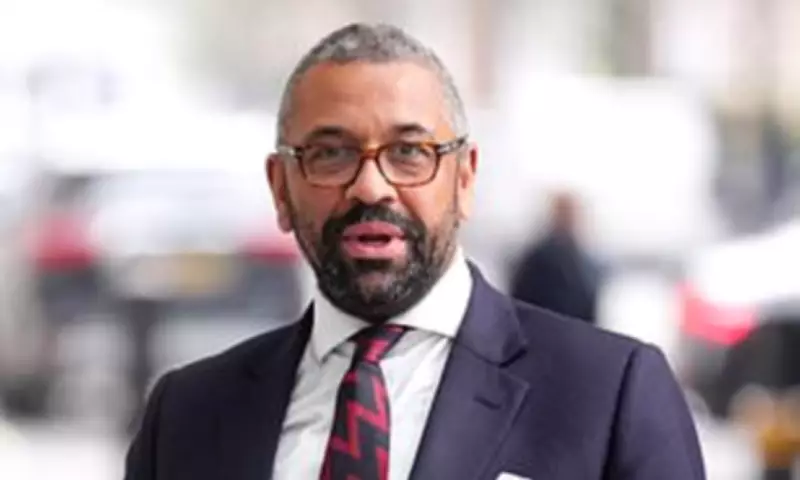
Sir James Cleverly Demands Conservative Commitment to National Prostate Cancer Screening
Sir James Cleverly, the shadow housing secretary, has publicly urged the Conservative Party to include a pledge for a national prostate cancer screening programme in their upcoming election manifesto. Speaking from personal experience, Sir James revealed that his own father was diagnosed with the disease before his death, and he emphasised that the evidence supporting routine checks to save lives is now unequivocally clear.
Blasting Government Failure on Early Detection
In strong terms, Sir James criticised what he described as a 'failure of government' to implement screening when effective tools exist to detect tumours at an early stage. He argued that early detection makes treatment both easier and more successful, potentially alleviating pressure on the National Health Service. His comments come as The Daily Mail continues its campaign to end needless prostate cancer deaths, advocating for a targeted national screening programme initially focused on high-risk groups such as black men, those with a family history, or individuals with specific genetic mutations.
Addressing the National Conference on Prostate Cancer Screening
Sir James is scheduled to address delegates tomorrow at the National Conference on Prostate Cancer Screening, held at Freemasons Hall in London. The event is organised by the men's health charity Chaps. Ahead of his speech, he stated: 'The evidence is there. The need is clear. A national screening programme for prostate cancer is a policy that would save lives, reduce pressure on the NHS by catching the disease earlier when treatment is less complex and less costly.'

He added: 'This is something I believe the Conservative Party should commit to, and I will be advocating for it. My father was diagnosed with prostate cancer. He died with it rather than from it, but I saw at first hand what the disease puts a family through. I do not want anyone to suffer unnecessarily from this disease when we have the tools to detect it early.'
Current Screening Landscape and Controversial Guidance
This push for action coincides with the UK National Screening Committee (UKNSC) preparing to publish its final guidance on screening men for prostate cancer. Prostate cancer is the most common cancer in the UK, with approximately 63,000 cases and 12,000 deaths annually. Unlike breast, bowel, and lung cancer, there is currently no national screening programme in place.
In a draft recommendation issued last year, the UKNSC only advised screening men with BRCA1 and BRCA2 genetic mutations every two years between ages 45 and 61. It did not recommend population-wide screening using the prostate-specific antigen (PSA) blood test, citing concerns that it might lead to unnecessary biopsies or surgeries for tumours that would not cause harm in a patient's lifetime.
New Evidence Challenges UKNSC's Stance
However, a recent review by the York Health Economics Consortium has challenged this position. The review found that the model used by the UKNSC relied on outdated data, diagnosis methods, and treatments. It also failed to account for the impact of a coordinated screening programme on the UK's existing testing infrastructure and did not address serious population health inequalities.
Analysis of contemporary MRI-led screening studies suggests that the model cited by the UKNSC may have substantially overstated potential harms by up to seven-fold. Health Secretary Wes Streeting has expressed surprise at the UKNSC's draft recommendation and vowed to consider the views of charities and experts before making a final decision.
Sir James Highlights Growing Health Challenge
Sir James warned that prostate cancer remains a major and escalating health challenge, noting: 'Prostate cancer has now overtaken breast cancer as the most diagnosed cancer in the UK. Yet there is still no national screening programme. That is unacceptable. The fact that we have the tools to detect this disease early, we know who is most at risk, and we are still not acting on that knowledge at a national level is a failure of the government.'

Encouraging Men to Come Forward for Testing
Addressing men who might be hesitant to seek testing, Sir James offered reassurance: 'Caught early, prostate cancer is very treatable. Left undetected, it can be fatal. I know that there is a stigma around the testing, but men can now just ask their GP to have a PSA blood test. In its early stages, prostate cancer often has no symptoms, which is why it is so important for every man over the age of 50, black or with a family history, to take a PSA test. That small blood sample can and does save lives.'
Calls for Government Action and Investment
Sir James also outlined further actions he believes are necessary from the government, stating: 'The Government should be expanding access to PSA testing, improving GP referral rates and investing in the infrastructure needed to support a national programme when it comes. Every year they delay costs lives.'
The conference will bring together leading clinicians, researchers, and policymakers to discuss these issues. Chris Booth, founder and chairman of CHAPS, commented: 'The conference highlights the UK's unacceptably high prostate cancer death rate and systemic failures in early detection, particularly around the PSA blood test.'
He highlighted a recent CHAPS audit of 8,808 PSA tests conducted between 2022 and 2024, which identified 674 abnormal results, but only 250 were referred by GPs for specialist investigation, underscoring gaps in the current system.