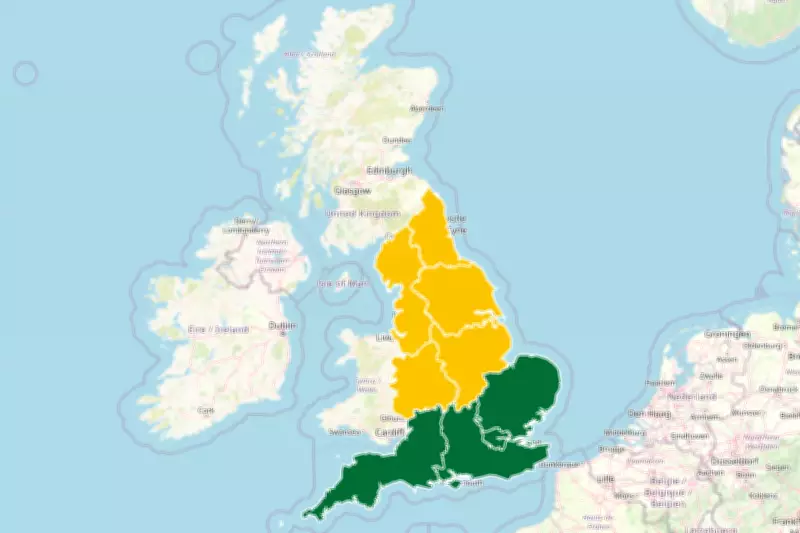
Cold Weather Health Alert Issued Across UK Ahead of Arctic Blast
The UK Health Security Agency has issued a significant yellow cold health alert covering extensive regions of the United Kingdom, with sub-zero temperatures expected to sweep across the country later this week. This alert, active from Friday through Monday, carries a risk score of 7, indicating that the impending weather conditions are likely to pose a heightened risk to vulnerable individuals while causing minor disruptions to health and social care services.
Freezing Temperatures and Snow Warnings
According to the Met Office, temperatures could plummet to as low as -2°C in certain areas, with major cities including Manchester and Birmingham bracing for freezing conditions. The forecast has prompted the issuance of multiple weather warnings:
- A yellow rain warning remains in effect for western Scotland and eastern regions from Aberdeenshire to Fife until midnight Wednesday, potentially causing travel disruptions and flooding.
- Fresh snow and ice warnings have been issued for Thursday and Friday across Scotland, impacting Central, Tayside and Fife, Grampian, Highlands and Eilean Siar, Orkney and Shetland, as well as south west Scotland, Lothian Borders and Strathclyde.
Grahame Madge, a Met Office spokesman, explained: "An Arctic Maritime airmass is moving south this week, bringing a colder influence to the UK's weather. We are already issuing snow and ice warnings for northern Britain. This colder spell is likely to be brief as longer-range indications suggest Atlantic conditions will dominate later in the weekend."

Snow Accumulation and Flood Risks
The Met Office has warned that snow levels will vary by area, with possible accumulation on low ground by Friday morning. On hills above 300 metres, accumulations of up to 10 cm are anticipated. Additionally, rapidly falling temperatures are expected to lead to ice formation on untreated surfaces.
Simultaneously, flood concerns persist across the UK. As of Wednesday morning, the Environment Agency has issued 87 flood warnings and 151 flood alerts for England, while the Scottish Environment Protection Agency has issued three flood warnings and seven flood alerts. Ongoing groundwater flooding is likely to affect Dorset, Wiltshire, Hampshire, and West Sussex over the next four days, with river flooding expected along the River Trent and various rivers in Somerset and Wiltshire.
Regional Impacts and Historical Context
Forecasters predict heavy rainfall in some areas, with 15-25 mm expected widely and potential accumulations of 30-40 mm over high ground. As temperatures reach freezing levels, snow is predicted to fall above 300-400 metres, with 5-10 cm expected to accumulate across Aberdeenshire, Angus, and Perthshire by Wednesday's end.
The warning in eastern Scotland covers Angus, Dundee, Fife, Perth and Kinross, Stirling, Aberdeen, and Aberdeenshire, while western regions include Argyll and Bute, Inverclyde, North Ayrshire, Renfrewshire, and West Dunbartonshire.
This cold snap follows an exceptionally wet start to the year. Cardinham in Cornwall has recorded rain every single day of 2026 so far. Cornwall and County Down in Ireland both experienced their wettest January on record, while Northern Ireland endured its wettest January in 149 years. Across the UK, 26 stations set new monthly rainfall records, with several daily records broken—Plymouth saw its wettest January day in 104 years, Hurn in Dorset in 74 years, and Dunkeswell in Devon in 57 years.
The combination of freezing temperatures, snow, ice, and ongoing flood risks underscores the need for caution, particularly among vulnerable populations, as the UK navigates this challenging weather period.