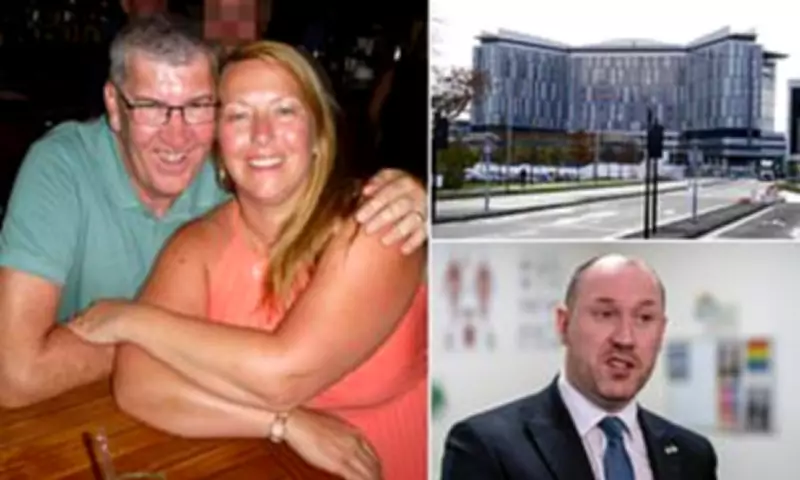
Patients receiving treatment in a high-risk ward at a scandal-hit Glasgow hospital continue to face potential dangers, according to alarming new disclosures. Families and whistleblowers have revealed that individuals are being advised to avoid using tap water for basic hygiene purposes, including brushing their teeth, amid ongoing concerns about water and ventilation systems.
Contradictory Safety Claims Spark Outrage
Health Secretary Neil Gray recently asserted that systems at the Queen Elizabeth University Hospital (QEUH) are "suitable and safe," citing expert opinions including that of water and ventilation specialist Andrew Poplett. However, these official assurances have been branded as "disgraceful" and "pie in the sky" by grieving families who have lost loved ones at the facility.
Whistleblower Revelations Challenge Official Narrative
Tory MSP Stephen Kerr has disclosed that multiple whistleblowers have informed him staff on cancer wards specifically advise patients to drink only bottled water. Some patients have reportedly been warned against even using tap water to brush their teeth, creating a stark contrast with safety guidance provided in other UK hospitals conducting similar treatments.

Louise Slorance, whose husband Andrew died in 2020 after contracting an Aspergillus infection during his stem cell transplant at QEUH, condemned the safety claims. "Neil Gray stood up and said it is safe and it blatantly isn't," she stated. "It's disgraceful that he is clearly cherry-picking details from the Poplett report. The idea that the hospital is safe is pie in the sky."
Ventilation System Concerns Compound Water Issues
Maureen Dynes, whose husband Tony died in 2021 while being treated for non-Hodgkins lymphoma, highlighted additional problems with the ventilation system in ward 4B, which serves as the national adult stem cell transplant service. She claimed the system, dating from the 1970s, remains "below standard" and "not at the national minimum recommended standard."
Charmaine Lacock, whose two-year-old daughter was treated for leukaemia at the hospital, confirmed receiving clear warnings that patients should not drink the water, further substantiating the pattern of concerns.
Official Responses and Ongoing Investigations
A Scottish Government spokesman maintained that "ministers have confidence in the safety of the QEUH" and noted that experts to the Scottish Hospitals Inquiry have advised governance arrangements for water and ventilation systems are "now optimal." The newly announced Safety and Public Confidence Oversight Group aims to provide additional assurance.
NHS Greater Glasgow and Clyde reiterated that "the QEUH and Royal Hospital for Children are safe today," pointing to evidence given by independent expert Andrew Poplett to the inquiry. They emphasised comprehensive steps have been taken to address past physical defects, with ongoing maintenance and monitoring programmes in place.
However, these reassurances conflict directly with the experiences reported by patients and families, creating a troubling discrepancy between official statements and on-the-ground realities at one of Scotland's major healthcare facilities.