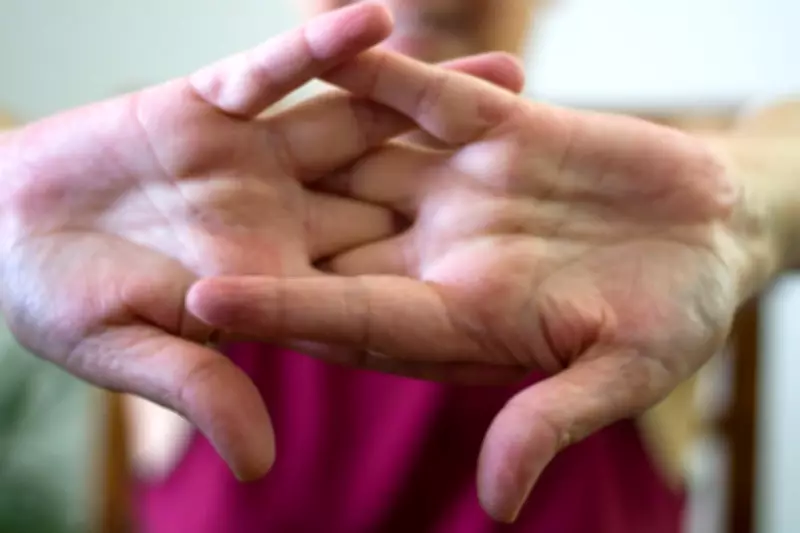
Many individuals experience audible joint sounds throughout their daily lives, from knees that crack on staircases to necks that pop during stretches and knuckles that seem to crack almost voluntarily. These noises frequently provoke concern, with many attributing them to ageing processes, potential damage, or the feared onset of arthritis.
Understanding the Science Behind Joint Sounds
As a physiotherapist and chronic joint pain researcher, I am regularly questioned about whether these sounds warrant genuine worry. The comforting reality is that, in the vast majority of instances, they do not. A primary source of anxiety stems from treating all joint noises as a uniform phenomenon, when clinically they are categorised quite differently.
The Familiar 'Crack' or 'Pop'
The characteristic cracking sound emanating from knuckles, backs, or necks is predominantly caused by a biological process known as cavitation. Joints are encapsulated and filled with synovial fluid, a viscous lubricant containing dissolved gases including oxygen, nitrogen, and carbon dioxide. When a joint is stretched beyond its typical range, pressure inside the capsule decreases rapidly. This pressure drop leads to the formation and subsequent collapse of a gas bubble, producing the distinctive popping noise.

This mechanism explains why you cannot immediately re-crack the same joint; it generally requires approximately twenty minutes for the gases to redissolve back into the synovial fluid.
Other Types of Joint Noises
Other audible sensations differ significantly. Snapping sounds often originate from tendons gliding over bony prominences. Grinding, crunching, or creaking noises, clinically termed crepitus, are especially prevalent in the knees. These sounds are believed to arise from movement between cartilage and bone surfaces and are frequently felt as a physical sensation as well as heard.
Knees are particularly susceptible to crepitus due to their anatomical design. The kneecap, or patella, rests within a groove at the front of the thigh bone and is guided by muscles above and below it. If these muscles pull unevenly—due to strength imbalances, tightness, or issues with foot and hip mechanics—the kneecap can track slightly off-centre, potentially intensifying the grinding or crunching sensation.
When Should You Seek Medical Advice?
The noise itself is rarely the primary clinical concern. What truly matters is whether it is accompanied by other symptoms. The presence of pain, noticeable swelling, joint locking, or a significant reduction in function are the key indicators that warrant further professional assessment.
Debunking the Arthritis Myth
A pervasive question is whether habitual joint cracking leads to osteoarthritis. Comprehensive research in this area presents considerable challenges, as it necessitates long-term longitudinal studies tracking individuals' habits over many years. The existing body of research, including retrospective and cross-sectional studies, has not established a meaningful causal link between habitual joint cracking and the development of arthritis.
Some investigations have examined other potential outcomes, such as grip strength or joint laxity—referring to a joint's looseness, flexibility, and capacity to move beyond its typical range. Findings in these areas have been mixed and inconsistent. Overall, there is no compelling scientific evidence that cracking joints causes structural damage, diminishes strength, or compromises long-term joint health.
The Psychological and Neurological Aspect
Many people find joint cracking satisfying or relieving, which is understandable from a physiological perspective. Stretching a joint to the point of cavitation can temporarily enhance its range of motion and alleviate muscle tension. There is also a neurological component; nerve endings are stimulated during the movement, sending reflex signals to the brain that prompt local muscle relaxation in the area. The audible pop itself can deliver a calming, satisfying sensation, potentially evolving into a habitual self-soothing mechanism for tension, much to the occasional annoyance of family and friends.

It is crucial to recognise that these effects are transient. Joint cracking does not rectify underlying mechanical issues or confer lasting improvements in mobility. If relief is only achieved through repeated cracking, the root cause remains unaddressed.
Professional Manipulation and Associated Risks
Spinal manipulation, performed by physiotherapists, chiropractors, or other qualified practitioners, operates on the same cavitation principle. Evidence suggests it can offer short-term pain relief and reduce muscle tension for some individuals.
However, caution is advised, particularly concerning neck manipulations. The cervical spine safeguards the spinal cord and major blood vessels supplying the brain. Although rare, serious complications, including stroke, have been documented following neck manipulation. Anyone considering such treatment should ensure it is conducted by a properly trained professional and understand that it typically addresses symptoms rather than underlying causes.
Age, Activity, and Joint Health
Joint noises do tend to become more frequent with age. Cartilage undergoes natural changes over time, and muscles and ligaments may lose some strength and elasticity, increasing the likelihood of audible movement.
For individuals with conditions like knee osteoarthritis who also experience noisy joints, studies indicate they may report slightly more pain and reduced function compared to those with osteoarthritis but no crepitus. Reassuringly, objective tests like walking speed or muscle strength show no significant difference between these groups, suggesting a potential psychological impact of the noise itself.
Critically, noise alone is not a valid reason to curtail physical activity. Some people reduce their movement due to fears of "wearing out" their joints. In reality, the opposite is true. Movement is fundamental to joint health. Cartilage depends on regular compression and release to receive nutrients, given its very limited direct blood supply.
Exercise is a cornerstone of joint health and is recommended as the first-line treatment in national and international clinical guidelines for conditions like osteoarthritis. Consistency outweighs the specific type of exercise; the best regimen is the one you will maintain consistently.
The Verdict on Supplements
There is no evidence that supplements such as collagen or fish oils reduce joint noise. Large-scale studies show limited effects on pain and function at a population level, although some individuals report personal benefits. These supplements are generally safe, but if they do not provide noticeable help, they are unlikely to justify the associated cost.
In summary, joint noises are usually harmless. They merit professional assessment only if accompanied by pain, swelling, locking, reduced function, or if they undermine your confidence to move. Remaining active is one of the most beneficial actions you can take for your joint health, regardless of whether your joints crack, pop, crunch, or remain silent.