London Measles Outbreak: Health Officials Issue Urgent Vaccination Plea
Health officials in London have issued an urgent plea to parents, urging them to have their children vaccinated against measles following a significant outbreak in the borough of Enfield. Since the start of the year, England has recorded 96 confirmed cases of the life-threatening virus, with the majority affecting children under the age of ten.
Enfield at the Epicentre with Underestimated Cases
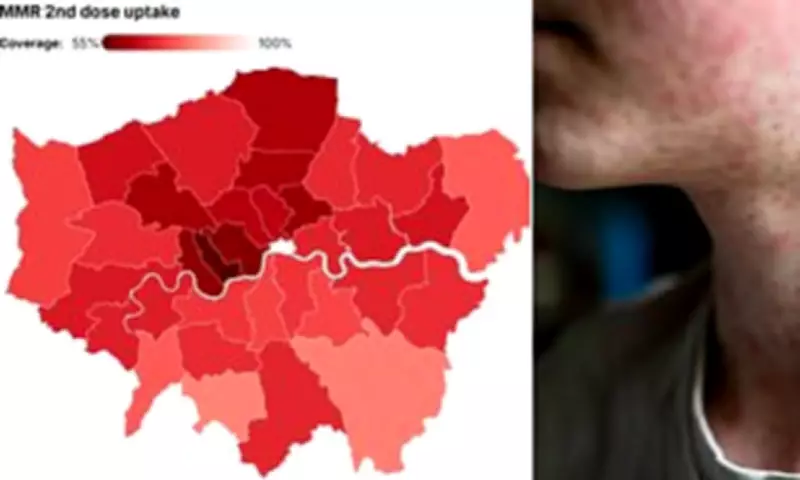
The north London borough of Enfield has experienced the highest number of infections, with 34 confirmed cases. However, the UK Health Security Agency (UKHSA) has warned that this figure is likely a gross underestimate of the true scale of the outbreak. Experts attribute the spread to low uptake of the measles, mumps, and rubella (MMR) vaccine across the capital.
In Enfield, where the current outbreak is concentrated, only around 62 per cent of children under five have received the two-dose vaccine, according to the most recent official statistics. This low coverage has created a vulnerable population, allowing the highly contagious virus to take hold.

London Boroughs with Alarmingly Low Vaccination Rates
Data reveals that five London boroughs have even lower MMR vaccination rates than Enfield, which experts warn could create a perfect storm for the virus to spread across the city. These boroughs include Hammersmith and Fulham, Hackney, Westminster, and Haringey.
The affluent borough of Kensington and Chelsea has the lowest rates in London, with only 51 per cent of under-fives vaccinated. This highlights that vaccine scepticism is not confined to any single demographic but is a city-wide concern.
Causes of Vaccine Hesitancy Among Londoners
Experts have pointed to several factors contributing to low vaccination uptake. The rising popularity of alternative medicine, where patients avoid pharmaceutical drugs in favour of natural remedies, has been blamed for vaccine scepticism among wealthy and middle-class Londoners.
Dr Nisa Aslam, a London-based NHS GP, expressed her dismay, stating, I feel dismayed that parents are rejecting these safe, efficient vaccines that we've used for years. In my whole career, I have never seen such an upsurge of infections, and it's really worrying.
She added, It's not necessarily due to logistical challenges. There are parents who are actively refusing vaccines, whether that's due to a fear of alleged side-effects, mistrust in the government and pharmaceutical companies, or complacency.
Measles: A Highly Contagious and Dangerous Virus
Measles is a highly contagious viral infection that spreads easily through coughing, sneezing, or even breathing. Symptoms typically develop between six and 19 days after infection and include:
- A runny nose and cough
- Sore eyes and fever
- A distinctive rash
In one in fifteen cases, measles can lead to life-threatening complications such as pneumonia, convulsions, and encephalitis. The virus is particularly concerning in school settings, where close contact facilitates transmission. More than 60 suspected cases have been reported by seven schools and a nursery in Enfield alone.
National Context and Historical Factors
The outbreak in London is part of a broader national picture. In July 2024, a child died in Liverpool after contracting measles amid the country's worst recorded outbreak, which saw 3,681 confirmed cases. Other areas with low vaccine uptake include Nottingham (71 per cent), Birmingham (75 per cent), and Manchester (75 per cent).
Modelling by the UKHSA suggests that up to 160,000 people could be infected if a major outbreak occurs in London. Currently, there is no cure for measles; prevention relies solely on the MMR vaccine, which was updated last year to include protection against chickenpox (varicella).
Vaccine uptake collapsed in the late 1990s and early 2000s following a now-discredited 1998 study by Andrew Wakefield, which falsely linked the MMR jab to autism. Although the vaccine has since been proven safe and effective, these claims have persisted, exacerbated by scepticism over Covid-19 jabs, particularly among some minority ethnic communities.

Severe Health Risks and NHS Response
Measles, while often presenting with flu-like symptoms and a rash, can cause severe and even fatal complications if it spreads to the lungs or brain. One in five infected children requires hospitalisation, and around one in fifteen develops serious complications like meningitis or sepsis.
The NHS is intensifying its efforts to combat the outbreak, urging families to come forward for vaccinations. The health service has also adjusted its schedule, now offering the second dose of the MMR vaccine earlier, at an 18-month appointment, to enhance protection.
Dr Aslam emphasised the urgency, stating, We deliver vaccination programmes really efficiently, and there is an ample window as well as a catch-up programme. There is opportunity and access to get your child vaccinated. It's about what you prioritise. But not getting your child vaccinated is putting thousands at risk. We need to act as soon as possible to be protected.
As the outbreak continues to unfold, health officials remain vigilant, stressing that vaccination is the most effective defence against this preventable disease.