Mother's Alzheimer's Diagnosis at 43 Reveals Early-Onset Dementia Struggle
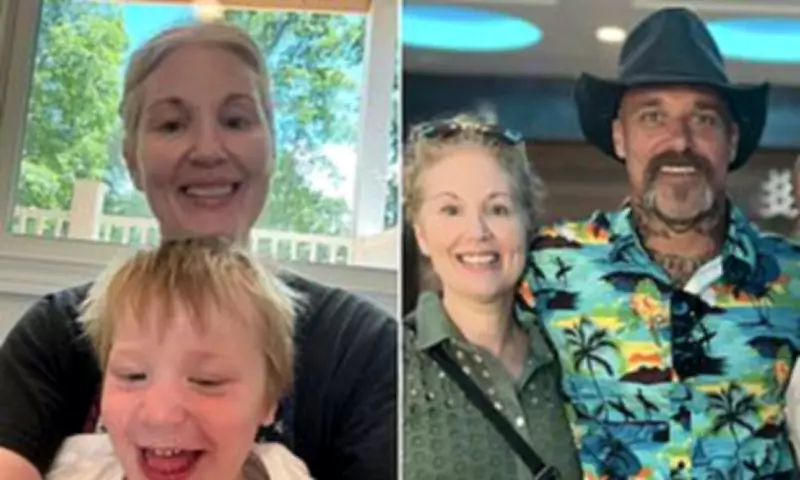
Staci Marklin was just 43 years old when she first noticed troubling symptoms that contradicted her normally hyper-organized and meticulous personality. The former nurse began experiencing word-finding difficulties and word-switching problems, which she initially attributed to postpartum brain fog after her son's birth.
From Initial Symptoms to Devastating Diagnosis
'I had difficulty finding words and word switching,' Marklin recalled to the Daily Mail. 'I started noticing symptoms when my son was young, but figured it was postpartum brain fog.'
These early symptoms, combined with short-term memory loss and multitasking challenges, eventually prompted Marklin to consult her doctor. Despite extensive initial testing returning normal results, she underwent further cognitive examinations that revealed mild cognitive impairment.

Still concerned about her grandmother's history of Alzheimer's disease, Marklin insisted on additional biomarker testing. She underwent both blood biomarker analysis and an amyloid PET scan, which returned positive results confirming early-onset Alzheimer's diagnosis.
'I was a wreck, I knew nothing would ever be the same again,' Marklin, now 47, told the Daily Mail. 'The most heartbreaking part was I knew I wouldn't see my son grow up or watch my daughter have kids of her own.'
Understanding Early-Onset Alzheimer's Prevalence
Alzheimer's disease represents a progressive form of dementia affecting memory, thinking capabilities, and behavioral patterns. Symptoms gradually intensify until they significantly interfere with daily functioning and routine tasks.
Current statistics indicate over seven million Americans live with Alzheimer's, with projections suggesting this number could approach thirteen million by 2050 according to Alzheimer's Association data. Researchers estimate approximately 110 individuals per 100,000 people aged 30 to 64 experience younger-onset dementia, representing about 200,000 Americans total.
Treatment Journey and Daily Challenges
Following her December 2024 diagnosis, Marklin resigned from her nursing position and began anti-amyloid treatment with Leqembi. This infusion-based therapy, administered every other week for eighteen months, aims to reduce or eliminate amyloid plaque accumulation in the brain.
'Leqembi is an infusion given every other week for 18 months,' she explained. 'It is proven to lessen or remove the amyloid plaque in the brain.'
Marklin's daily symptoms now include persistent brain fog, extreme exhaustion, and frequent confusion. 'When people are talking, it doesn't confuse me, but it feels like I can't keep up and it's exhausting,' she described. '[I think], "Did I already say this? Have I already done this?" I'm just all day losing things.'
Family Dynamics and Emotional Impact
The mother of a 21-year-old daughter and three-year-old son faces particular challenges with parenting while managing her condition. 'My toddler was two when I was diagnosed,' she noted. 'Raising a toddler while battling this awful disease is hard.'
Marklin humorously observes similarities with her young son, noting 'neither of us can regulate our emotions.' Her husband Erik, a merchant marine who works away from home for half the year, relies on support from both Marklin's mother and mother-in-law who alternate staying with the family during his absences.
'I don't want to be alone anymore,' Marklin admitted. 'I have a very difficult time in the evening. I get anxious and agitated easily. I have a routine and I stick to it. With that and all the family support, everything is flowing well.'
Career Loss and Identity Challenges
Marklin expressed profound grief over leaving her nursing career, despite previously expressing dissatisfaction with her work. 'I feel like I don't matter anymore,' she confessed. 'I'm not doing anything. I feel like I will just never do anything important ever again.'
She constantly anticipates what she calls 'the ball dropping' moment when she might forget fundamental information like her home address or destination. '[When that day happens,] it's the beginning of the end,' she told the Daily Mail. 'I feel like I'm just constantly waiting for that.'

Documenting the Journey Through Social Media
Marklin now chronicles her experiences on TikTok under the username tryingnottoforget, offering candid insights into daily life with early-onset Alzheimer's. Through this platform, she shares both the practical challenges and emotional realities of navigating progressive cognitive decline while maintaining family relationships and personal identity.
Despite the dramatic changes to her anticipated life path, Marklin and her family continue adapting to their new reality, finding ways to maintain stability through established routines, medical treatment, and extensive family support networks.