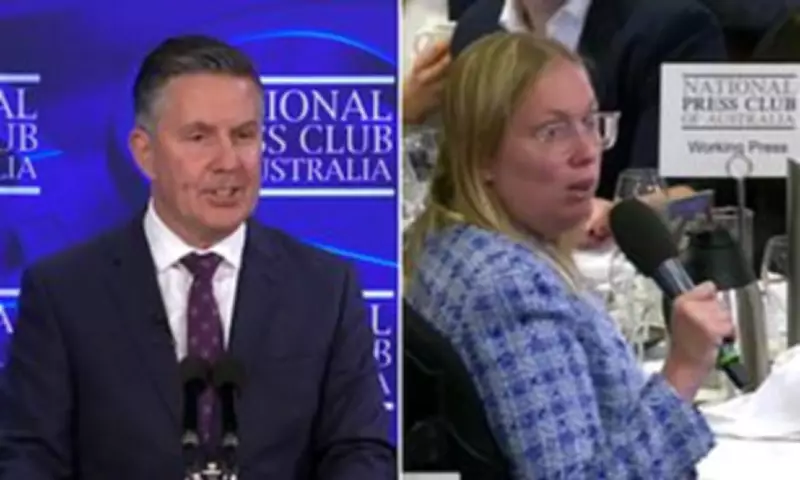
Health Minister Mark Butler has faced direct questioning about why his government is cutting support for National Disability Insurance Scheme participants during a severe cost-of-living crisis. The minister revealed on Wednesday that more than 160,000 people would lose access to the disability support program under sweeping reforms designed to control spiraling costs.
Major Overhaul Announced
During his National Press Club address, Butler detailed a comprehensive overhaul of the NDIS that will significantly tighten eligibility requirements, reduce spending on certain support categories, cut third-party management costs, and introduce new provider quality standards. The minister acknowledged these changes would directly impact many participants while defending them as necessary for the scheme's sustainability.
Journalist's Direct Question
Powerd Media reporter Emma Myers, who lives with a disability, confronted the minister about the timing of these cuts. "In the current cost-of-living crisis, why have you decided to cut the support of NDIS participants?" Myers asked. "Will there be additional supports to help us cover the cost of living?"

Butler responded that the government had worked "very carefully" to identify areas where spending growth could be contained while protecting essential supports. "We've worked very carefully to identify where we think we can control spending growth, and the areas where we need to preserve existing support," he explained.
Core Supports Protected
The minister stressed that daily living essentials would remain unaffected by the changes. "Those areas of support that are essential for daily living, accommodation supports, personal care, transport, hygiene and continence supports, medication management and all the rest, will not be subject to any of the controls I've talked about," Butler assured.
Instead, the government is targeting areas where spending growth has accelerated rapidly, particularly unscheduled plan reassessments. "There will still be capacity for reassessments, but they should only happen in exceptional circumstances, where there's been a significant change in a participant's situation," the minister clarified.
Social Participation Funding Reduced
Butler acknowledged that changes to social and community participation funding would directly impact some participants. "Getting that spending back to where it was a few years ago is going to mean a reduction in the number of hours participants can spend on that," he admitted.
"For people in supported independent living, they'll be able to reallocate some of their daily living budgets to help fill that gap. For others, it will have an impact, and I understand that, and we haven't done this lightly."
Unsustainable Growth
The minister justified the reforms by pointing to unsustainable growth patterns. "This is an area that has tripled in the last five years and is projected to grow to $20 billion on its own," Butler revealed about social and community participation spending. "That's not something we think we can continue to sustain."
He emphasized that the changes aimed to improve quality as well as reduce costs, highlighting the creation of a new Inclusive Community Fund. "This isn't just about spending," Butler said. "It's also about the quality of supports, which is why we're building an inclusive community fund to rebuild the capability of community organizations, whether they're disability organizations, sporting clubs or arts groups, to host NDIS participants."
Eligibility Tightening
Butler revealed the scheme would face new eligibility tests that would significantly reduce participant numbers. "The NDIS was originally intended to support around 410,000 people with a disability. Today, there are 760,000 people on the scheme," he explained.
"While new eligibility rules need to be worked through, our initial modelling will see the number of people on the scheme reduce to around 600,000 by the end of the decade, instead of growing to well over 900,000."

Key Changes to the NDIS
- More than 160,000 people are expected to lose access to the NDIS by 2030
- Eligibility rules will be tightened, with access based on functional impact rather than diagnosis alone
- Standardised assessments will determine who qualifies for the scheme
- People with lower support needs may be moved off the scheme
- Mildly autistic children will be redirected away from the NDIS under Thriving Kids reforms
- Social and community participation spending will be cut significantly
- Plan managers and third-party intermediaries face 30 percent spending reductions
- A shortlist of approved quality providers will replace the current open market model
Spending Figures Revealed
The minister provided startling figures about the scheme's growth. The social and community participation budget has exploded from $4 billion annually five years ago to $12 billion this year. "Today, that one stream of NDIS is costing about the same as what we spend in net terms on the entire Pharmaceutical Benefits Scheme," Butler noted.
Average participant spending on social and community participation has jumped from $14,000 five years ago to approximately $31,000 today. "Over the next two years, our changes will bring that figure down to about $26,000 per participant, back to where it was in 2023," the minister stated. "Without these changes, that figure would have been closer to $33,000."
Provider Quality Crackdown
Butler announced Labor would be "moving quickly to improve the quality and reduce the cost of the huge number of intermediaries in the scheme – those third parties who manage the majority of NDIS plans and claims."
He criticized the current market-driven model for encouraging some providers to prioritize profits over care. "Market models are designed to create competition, but too often in the NDIS, we see that competition play out with third parties cutting costs and cutting corners to get as many plans on the books as possible rather than trying to win clients based on quality of their services," Butler concluded.