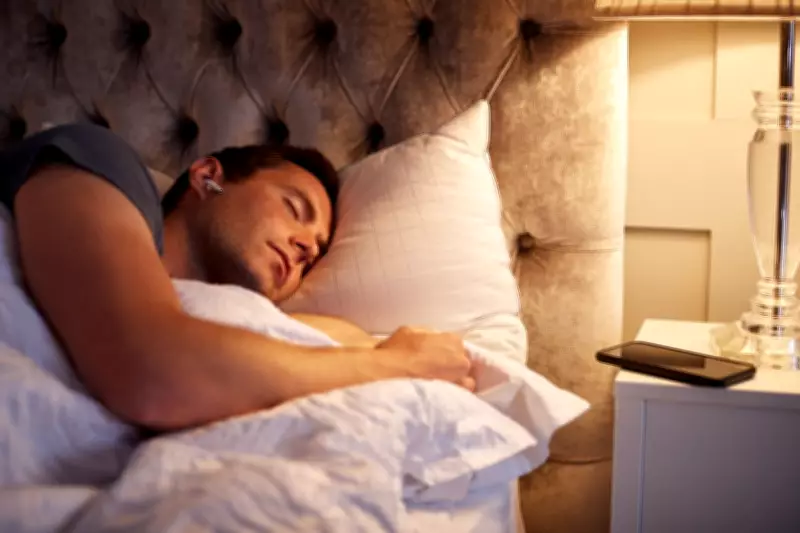
New scientific research has raised significant concerns about the widespread use of pink noise as a sleep aid, suggesting it may actually damage sleep quality rather than improve it. Pink noise, characterized by its lower frequency sound similar to heavy rainfall or ocean waves, has been heavily promoted as an effective method to help people fall asleep faster by masking disruptive environmental sounds.
The Science Behind Pink Noise and Sleep Patterns
Pink noise contains lower sound frequencies compared to white noise, which resembles television or radio static. Both types of broadband noise are commonly available through dedicated machines and online platforms, with many users relying on them nightly. While previous research, including a 2019 Northwestern University study, suggested pink noise could enhance deep sleep for individuals with mild cognitive impairment, new findings present a contradictory and worrying picture.
Penn Medicine Study Reveals Concerning Results
A Federal Aviation Administration-funded study conducted by researchers at Penn Medicine examined 25 healthy adults aged 21 to 41 who had no prior experience using noise machines for sleep. Participants slept for eight hours nightly under various conditions, including exposure to aircraft noise, pink noise, and combinations with and without earplugs.

The results were striking. Individuals exposed to pink noise over a week experienced nearly 19 minutes less REM sleep compared to noise-free nights. REM sleep, or rapid eye movement sleep, is crucial for multiple brain functions including memory consolidation, emotional regulation, and cognitive development. According to Harvard Health, this sleep stage also provides protection against dementia and supports learning processes.
"Our findings suggest that playing pink noise and other types of broadband noise during sleep could be harmful," stated Dr. Mathias Basner, professor of Sleep and Chronobiology in Psychiatry. "This is especially concerning for children whose brains are still developing and who spend much more time in REM sleep than adults."Comparative Effectiveness and Sleep Disruption
The study revealed several important comparisons between different sleep protection methods:
- Earplugs proved significantly more effective at protecting sleep against traffic noise than pink noise machines
- The combination of pink noise and aircraft noise shortened both deep sleep and REM sleep compared to quiet nights
- Participants woke more frequently when exposed to either aircraft noise or pink noise alone
- These frequent awakenings did not occur when participants wore earplugs
Particular Risks for Vulnerable Populations
The research highlights special concerns for young children and infants, who commonly have sound machines used to help them sleep. REM sleep constitutes approximately 25% of infants' total sleep time, making any reduction particularly significant for their developing brains.
Dr. Basner emphasized the potential amplified effects for children watching pink noise videos, noting that white noise videos on YouTube have accumulated hundreds of millions of views. Many parents routinely use these sound machines to help toddlers and newborns fall asleep, potentially unaware of the possible consequences.
Call for Further Research and Caution
The Penn Medicine researchers stressed that noise machine sleep aids require more thorough scientific investigation. They specifically called for additional studies focusing on vulnerable populations, long-term usage effects, different types of broadband noise, and safe noise levels in relation to sleep quality.
"Overall, our results caution against the use of broadband noise, especially for newborns and toddlers," Dr. Basner concluded. The research team recommends that consumers approach pink noise sleep aids with increased skepticism until more comprehensive studies can establish their safety and effectiveness profiles.