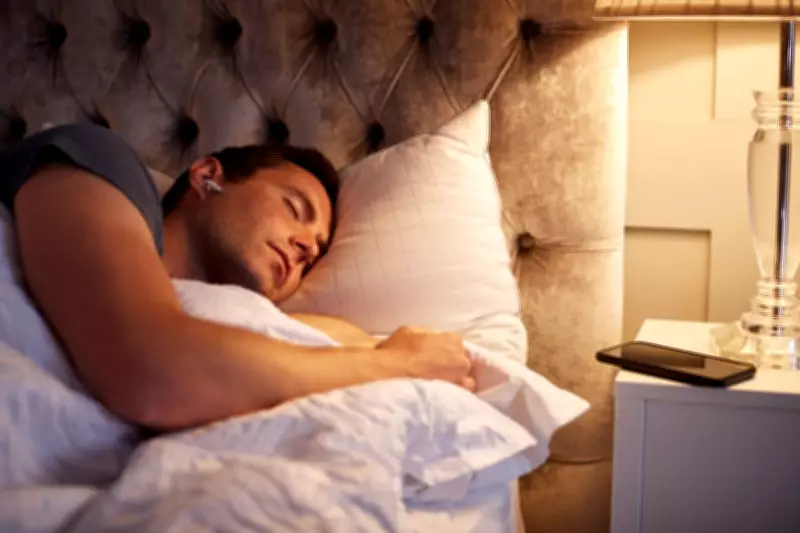
Sleep scientists are raising urgent concerns about the potential health risks of using pink noise machines to aid slumber, following new research that suggests these popular sleep aids might actually be doing more harm than good.
Understanding Pink Noise and Its Sleep Promises
Pink noise has become increasingly popular as a sleep aid, often promoted as an effective method to help people fall asleep faster while blocking out disruptive environmental sounds. This ambient, steady, static-like tone resembles recordings of heavy rainfall or ocean waves, with the specific aim of soothing the brain into a deep, restorative slumber.
Technically, pink noise contains lower frequencies of sound than its more familiar counterpart, white noise, which produces the same static-like sound as television or radio interference. Numerous devices and applications now provide users with both types of broadband noise, marketed specifically for sleep improvement.

The Emerging Scientific Concerns
Recent research from Penn Medicine presents a significant challenge to the prevailing positive narrative surrounding pink noise. While earlier studies, including a 2019 Northwestern University investigation, suggested pink noise could potentially boost deep sleep in patients with mild cognitive impairment, this new warning paints a more concerning picture.
A small but significant Federal Aviation Administration-funded study examined 25 healthy adults aged between 21 and 41 who had not previously used noise machines to aid their sleep. Participants slept for eight hours nightly under various conditions, including exposure to aircraft noise, pink noise, both aircraft and pink noise combined, and aircraft noise while wearing earplugs.
Alarming Findings About REM Sleep Reduction
The research revealed particularly troubling results regarding rapid eye movement (REM) sleep, the crucial sleep phase associated with memory consolidation, emotional regulation, and brain development. Participants exposed to pink noise over a week experienced nearly 19 minutes less REM sleep compared to their baseline measurements.
"REM sleep is important for memory consolidation, emotional regulation and brain development, so our findings suggest that playing pink noise and other types of broadband noise during sleep could be harmful," explained Dr. Mathias Basner, a professor of Sleep and Chronobiology in Psychiatry at Penn Medicine, in an official statement.
"This is especially concerning for children whose brains are still developing and who spend much more time in REM sleep than adults," Dr. Basner added, highlighting the particular vulnerability of younger populations.
Comparative Effectiveness and Sleep Disruption
The study produced additional noteworthy findings about sleep quality and disruption. Researchers discovered that earplugs proved significantly more effective at protecting sleep against traffic noise than pink noise exposure. Furthermore, the combination of pink and aircraft noise actually shortened both deep and REM sleep compared to nights without any artificial noise.
Participants also experienced more frequent awakenings when exposed to either aircraft noise or pink noise alone, compared to quiet nights without noise interference. This increased sleep fragmentation did not occur when participants wore earplugs, suggesting simpler solutions might prove more effective for noise-sensitive sleepers.
Vulnerable Populations and Long-Term Concerns
The researchers emphasised that their results highlight the need for more thorough investigation into noise machine sleep aids, particularly noting that white noise videos on platforms like YouTube have accumulated hundreds of millions of views, indicating widespread use without comprehensive safety understanding.
For young children watching these videos to help them fall asleep, Dr. Basner warned that the effects could be even more pronounced. This concern is particularly relevant given how common it has become for parents to use sound machines to help their toddlers or newborns fall asleep, despite REM sleep constituting approximately a quarter of infants' total sleep time.

Call for Further Research and Caution
"Overall, our results caution against the use of broadband noise, especially for newborns and toddlers," Dr. Basner stated definitively. "They indicate that we need more research in vulnerable populations, on long-term use, on the different colours of broadband noise and on safe broadband noise levels in relation to sleep."
This emerging research presents a significant challenge to the growing sleep aid industry and suggests consumers should approach noise-based sleep solutions with increased caution, particularly when considering their use for children and vulnerable individuals.