The Growing Debate Over Profound Autism Diagnosis
As the definition of autism spectrum disorder has expanded in recent years, a significant movement is emerging to establish profound autism as a distinct diagnosis. This push aims to address the unique needs of individuals who require constant, lifelong care, such as Connor and Ronan Murphy, nine-year-old twins whose family navigates daily challenges with resilience and love.
A Family's Daily Reality with Profound Autism
In the Murphy household, spontaneous moments of connection are woven into routines that revolve around the twins' needs. Connor often walks in circles around his father, Matthew, who transforms repetitive behaviors into opportunities for interaction through lifting, tickling, and spinning. "They're going to need 24-7 care for the rest of their lives," Matthew Murphy explains. "Life will be a challenge for them, and we have to prepare them as best we can."
Autism rates have risen steadily for decades, driven partly by broader diagnostic criteria adopted in 2013 and increased awareness. However, this expansion has, in a paradoxical twist, shifted some focus away from those with the most intensive support requirements. Researchers estimate that approximately one in thirty-one children in the United States has autism spectrum disorder, with around a quarter falling into the "profound autism" category—a term introduced by the Lancet Commission in 2021 to describe individuals most severely impacted by the condition.

Safety Concerns and Creative Solutions
For the Murphys, safety is a paramount concern. The twins, who speak in one- to three-word sentences and perform academically at the level of three-and-a-half-year-olds, require constant vigilance. Last summer, Connor briefly left the house in his pajamas and walked half a mile unsupervised. "Our number one concern is their safety," says their mother, Andrea Murphy, 47.
The family has implemented innovative measures to protect the boys, including GPS locators in their shoes, sensors with alarms on windows and doors, and thumbprint locks on certain areas. They also advocated for fencing at their schoolyard and helped fund Project Lifesaver, a local police search-and-rescue program. Despite these precautions, hypervigilance remains a constant part of their lives, as Matthew notes: "If that's at three in the morning, it's at three in the morning."
Community Engagement and Joy Amid Struggles
The Murphys actively take the twins into the community, believing it benefits everyone involved. On a snowy Saturday trip to Target, for example, Andrea guided Connor with a hand on his back while Matthew navigated a toy aisle with Ronan. When Ronan became upset over a Bluey figurine, his father calmly helped him up from the floor. "We can't live our lives in a bubble," Matthew asserts. "We want them to experience life."
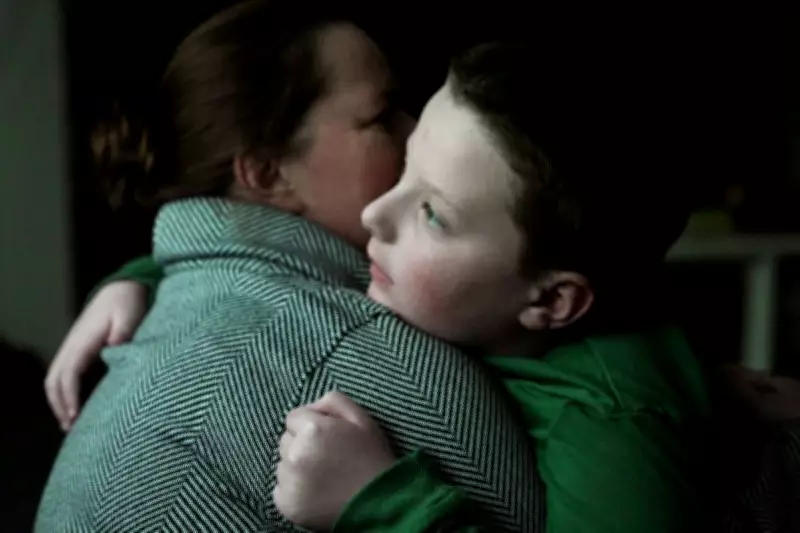
Amid the difficulties, the family cherishes moments of joy, such as Connor nuzzling into his mother during a rendition of "You Are My Sunshine." "They bring a light to you no matter how bad of a day you're having," their father reflects. "It's all unconditional love."
The Diagnosis Debate: Unity Versus Specificity
Judith Ursitti, president of the Profound Autism Alliance, advocates for separating profound autism into its own diagnosis. She argues that this population lacks appropriate treatments, supports, and trained providers, and is often excluded from clinical research. "If you don't have research, you won't have treatments," Ursitti emphasizes. "There are people across the spectrum who have high support needs that are intermittent. The difference with our population is they're constant."
Conversely, Dena Gassner, an autistic senior research scientist at Drexel University's autism institute, expresses concerns about potential stigmatization. She believes the issue lies not in autism itself but in societal failures to provide adequate supports and services. "We need to come together in a unified voice to talk about services for the entirety of the spectrum," Gassner states.

Preparing for an Uncertain Future
The Murphys focus on helping their children thrive through daily interventions, such as applied behavior analysis sessions with professionals from The Autism Community Therapists. These sessions include language practice, like Ronan instructing a therapist to draw an elephant, and efforts to expand the twins' limited diets through gradual exposure to new foods.
However, a looming deadline adds urgency: in Massachusetts, public educational support ends at age 22. Both parents work full-time—Matthew at a nonprofit aiding injured veterans and Andrea in healthcare—but they worry about financing long-term care. "The thing that keeps me awake at night is what their future looks like," Matthew admits. "That's the great unknown."
As the debate over profound autism continues, families like the Murphys highlight the critical need for tailored support, research inclusion, and societal understanding to ensure a better quality of life for all individuals on the autism spectrum.