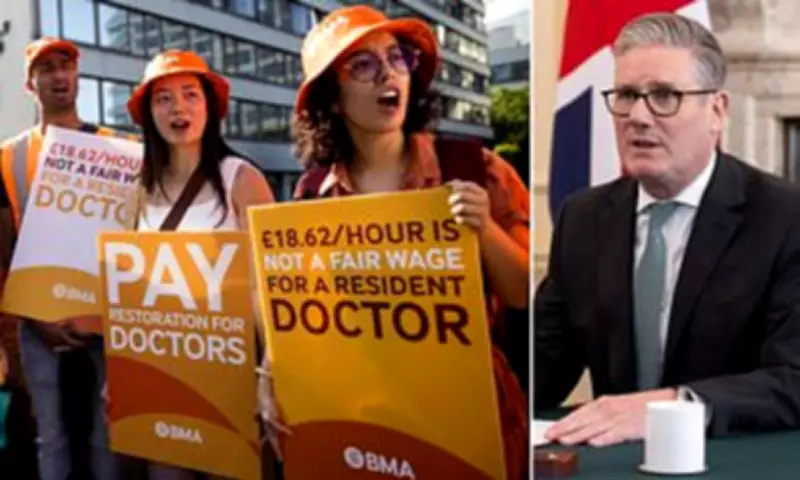
Prime Minister Keir Starmer has launched a scathing attack on junior doctors, accusing them of "recklessly" abandoning a pay agreement that would have boosted some salaries beyond £100,000 annually. He has issued a 48-hour ultimatum for the British Medical Association (BMA) to cancel a planned six-day strike scheduled from April 7 to April 13, immediately following the Easter Bank Holiday weekend.
Pay Deal Rejected Without Member Vote
The BMA's junior doctors committee recently turned down a government offer worth up to 7.1 percent for this year, without even presenting it to members for a vote. This proposed deal would have culminated in a total pay increase of 35 percent over the past three years. Health Secretary Wes Streeting highlighted that under this arrangement, the most experienced junior doctors would have seen their basic pay rise to £77,348, with average earnings surpassing £100,000.
Strike Impact and Financial Consequences
In a column for The Times, Sir Keir emphasised that fresh industrial action would severely damage the NHS. He urged the BMA to formally consult its members on the government's offer, stating that walking away from the deal was a "wrong and reckless decision." He warned that rejecting the agreement would leave junior doctors worse off, as they would only receive the standard pay award this year instead of the improved terms on offer.

Sir Keir also pointed out the broader repercussions, noting that each strike costs the NHS approximately £250 million in cover payments, adversely affecting both the health service and patients. The Prime Minister asserted that while efforts would be made to protect care, the impact of strikes cannot be ignored.
Training Posts at Risk
The rejected pay deal included a commitment to create at least 4,000 new specialty training posts within the NHS, available to junior doctors after their initial two years of training. However, Health Secretary Wes Streeting has declared that these posts will be withdrawn if the strike proceeds, emphasising that there is "not a something for nothing culture here."
Earnings Potential and Union Hypocrisy
Under the proposed terms, junior doctors in the final stages of specialty training, currently earning a basic pay of £73,992, would have seen their salary increase to £77,348. With additional earnings from overtime, weekends, and night shifts averaging £20,500 per year, the highest earners could have taken home more than £100,000 annually. First-year doctors fresh out of medical school would have earned an average of £52,000, a £12,000 increase compared to three years ago.
The BMA has been labelled "hypocritical" for demanding a 26 percent pay rise, citing inflation driven by the Iran war, while offering its own staff a mere 2.75 percent uplift. The union is also insisting that consultants covering for striking junior doctors be paid up to £2,500 per shift, though the NHS has mandated that hospitals keep pay within "normal ranges."
Imminent Strike and Emergency Planning
If the strike goes ahead, it will mark the 15th round of industrial action by junior doctors since 2023. Mike Prentice, national director for emergency planning at NHS England, has alerted hospital leaders that this round is expected to be particularly challenging due to the short notice period, bank holidays, and the Easter break.
Sir Keir's firm stance underscores the government's determination to resolve the dispute while highlighting the potential benefits of the rejected pay deal for junior doctors and the NHS alike.