Spider Silk Breakthrough: Clinical Trials Begin for Nerve Repair Surgery
In an astonishing medical breakthrough, scientists have discovered that a combination of spider and silkworm silk could hold the key to repairing devastating nerve injuries in humans. Clinical trials are now set to proceed using revolutionary 'off-the-shelf' spider silk technology that promises to transform treatment for peripheral nerve damage.
The Science Behind the Silk Solution
At the forefront of this discovery is Professor Alex Woods, founder of Newrotex, a clinical-stage biotechnology start-up originating from the University of Oxford. Professor Woods explains the fundamental challenge of nerve damage: "Nerves are essentially like telephone cords – tubes containing numerous tiny wires that transmit information between your brain, muscles, and skin. When nerve damage occurs, whether from serious accidents or even minor incidents like cutting an avocado, those crucial connections become severed."
This disruption can lead to chronic pain, persistent numbness, or even paralysis. Contrary to common perception, nerve damage is far from rare, with data indicating that approximately one in ten people in the United Kingdom will experience some degree of nerve damage during their lifetime.

The Limitations of Current Treatments
The current gold-standard treatment for nerve damage is a procedure called an autograft, where surgeons harvest a healthy nerve from another part of the patient's body to patch the injury site. However, Professor Woods highlights significant drawbacks: "The problem with autografts is that we're not actually creating a cure. We're simply trading nerve damage in one area for damage in another by removing a healthy nerve to heal the initial injury."
For the National Health Service, which treats approximately 300,000 peripheral nerve injuries annually, autograft surgery presents concerning statistics. The procedure yields less than a 50% recovery rate while carrying a 27% complication rate, creating substantial challenges for both patients and healthcare providers.
The Transformative Potential of Spider Silk
The innovative 'off-the-shelf' silk alternative developed by Newrotex could revolutionize nerve repair. By eliminating the need for a second surgical site to harvest donor nerves, this technology significantly reduces operation times, lowers infection risks, and could dramatically cut long-term costs associated with rehabilitation and chronic pain management.
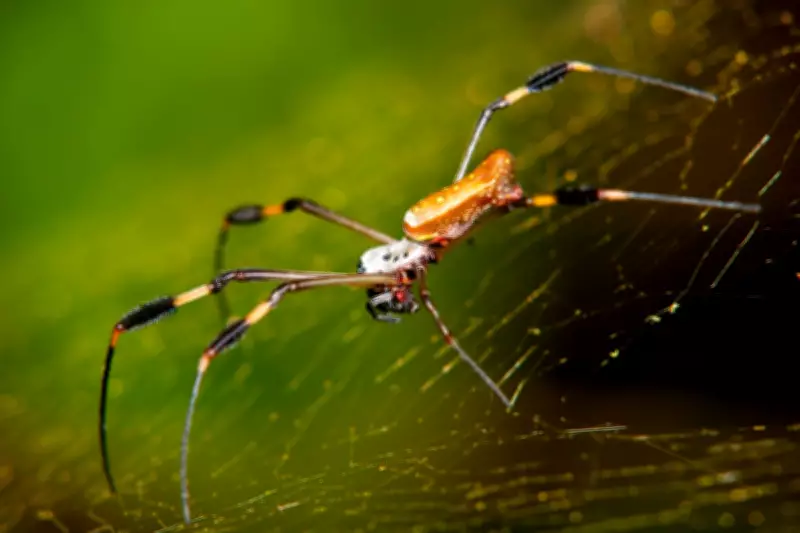
Newrotex's solution utilizes silk fibres from golden orb-web spiders to create what Professor Woods describes as "a trellis-like structure that bridges damaged nerves, enabling them to essentially grow back together." Preliminary tests conducted on rats have shown remarkable results, with nerve cells latching onto the spider silk and migrating at speeds exceeding 1.1 millimeters per day.
Biocompatibility and Structural Advantages
Crucially, the silk remains in place for several months – sufficient time to support nerve regeneration across gaps measuring up to 10 centimeters, distances human nerves cannot bridge independently. Professor Woods emphasizes the material's exceptional biocompatibility: "Spider silk is highly biocompatible, meaning two years after surgery, there's no trace of any silk remaining in the patient's system. This massively reduces the possibility of adverse reactions, something not guaranteed with other surgical options."
The spider silk fibres, thinner than human hair yet stronger than steel by weight, provide an ideal structural framework for nerve regeneration while maintaining their integrity throughout the healing process.
The Delicate Harvesting Process
The process of obtaining this remarkable material is as delicate as the surgery it enables. Golden orb-web spiders, native to southern and east Africa with Newrotex sourcing theirs from Madagascar, are gently sedated using carbon dioxide. Their silk glands are then stimulated with a tiny brush, and the 'dragline' fibres – traditionally used by spiders to descend from heights – are carefully wound onto custom bobbins using high-precision drive systems.

Addressing a Critical Clinical Need
Professor Woods underscores the technology's significance: "Peripheral nerve injuries have devastating impacts on patients. Huge ranges of people, from athletes to men with prostate cancer to women who have undergone mastectomies, suffer nerve damage. The work at Newrotex addresses a massive unmet clinical need and creates a real solution for those suffering the effects of nerve damage."
If forthcoming trials in the United Kingdom and America prove successful, the humble spider's web may soon become the new gold standard for helping humans walk, move, and feel again. Target dates for wider commercial availability are currently set for 2027, marking a potential paradigm shift in surgical nerve repair.