The Vagus Nerve: Unlocking the Body's Internal Superhighway
Why is everyone suddenly talking about the vagus nerve? This remarkable internal communication system is at the center of what experts are calling a revolution in bioelectric medicine. The groundbreaking idea that inflammation can be regulated by the nervous system is leading to explosive developments in medical treatment, but alongside genuine breakthroughs, a proliferation of unverified claims and questionable devices is creating a confusing landscape for consumers.
The Body's Internal Information Network
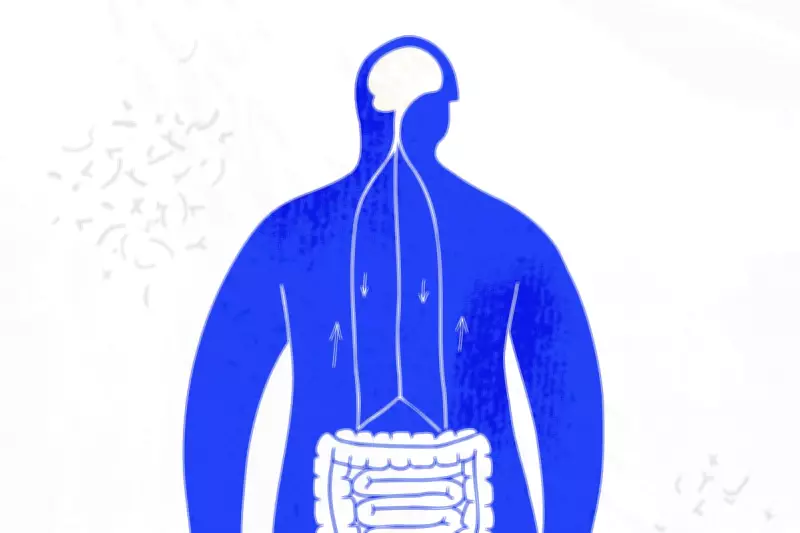
"How long have you got?" responds Professor Owen Epstein, a pioneering consultant gastroenterologist, when asked what the vagus nerve actually does. Like the gut microbiome before it, this physiological structure has suddenly become fashionable as medical understanding advances. The vagus nerve serves as the body's intranet - an incredibly complex information-sharing system connecting the brain to nearly every internal organ.
"It has now been reasonably recognised that it is the key to providing our consciousness with information about our internal organs," explains Professor Epstein. "By providing that information in a very precise and very beautiful way to the subcortical area of the brain, the vagus nerve actually orchestrates communication between the organs to try and maintain stability and wellbeing."

This internal surveillance mechanism constantly monitors and modulates organ function, acting like a conductor of an orchestra. It tells you when you're hungry, when you need the bathroom, or when you feel bloated - and performs similar regulatory functions across all organs simultaneously.
From Accidental Discovery to Medical Revolution
Dr Kevin Tracey, a neurosurgeon and scientist, first discovered the vagus nerve's incredible influence by complete accident in the 1990s. While studying inflammation, his team made a surprising discovery: anti-inflammatory drugs placed in animal brains also stopped inflammation throughout the body. This led to the revolutionary realization that the vagus nerve acts as a transatlantic cable connecting the nervous and immune systems.
"No one had anticipated that something as complicated as inflammation could be regulated by the nervous system using a similar sort of mechanism that's used to regulate every beat of our hearts," says Dr Tracey. "But it is the same. It's more complicated, but it's the same."
This understanding has led to the development of bioelectric medicine, using devices that stimulate the vagus nerve with specific electrical currents to "reboot" the system. Clinical trials have shown promising results for numerous conditions including:
- Epilepsy and depression
- Diabetes and Crohn's disease
- Fibromyalgia and irritable bowel syndrome
- Stroke recovery and rheumatoid arthritis
The Murky World of Wellness Claims
While legitimate medical devices like the FDA-approved SetPoint System for rheumatoid arthritis and non-invasive wearables like Nurosym show genuine promise, the wellness industry has embraced vagus nerve terminology with questionable evidence. Social media platforms overflow with posts about polyvagal theory and unverified stimulation techniques.
"These modalities are being used left, right and centre by anybody, without any training, without any real knowledge," warns Professor Epstein. "But there's no point in using vagus nerve stimulation on every Tom, Dick and Harriet. It's not a panacea."
The market now includes devices retailing for over £300 that claim to "tone the vagus nerve" using infrasonic waves through the chest, along with various claims that deep breathing, cold-water immersion, humming, and yoga can "wake up" the nerve. Many of these products cite "scientific research" that upon investigation reveals:

- Studies commissioned by the tech companies themselves
- Lack of peer review and independent verification
- Small clinical trials with 25 participants or fewer
- Absence of control groups for placebo effects
The Real Harm of Misinformation
Dr Tracey emphasizes that while unproven techniques and devices likely won't cause physical harm when used unnecessarily, there's significant damage to scientific progress. "Eventually you get to the point where people don't believe anything any more," he warns. "What I am opposed to is when things that are overstated or factually incorrect are 'justified' by millions of likes, because it cheapens and undermines very important and sophisticated science that has revealed how the vagus nerve works."
The vagus nerve's importance extends beyond physical health to mental wellbeing. American psychologist Stephen Porges' Polyvagal Theory describes how the autonomic nervous system, especially the vagus nerve, regulates health and behavior through three states: fight-or-flight mobilization, immobilization or "freeze" response, and social engagement when we feel safe. Trauma can leave people "stuck" in what Professor Epstein calls "reptilian mode," disconnected from normal functioning.
As research continues into connections between the vagus nerve and conditions like autoimmune diseases, long Covid, post-viral fatigue syndrome, PTSD, and chronic anxiety, the medical community faces the challenge of separating genuine breakthroughs from wellness industry hype. The future of bioelectric medicine depends on maintaining scientific rigor while exploring this remarkable internal communication system's full potential.