Why I Chose to Remove My Breast Implants and Embrace a Flat Chest at 56
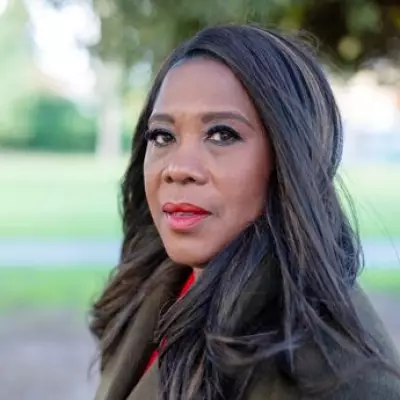
Sarah Lavender Smith, an athlete based in Colorado, has made a profound personal decision that reflects a broader societal shift. After 22 years living with breast implants, she opted for explant surgery—removing the implants without replacement—to return to her natural, flat chest. At 56, she wants to model ageing naturally, a goal that felt incompatible with artificial enhancement.
The Personal Journey from Implants to Explant
For over two decades, Smith carried what she describes as "small bags of saline water on my chest", a secret shared with only a few close friends. She felt ashamed of her choice, rooted in cultural pressures and personal insecurities. As an outdoorsy mountain runner, her fit physique developed a masculine chest after breastfeeding her two babies, leading her to view her body as "tough and unappealing as beef jerky".
Smith recalls being conditioned from a young age to value well-shaped breasts, influenced by parents who casually commented on "good tits" and societal beauty standards. At 34, during a period of low self-confidence as a stay-at-home mom, she decided to get implants, seeing it as a gift to her husband despite his never suggesting it. She requested "runner boobs – like, ballerina boobs", aiming for what she called "the world’s smallest boob job".

Reflecting on that decision, Smith wishes she had sought counselling beforehand and heeded her obstetrician’s advice that shrinking breasts after breastfeeding are normal. Her story mirrors a common arc: getting implants during insecurity and finding relief years later after removal.
The Surging Demand for Breast Implant Removal
Smith’s experience is part of a growing trend. A December 2024 report by the International Society for Aesthetic Plastic Surgery found that implant removal surgeries worldwide nearly doubled between 2017 and 2022. This rise is described as "escalating at a pace surpassing that of other mammoplasties", indicating a potential shift in how patients perceive breast implants.
Dr Matthew Swelstad, a plastic surgeon in Grand Junction, Colorado with over 18 years of experience, confirms this trend. He notes that breast implant removal has become "a growth area" in his practice, with many women seeking smaller, more athletic, and proportional appearances. "Size is now less important, but perky remains desirable," he says, adding that societal acceptance of different body types has increased, allowing women to feel feminine with a flat chest.
Stories from Other Women Choosing Explant
Smith is not alone in her journey. Jaime McDonald of North Carolina got implants at 19 in 1999 during a psychologically difficult time, only to emerge from surgery with larger breasts than desired. She had them removed eight years ago after marrying a woman who loves her for who she is. "It literally felt like a weight lifted off my shoulders. They never were me," she says.
Debbie Sironen, a 74-year-old athlete from Idaho, removed her implants after divorcing the husband who encouraged them. She advises younger women: "Don’t do it, unless you really want to look different, but I think in the long run you’d regret it. Be happy your body works... and just stay healthy."
Health Considerations and Surgical Details
Smith’s decision to remove her implants was influenced by health factors. Several years ago, they began to harden due to capsular contracture, a condition affecting 10% to 15% of women with implants, where scar tissue around the implant hardens. She also learned about breast implant illness (BII), an umbrella term for symptoms like joint pain and rashes, though she did not experience it herself.
Her explant surgery cost $5,617 and was not covered by insurance, compared to $8,403 for replacement with new implants. The procedure left smiley-shaped scars and required recovery with drainage tubes and restrictions on exercise. While Smith did not opt for additional procedures, many women choose breast lifts or aesthetic flat closures for a smoother chest wall.

Embracing Natural Ageing and Body Acceptance
Smith’s choice aligns with a broader move towards natural ageing. She briefly tried Botox in her 40s but rejected further injections, believing cosmetic procedures can create a "slippery slope" towards perpetual maintenance. Now, she finds freedom in her flat chest, feeling "wonderfully aerodynamic" when running and enjoying going braless.
She draws inspiration from women like Junko Kazukawa, a distance runner who chose to stay flat after a bilateral mastectomy, and Kelly Ridgway-Smith of northern California, who made a similar decision post-mastectomy. "I’m getting more confident being who I am," Ridgway-Smith says. "We don’t need that to be a full woman."
As Smith ages, she finds it easier to reject appearance expectations and embrace her natural self. Her story highlights a cultural shift towards authenticity, health, and self-acceptance in the face of pervasive beauty standards.