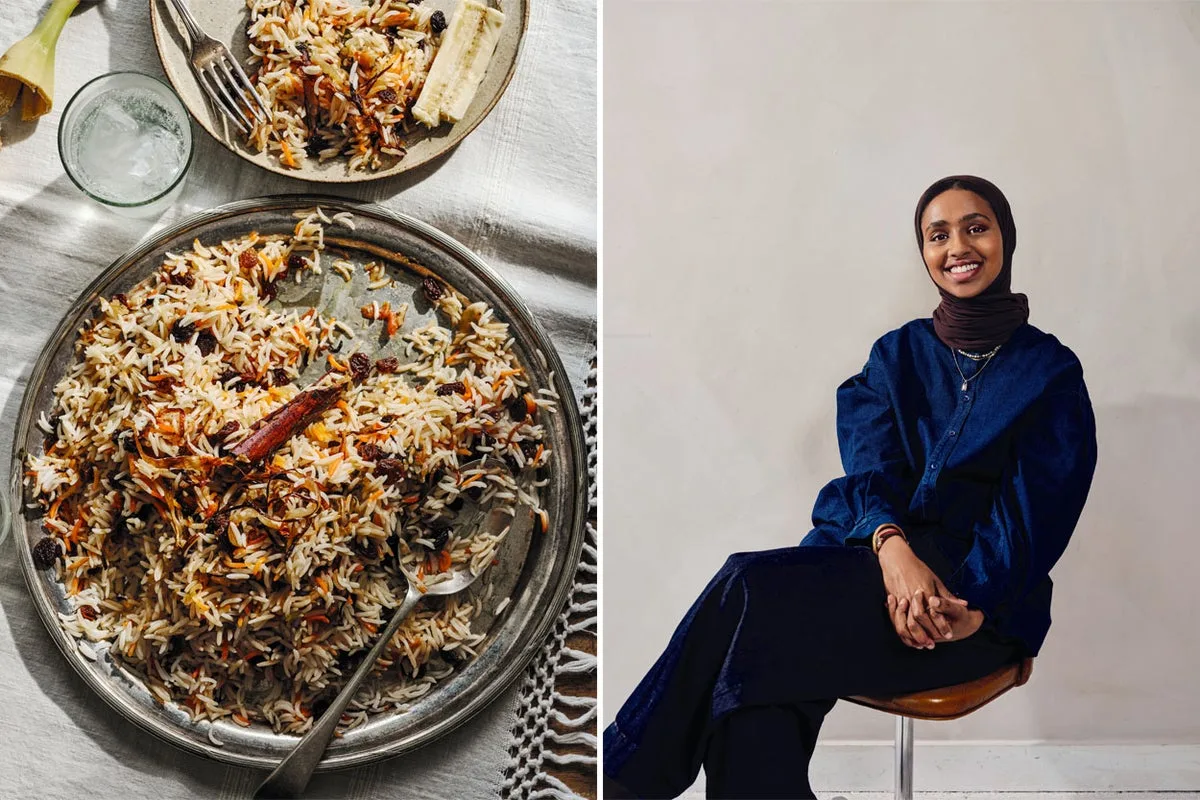
Ilhan Mohamed Abdi's Ramadan Kitchen: Modern Recipes for Faith and Family
Ramadan Kitchen: Modern Recipes for Faith and Family

The Independent's journalism is supported by our readers. When you purchase through links on our site, we may earn commission.

What Happens When Ramadan Cooking Meets Modern Life

From 15-minute Somali rice to Instagram Lives that went viral during lockdown, Ilhan Mohamed Abdi's debut cookbook reframes Ramadan cooking for busy, contemporary households – without sacrificing its profound sense of faith, family connection, or authentic flavour. Ella Walker reports on Wednesday 04 February 2026.

From Brain Surgery to Book Launch

While most debut cookery authors celebrate publication with signings and recipe sharing, Ilhan Mohamed Abdi's journey to her first cookbook involved an unexpected challenge: brain surgery. "So if I am a bit slow on some of the questions, please bear with me," she says gently. Yet this major medical intervention has done nothing to diminish her palpable excitement. "I'm very excited, nervous at the same time, but very excited," she buzzes with enthusiasm.

Instagram Origins and Viral Success

You may have encountered the London-based 36-year-old on Instagram, where she commands an impressive 265,000 followers. It was on this platform, particularly during the lockdown periods, that The Ramadan Kitchen first took shape. "I started a Ramadan series online, just live on Instagram, and I'd post to tell everyone, 'This is what we're going to cook. These are the ingredients and kitchen utensils you're going to need. Join me at six o'clock.' And I'd get hundreds of people come on these lives. It was fantastic," she recalls with evident pleasure.

What particularly resonated with her growing audience was her commitment to authenticity and speed. "I would actually show people I was being serious when I said something takes 15 minutes. Like my Somali rice is 15 minutes, one of my most popular recipes, and once they'd seen me actually cook it in front of them online, they'd realise it really does take 15 minutes, and it really is beginner-friendly," she explains.

Corporate Background Meets Culinary Heritage

Formerly established in the corporate sector with roles at Goldman Sachs and Amazon, Mohamed Abdi's approach to cooking remains deeply personal and culturally rooted. "A lot of it comes from my own culture, my own heritage. It's influenced heavily by that. So the foods I grew up with," she elaborates. "It's Somali flavours. It's Arab flavours. My heritage is Somalian Egyptian, so a lot of the flavours come from there. But at the same time, my mother was in the kitchen quite a lot, so cooking her meals would take hours, and I don't think that's a fit for the modern cook, so I just adapted those recipes."

She spent countless childhood hours observing her mother cook. "I absolutely loved it. I didn't bore of it at all," she says fondly. Decades later, a similar pattern has emerged in her own kitchen. Mohamed Abdi has dedicated the book to her daughter, Amaana, who has already inspired even better shortcuts and methods to involve toddlers in cooking processes. "I want to preserve memories that I had growing up, the same recipes," she states. "Ramadan comes every single year. It'll come every single year until the end of time, and so it's a book that will grow with her and her children, potentially."

Ramadan: Faith, Family and Modern Adaptation

This year, Ramadan – the sacred month of fasting observed by Muslims worldwide – runs from the evening of Tuesday 17 February until Wednesday 18 March. "For me, it's a month that brings me back to my faith, routine and family," Mohamed Abdi reflects. "We spend a lot more time, not just with my own immediate family, but my extended family." Growing up with periods in Somalia, she experienced Ramadan as an all-encompassing presence. "When I was in Somalia a lot [when I was younger], I would feel it around me everywhere, but in England or London, you don't, so Ramadan for me was that one thing that was always constant every single year, no matter where I was. Now, as a mother, I'm trying to create that same sense for my child – comfort and memory."

Structured for Modern Kitchens

Split into two main sections, the book comprehensively covers suhoor – the pre-fasting meal consumed before dawn – and iftar, the evening meal that breaks the daily fast. Suhoor recipes include indulgent options like a decadent croissant bread pudding and a nourishing date shake, though Mohamed Abdi's personal routine tends toward simplicity. "I'll often just have a cup of water and a few dates, or I'll have a really small sandwich or bagel, or even egg bites," she shares.

For iftar, Mohamed Abdi presents dishes ranging from chicken shawarma and oxtail stew to lamb chops, macaroni, and even sheet-pan pizza adorned with pepperoni. "The book is absolutely for everyone," she emphasises, not solely for those who observe Ramadan. For newcomers seeking an initial taste of the holy month, she recommends beginning with her samosas or syrup-soaked fried doughballs. "I have such strong memories of these. They'd be the first thing on the table along with samosas throughout the entire month of Ramadan."

Confidence, Comfort and Cultural Understanding

Ultimately, Mohamed Abdi aims for readers to feel both confident and comforted by her culinary creations. "I want people to feel confident when they try these dishes, and I want [them to experience] a sense of comfort," she expresses. "I also want people to walk away with a better understanding of the Somalian Egyptian cuisine I've grown up with." She recalls an early conversation with her editor: "There are so many more Muslims in the world than, let's say, vegetarians and vegans, but there are so many vegetarian and vegan books, which are fantastic," she notes, "but why aren't there more books like The Ramadan Cookbook? I think it's really important. I think it's changing, but very slowly."

Signature Recipe: Aromatic Somali Rice

"Bariis Somali is the recipe that first got people talking about my cooking. It's one of those dishes that makes me feel deeply connected to my roots," explains Mohamed Abdi. "The flavours are layered and, like many Somali dishes, it brings together sweet and savoury in a way that just makes sense. I've simplified the method so it comes together in just 15 minutes, but none of the flavour is lost. It's usually served with meat, like suqaar (lamb or beef cubes with veg) or chicken, and don't forget the banana, a classic Somali pairing that rounds everything out. You have to try it."

Serves: 4-6

Ingredients:

  • 300g basmati rice (I use sella basmati)
  • 125ml sunflower oil
  • 1 onion, half sliced and half finely chopped
  • 1 tomato, finely chopped
  • 1 chicken stock cube
  • 1 tbsp ground cumin
  • 1 small cinnamon stick
  • 4-5 cardamom pods, crushed open
  • Handful coriander
  • 3-4 garlic cloves
  • 70g sultanas (golden raisins)
  • ¼ tsp red or orange food colouring

Method:

  1. Start by bringing a pot of water to the boil for the rice. While waiting, wash the rice thoroughly until the water runs clear. Once the water is boiling, add the rice and parboil for eight to 10 minutes, or until the grains are clear and cooked on the edges but still firm in the centre.
  2. While the rice is parboiling, heat the sunflower oil in a large pot over medium heat. Add the sliced onion and fry until golden brown and crispy, being careful not to overcook. Remove the onions from the oil and drain on paper towels.
  3. In the same pot, add the chopped onion to the remaining oil and cook until softened. Add the tomato, chicken stock cube, cumin, cinnamon stick and cardamom pods (count the pods in order to remove them later). Stir and cook for four to five minutes until the tomatoes break down and the mixture becomes fragrant.
  4. Crush the fresh coriander and garlic together using a pestle and mortar, then add this mixture to the pot. Cook for another two minutes, then add 125ml water to the mortar, rinsing it to capture any remaining flavour. Pour this into the pot and stir. Lower the heat, and leave to cook for two to three minutes.
  5. Drain the rice and carefully layer it over the sauce in the pot, making sure not to mix the two. The rice should sit on top as a covering layer without fully blending into the sauce. Scatter the fried onions over the rice, then rinse the raisins in hot water to soften and arrange them on top. Dot the food colouring in one corner.
  6. Cover the pot with a kitchen towel to absorb excess moisture, place the lid tightly on to trap the steam, and move the pot to the smallest burner. Cook on the lowest heat for eight to 10 minutes.
  7. When ready, turn off the heat and remove the lid. A small plume of steam should escape – this indicates the rice is perfectly cooked. Let the rice cool slightly before mixing, allowing the food colouring to set.

Somali Dinner Rolls

"If there's one thing I'm always expected to show up with, it's these dinner rolls. Whether it's iftar [fast-breaking evening meal], a family gathering or just an excuse to share a meal, this is what I bring," says Mohamed Abdi. "They're unbelievably soft and pillowy, and the garlic butter on top takes them somewhere special. They're also incredibly forgiving. I've made them with wholemeal (wholewheat) flour, added cheese, thrown in seeds and even used them as burger or hotdog buns. Whatever I do, they still work. With any luck, these will be the softest, most reliable rolls you'll ever bake."

Makes: 12-16

Ingredients:

  • 250ml milk, warmed
  • 2 tbsp granulated sugar
  • 1 tbsp fast-action dried yeast
  • 1 egg
  • 50g/3½ tbsp unsalted butter, softened, plus 3 tbsp melted butter, for brushing
  • 1 tsp salt
  • 400g plain (all-purpose) flour, plus extra for dusting and if needed

For the garlic butter:

  • 2 tbsp unsalted butter, melted
  • 3 garlic cloves, minced
  • 1 tbsp fresh parsley, finely chopped
  • Flaky sea salt, to finish

Equipment: 23 x 30-cm/9 x 12-inch baking tray, lightly oiled

Method:

  1. In a large mixing bowl, whisk together the warm milk, sugar and yeast until the mixture begins to froth slightly. Leave it to rest for 5 minutes to activate the yeast.
  2. Add the egg to the mixture and mix until combined. Stir in the softened butter and salt, followed by half of the flour, and mix until incorporated. Add the remaining flour and mix until a rough dough forms. If the dough feels too wet to knead, add a tablespoon of flour at a time, mixing gently, until the dough comes together. It should be soft and slightly sticky, but manageable. Be careful not to over-add flour, as this can result in a dense dough.
  3. Turn the dough onto a lightly floured surface and knead by hand until it becomes smooth and elastic. To test if it's ready, gently poke the dough; if it slowly bounces back, it's ready to rise.
  4. Lightly oil the dough and place it in a clean mixing bowl. Cover and let it rise in a warm place until doubled in size. Once risen, gently press the air out of the dough in the bowl. Fold the dough on itself a few times to create layers, then carefully shape it back into a ball without additional kneading.
  5. Divide the dough into 12–16 equal pieces. Slightly flatten each piece, folding and pinching underneath to form a smooth ball, then roll gently in your palm to finish shaping. Arrange the dough balls on the greased baking tray. Cover and leave to rise again for 30 minutes.
  6. Preheat the oven to 180C fan/200C/400F/gas mark 6.
  7. Brush the tops of the rolls with some melted butter and place them in the oven. Bake for 20-25 minutes, or until golden brown, rotating the tray halfway through, if needed, for even colouring.
  8. While the rolls bake, combine the melted butter, garlic and parsley in a small bowl. When the rolls come out of the oven, brush them generously with the garlic butter and sprinkle with flaky sea salt. Serve warm.

Somali Chai Tres Leches Cake

"This is my take on the classic Latin American dessert, but infused with Somali tea spices like cardamom, cinnamon and clove. That warmth completely transforms the milk mixture, and it's one of those recipes I shared online that really took off," says Mohamed Abdi. "So many people tried it and made it their own – which makes it feel all the more special to me. I usually keep it simple and use store-bought madeira cake, but doolsho [cardamom sponge cake] works beautifully too. It's the kind of dessert you can prep the night before, and just before serving, pour over a little saved milk to freshen it up. Now, it's become the thing people expect from me. The same way you'd expect tea and biscuits at someone's house, my guests expect Somali tres leches. And truthfully, I enjoy making it every time."

Serves: 8-10

Ingredients:

  • 150ml milk
  • 397g can condensed milk
  • 350ml evaporated milk
  • 2 tsp Somali tea spice
  • 24 Madeira cake slices (510g) or doolsho
  • 500ml double (heavy) or whipping cream
  • 100g icing (confectioners') sugar
  • 1 tsp vanilla bean paste
  • 100g crushed pistachios

Equipment: 23 x 30-cm/9 x 12-inch baking dish

Method:

  1. Heat the milk, condensed milk and evaporated milk together with the Somali tea spice in a saucepan. Bring it to a gentle simmer, avoiding a boil to prevent the milk from splitting or burning – you just want small bubbles around the edges. Simmer for five to 10 minutes, then strain out the spices and set the milk mixture aside to cool.
  2. Arrange the cake slices in the baking dish, arranging them in two layers if possible. As you lay down each layer, press it down gently to flatten slightly. Use a chopstick to poke holes all over the cake slices, ensuring you reach the bottom of the dish. Reserve 250ml of the milk mixture for serving, then pour the remaining cooled milk mixture over the cake, a little at a time, letting it soak in and settle before adding more.
  3. In a separate bowl, whisk together the cream, icing sugar and vanilla until soft peaks form.
  4. Spread the cream mixture evenly over the cake using a palette knife or metal spatula, then top with the crushed pistachios. Refrigerate for at least four hours to allow the cake to set.
  5. When serving, pour a bit of the reserved milk mixture at the base of each slice.

'The Ramadan Kitchen: Nourishing Recipes from Fast to Feast' by Ilhan Mohamed Abdi (Pavilion Books).