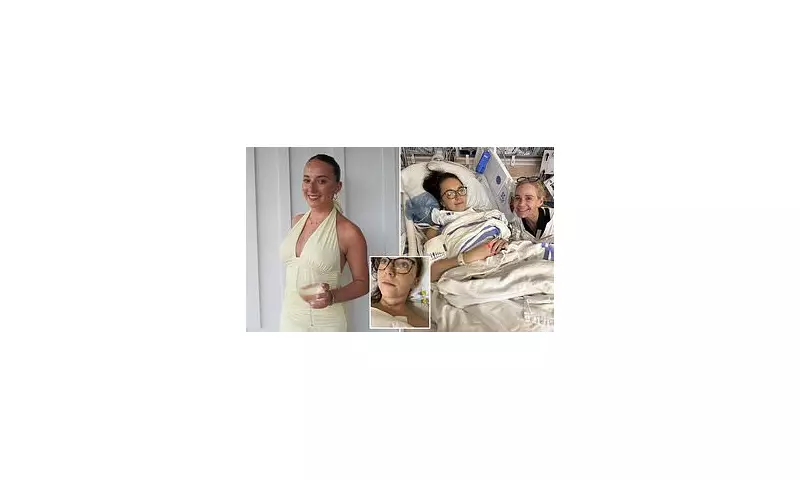
At just 24, Rachel Christensen's life took an unexpected turn when persistent exhaustion and a neck lump led to a diagnosis of metastatic thyroid cancer. Her story mirrors a concerning surge in the disease among young Americans, with experts pointing to environmental and lifestyle factors.
A Young Woman's Unexpected Diagnosis
In her early twenties, Rachel Christensen was navigating the typical pressures of a busy life, balancing work and personal commitments in South Carolina. When overwhelming fatigue and anxiety set in, she initially attributed it to her hectic schedule. However, in 2023, she discovered a lump in her neck.
"In my gut, I felt something may be wrong," Christensen recalled. Despite hoping it would vanish, the lump remained for nine months. By March 2024, she consulted a specialist. A CT scan revealed three swollen lymph nodes, leading to a biopsy.

The results in April 2024 confirmed her fears: papillary thyroid carcinoma (PTC), the most common thyroid cancer. Crucially, it had spread to other lymph nodes, classifying it as metastatic and more challenging to treat. "It was terrifying," Christensen said. "It honestly did not feel real."
A Disturbing National Trend Among the Young
Christensen's case is not isolated. She is part of a growing cohort of young Americans facing thyroid cancer. Research indicates a staggering 240 percent increase in the disease across all age groups between 1973 and 2002.
More specifically, a 2025 study found incidence rates among children, adolescents, and young adults aged 15 to 39 in the US surged by 137 percent from 1995 to 2014. The sharpest rise was for PTC, increasing by 5.5 percent annually.
Medical professionals suggest several potential drivers for this alarming trend. Environmental contaminants like microplastics and pollution, alongside rising obesity rates, are considered key suspects. Improved detection through more common scanning also plays a role. The American Cancer Society estimates 44,000 new cases will be detected in 2025, with about 80 percent being PTC.
Life After Treatment: A New Normal
Less than a month after her diagnosis, Christensen underwent a major five-hour surgery to remove her thyroid and affected lymph nodes. "I honestly just wanted to get it over with," she stated. The operation was successful, rendering her cancer-free, but it introduced a lifelong new reality.
Without a thyroid gland, she must now rely on hormone replacement therapy to regulate her metabolism, energy, and heart function. Managing these levels is critical to avoid complications like fatigue, heart issues, and depression.
"My body is constantly fluctuating, so listening to my body is very important," Christensen explained. She now prioritises her health with early mornings, regular blood tests, and dietary evaluation with a naturopathic doctor, focusing on her gut microbiome.
Supported strongly by her family, particularly her mother, Christensen has turned her experience into advocacy. She actively shares her story on social media to raise awareness, urging other young people not to dismiss potential warning signs like unexplained lumps or fatigue.
"Now I don’t even care if you can see [my scar]," she said. "It reminds me of my strength." Her journey underscores a critical public health issue while highlighting the resilience required to navigate a life-changing diagnosis at a young age.