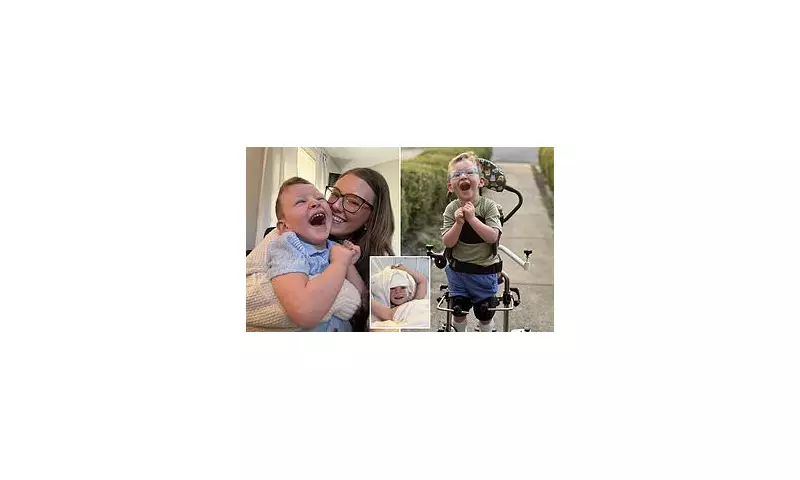
A mother from Kentucky is urging parents to trust their instincts after doctors repeatedly dismissed her baby's rare brain disorder as nothing more than 'new parent anxiety'.
A Mother's Growing Concern
In 2022, Vanessa Hickle, then 23, began rushing her three-month-old son Easton to the doctor. She was alarmed by symptoms including his legs turning purple and shaking. Easton, born a healthy 7lb 2oz, was also failing to meet crucial developmental milestones. He wasn't rolling over, couldn't grasp objects, and had poor head control.
Despite multiple visits to her local practice, medical professionals reportedly attributed the issues to Easton being 'chubby'. They told Hickle her worries were simply 'new parent anxiety' and advised that 'he just needs time'.

"My gut feeling was telling me something was wrong," Hickle said. "As a mother, you just have those instincts."
The Fight for a Correct Diagnosis
By the time Easton was nine months old, with no progress and the purple discolouration persisting, Hickle sought a second opinion. A new doctor immediately recognised the severity and urgently referred Easton to a children's hospital in a neighbouring state.
"Within five minutes he said, 'Something is wrong with Easton's brain,'" Hickle recalled. A battery of tests, including an MRI and scans to measure eye and inner ear movements, revealed the shocking truth.
Easton was diagnosed with cortical dysplasia, a malformation where the brain's outer layer forms incorrectly in the womb, causing disorganised neurons. This condition is a known cause of focal epilepsy, which affects an estimated 1.8 million Americans.
Devastating Diagnosis and Life Today
The family's ordeal intensified when Easton suffered three seizures on the very day of his diagnosis, forcing Hickle to perform CPR before an ambulance arrived. "It was an unexplainable feeling, like a nightmare," she said.
In 2023, a further diagnosis confirmed Easton also has Joubert's syndrome, an exceptionally rare genetic disorder affecting brainstem and cerebellum development, seen in roughly one in 100,000 births worldwide.
Now three years old, Easton is non-verbal and non-mobile. He requires anti-seizure medication, Botox injections for muscle stiffness, and intensive occupational and speech therapy. Hickle has had to radically adjust her expectations of motherhood. "Life doesn't look like I thought it would," she admitted. "I've changed to the mother he needs me to be."
A Plea to Other Parents
Hickle now shares her story as a powerful warning. She felt "absolutely dismissed, rushed out the door" and is adamant that blaming concerns on parental anxiety is unacceptable.
Her core message to other families is clear: persist and seek additional answers if you feel your concerns are being ignored. "We realized we were right, and for nine months we were told he was perfectly fine," she said. Her experience underscores the critical importance of advocating for your child's health.