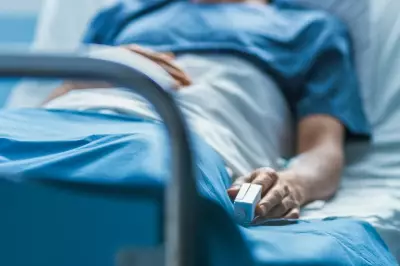
Hinda Abrahams, a 28-year-old teacher, went to hospital for a routine laparoscopic procedure for a suspected ectopic pregnancy, but her heart stopped twice due to an anaphylactic reaction to general anaesthesia. She woke up in intensive care, having been clinically dead for 20 seconds.
Hinda said: 'When I woke up, I immediately recognised an ICU room, so my first thought was my blood pressure had dropped or something. Then I saw the clock above the nurse's head showing 4pm, meaning it had been five hours since they started the operation and I was only just waking up. I knew it wasn't good.'
The ordeal began on 30 January when Hinda experienced abdominal pain and spotting. Despite taking birth control pills without missing doses and having a normal period two weeks earlier, a pregnancy test at the hospital was positive. Doctors confirmed an ectopic pregnancy, where a fertilised egg implants outside the womb, usually in a fallopian tube.

Emergency Surgery and Cardiac Arrest
Surgery was scheduled to investigate and remove the suspected ectopic pregnancy, expected to take 45 minutes. Less than 20 minutes after Hinda was taken into surgery, doctors called her husband, Theodore, 35, to inform him that her heart had stopped twice due to an allergic reaction to the anaesthesia.
Hinda said: 'When this first happened I thought it was like the movies where CPR always works and the person gets up and goes back to normal. I didn't know that CPR only has at best a 40% survival rate when done in the best medical setting. On the street, CPR is only 10% successful.'
She added: 'Even still, of those who survive CPR enough to get their heart beating again, many of them don't survive the next two to three days from the complications. Of those who survive the pneumonia, many of them have a permanent disability or brain damage from oxygen deprivation. The fact that I not only survived it, but don't have any serious life altering injury from it, is a true miracle and I thank God for it.'
Recovery in Intensive Care
Hinda woke up hours later intubated and unable to breathe on her own. She was connected to multiple IV lines, had a catheter, and a central line stitched into her neck delivering emergency medication. Her sternum ached from chest compressions during CPR. She spent three days in intensive care and developed pneumonia from being intubated. Doctors observed signs of heart failure caused by the trauma of the cardiac arrest, but no underlying heart condition was found.
Now recovering at home, Hinda says she still finds it hard to believe what happened. More than a week after receiving CPR, her sternum is still sore, though she was fortunate not to suffer broken ribs. She said: 'I can't believe it all happened – who needs to be resuscitated at 28 years old? I know I got super lucky with all of this. Not just getting another chance at life, but the fact that I don't have any permanent injuries or didn't end up in a coma is a straight-up miracle.'
Hinda also wants to raise awareness about the importance of pregnancy tests at hospitals. She said: 'Someone like me who was on birth control and had a period two weeks earlier would understandably think it's silly to take a pregnancy test. If my tube with the ectopic had been rupturing, then knowing it was a pregnancy would have saved my life.'