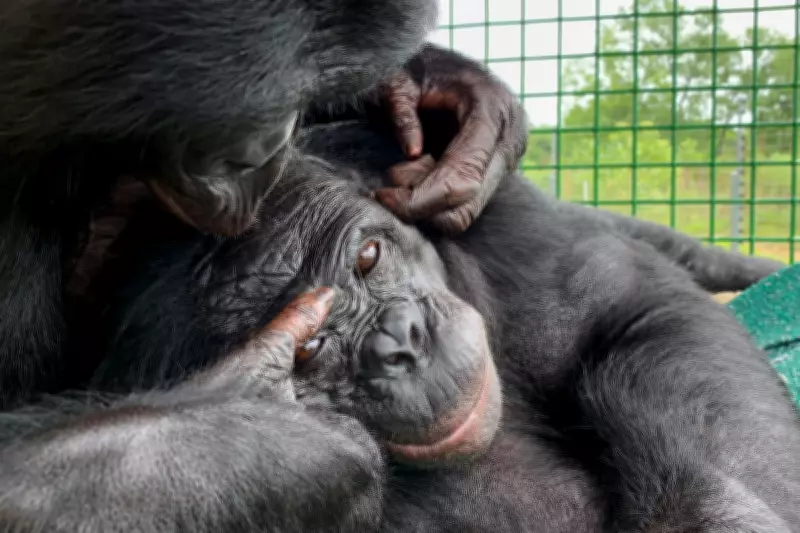
Bonobo's Tea Party Test Reveals Apes May Possess Imagination
Imagination, that remarkable human faculty allowing children to transform bedrooms into castles and host elaborate make-believe tea parties, might not be exclusive to our species after all. For the first time, a scientific experiment offers compelling evidence that a captive ape possesses this sophisticated cognitive capacity, challenging fundamental assumptions about what separates human and animal minds.
The Groundbreaking Experiment
The subject of this revolutionary study is Kanzi, a bonobo raised in a laboratory environment who became famous for his ability to communicate with humans using graphic symbols. Researchers adapted methodologies typically used with young children to stage a juice party for Kanzi. They poured imaginary juice from a pitcher into two cups, then pretended to empty just one container. When asked which cup he preferred, Kanzi pointed to the cup still containing pretend juice 68 percent of the time.
To ensure Kanzi wasn't confusing reality with imagination, scientists conducted a parallel test with actual juice. The bonobo chose the real juice over the pretend version nearly 80 percent of the time. "This strongly suggests he can genuinely distinguish between real juice and imaginary juice," explained Amalia Bastos, a study co-author from the University of St. Andrews in Scotland.

Scientific Significance and Skepticism
Christopher Krupenye, another co-author from Johns Hopkins University, emphasized the discovery's importance: "What's truly exciting about this research is that it indicates the roots of imaginative capacity might not be unique to our species." The findings build upon previous observations of apes in both wild and captive settings, including reports of female chimpanzees holding sticks as though they were infants and chimps dragging imaginary blocks after playing with real ones.
However, not all scientists are convinced that Kanzi's behavior represents true pretend play as humans understand it. Michael Tomasello, a comparative psychologist from Duke University who wasn't involved in the study, noted a crucial distinction: "There's a difference between envisioning juice being poured and maintaining the pretense that it's real. To be fully convinced, I would need to see Kanzi actually pretend to pour water into a container himself."
Kanzi's Unique Background and Legacy
Kanzi's upbringing presents an important caveat to the findings. Having been raised among humans and becoming proficient at communicating through graphic symbols—even combining different symbols to create new meanings and learning to fashion simple stone tools—it remains unclear whether his abilities reflect those of all apes or result from his exceptional upbringing. The celebrated bonobo passed away last year at age 44.
The research, published in the prestigious journal Science, opens new avenues for understanding animal cognition. With many great ape species critically endangered in the wild, this study underscores the urgency of investigating their mental capabilities before opportunities disappear. "Kanzi pioneered this path for numerous future studies," Bastos reflected, highlighting how his participation has expanded scientific understanding of primate cognition.
While questions remain about the precise nature and extent of ape imagination, this tea party experiment represents a significant step toward unraveling one of cognition's most intriguing mysteries, suggesting the imaginative spark that fuels human creativity might flicker in other minds as well.