The human body is a complex machine, assembled over billions of years through evolutionary processes, yet scientists continue to grapple with unanswered questions about its specific form. For instance, why do humans uniquely possess a chin, and why do primate testicle sizes vary so dramatically relative to body weight? These mysteries highlight the ongoing quest to understand the "why" behind our evolutionary traits.
The Role of Convergent Evolution in Understanding Body Parts
Evolutionary history reveals how species developed from simple origins, with body parts appearing in a specific order as we climb the tree of life. Humans, for example, evolved from animals to vertebrates, then mammals, and finally primates, each step adding new features like backbones, limbs, milk, hair, and fingernails. However, to determine why certain traits evolved, scientists rely on convergent evolution, where similar features arise independently on separate branches of the tree.
Testicle Size as a Case Study in Natural Experimentation
Primate testicle size offers a classic example of how convergent evolution serves as a natural experiment. For instance, Abyssinian black and white colobus monkeys and bonnet macaques are similar in size but have vastly different testicles: colobus testicles weigh just 3 grams, while macaque testicles are a hefty 48 grams. This disparity can be linked to mating behaviors.

Colobus monkeys live in harems where males compete for exclusive access to females, allowing for minimal sperm production. In contrast, macaques engage in promiscuous mating within mixed troops, leading to sperm competition. Larger testicles in macaques likely produce more sperm, increasing reproductive success. This pattern holds across mammals, with promiscuous species generally having larger testicles and monogamous species smaller ones.
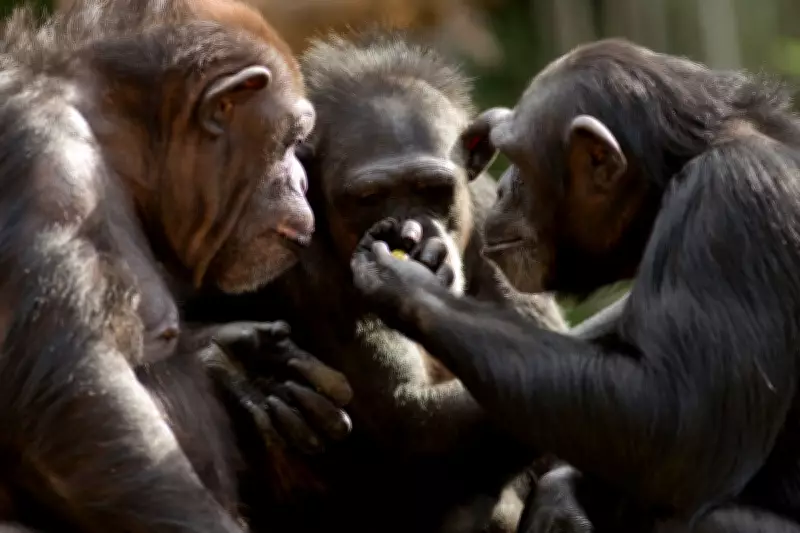
Observations from convergent evolution confirm this correlation. For example, gorillas with small testicles maintain harems, while chimps and bonobos with large testicles are highly promiscuous. Dolphins, with testicles making up to 4% of body weight, engage in mass mating events, further supporting the theory. Human testicle size falls somewhere in the middle, reflecting a mix of mating strategies.
The Enigma of the Human Chin
In contrast, the human chin presents a more perplexing evolutionary puzzle. Unlike testicle size, the chin is unique to Homo sapiens, not found in any other mammal, including our closest relatives like Neanderthals. This uniqueness complicates efforts to test theories about its purpose.
Several plausible explanations have been proposed for the evolution of the human chin. It might have strengthened the jaw during physical conflicts among early humans, or it could have served to accentuate facial features, such as beards, for social or sexual display. Another theory suggests it is a by-product of dietary changes, like the advent of cooking, which softened food and reduced jaw strength, leaving the chin as a functionless remnant.
However, without convergent evolution—where the chin appears in multiple species independently—scientists lack a reliable method to test these hypotheses. This absence of comparative data means the true evolutionary purpose of the human chin remains speculative, destined to stay a mystery for now.
Implications for Evolutionary Biology
These examples underscore the challenges in evolutionary biology. While convergent evolution provides valuable insights into traits like testicle size by allowing for cross-species comparisons, unique features like the human chin highlight the limits of current scientific methods. As researchers continue to explore these questions, they remind us that some aspects of human nature may forever elude full explanation, fueling ongoing debate and discovery in the field.