

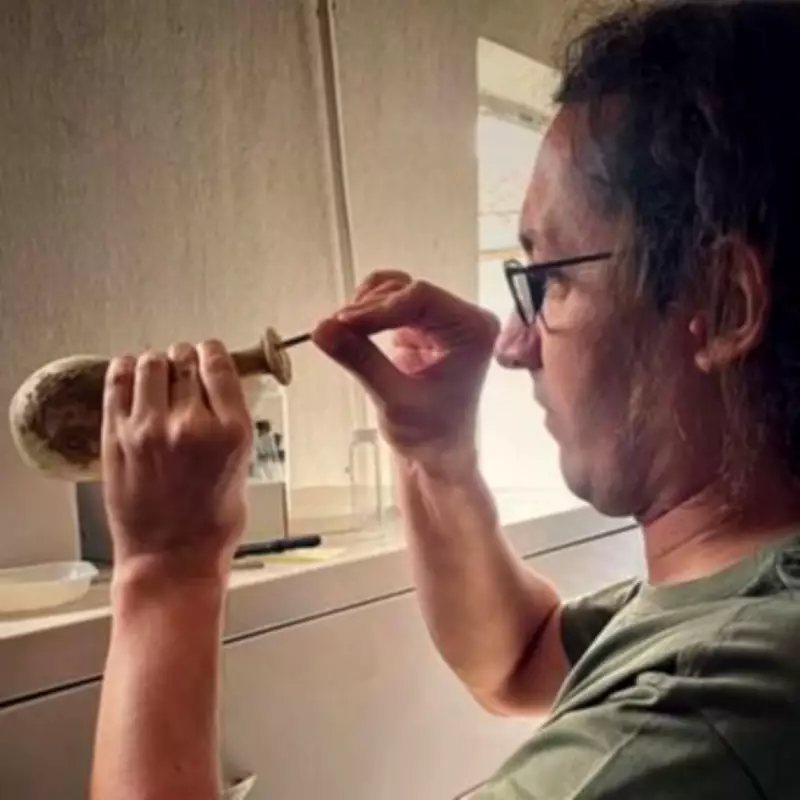
Ancient Roman Vial Reveals Human Faeces Used as Medical Treatment
Archaeologists have uncovered the first concrete physical evidence that ancient Romans employed human excrement as a medical remedy, following a detailed analysis of a 2,000-year-old glass container discovered in Turkey. This remarkable find provides hard scientific proof of a practice long documented in historical texts but never before verified through archaeological means.
Analysis of a 2,000-Year-Old Container
Researchers examined brown fragments within the glass vial and identified clear traces of human waste, alongside aromatic compounds such as carvacrol, a major component of thyme oil. The thyme was likely added to mask the unpleasant odour, making the treatment more palatable for patients. The container was unearthed at a burial site in Pergamon, an ancient settlement in modern-day Turkey that was redesigned by Roman emperor Trajan in the early second century.
Pergamon was also the home of the renowned physician Galen, one of the most distinguished doctors of antiquity alongside Hippocrates. This context suggests the vial may have been part of a sophisticated medical tradition. Lead author Dr Cenker Atila of Sivas Cumhuriyet University in Turkey stated, "Faecal-based pharmacological treatments are widely attested in Greco-Roman medical texts. The use of faeces as a form of treatment was known in the ancient Egyptian, Chinese, Greek, and Roman worlds, based on written sources. However, until now, there had been no archaeological evidence of this practice."

Historical Context and Medical Practices
The discovery confirms that Romans utilised human faeces to combat infections and inflammation, aligning with classical prescriptions that combined dung with odour-masking agents to improve patient compliance. Dr Atila added, "The vessel's contents revealed a distinctive blend of human faecal biomarkers and aromatic compounds such as carvacrol. These results align with classical prescriptions that combined dung with odour-masking agents to enhance patient compliance."
This practice was not unique to Rome; it was referenced in texts from ancient Egypt, China, and Greece, indicating a broader historical belief in the therapeutic properties of excrement. The Romans, however, appear to have been ahead of their time in some respects, albeit with a considerably less appetising administration method compared to modern standards.
Ongoing Research and Modern Parallels
Researchers are now examining additional museum-held vials and ceramic vessels across Turkey to determine whether other ancient pharmacy specimens have survived. If successful, this could lead to a reassessment of Roman medical practices, revealing more about their herb-infused treatments and knowledge.
Contemporary medicine has, mercifully, progressed, but present-day faecal microbiota transplants—administered professionally in clinics for severe gut infections—demonstrate that the notion of using intestinal material for healing is not entirely unfounded. Centuries later, science has validated some aspects of this ancient approach, though with significantly more sterile and controlled methods.
The discovery of this vial not only sheds light on the medical arsenal of ancient Romans but also highlights the continuity and evolution of medical thought across millennia. It serves as a fascinating, if somewhat revolting, reminder of how far healthcare has come while acknowledging the innovative, if unconventional, practices of our ancestors.






