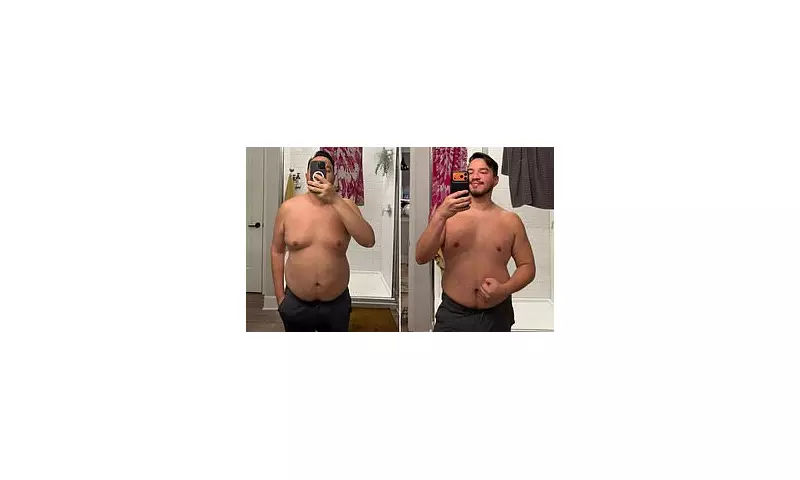
A man who endured relentless childhood bullying over his appearance has told how a £5,000 surgical procedure has completely transformed his confidence and daily life.
Years of Bullying and Self-Consciousness
Kelbin Cordova, 32, from Atlanta, Georgia, was first diagnosed with gynecomastia – a condition involving increased breast gland tissue in men – while still at high school. The diagnosis came after years of cruel taunts from peers about his chest.
"There was some bullying growing up. I would be called fat or told I had 'man boobs'," Mr Cordova revealed. Everyday situations became sources of deep anxiety. "Going into fitting rooms was especially frustrating," he said. "I would get so emotional and upset because no matter what clothes I tried on, my chest was still so prominent."

For a long time, he believed weight loss was the solution. He embarked on intense exercise regimes and successfully slimmed down, but the excess breast tissue remained unchanged. "I did lots of cardio, I lost weight, but nothing happened to my chest," he explained. "That was when I realised it wasn't just about being overweight."
The Life-Changing Decision for Surgery
In June last year, Mr Cordova made the decision to privately fund surgery to correct the condition. The procedure, performed by North Carolina-based plastic surgeon Dr Walter Dutton, involves the removal of excess breast tissue and fat to create a flatter, more traditionally masculine chest. The cost was $7,000 (over £5,000) and was not covered by his insurance.
Before the operation, his self-consciousness dictated his life. He would buy thick clothing to hide his chest, even in the sweltering Miami summers. "I would wear jean jackets all the time because I thought if I doubled up, people wouldn't notice. Wearing jackets through the summer there was hell," he admitted.
A Newfound Confidence and a Growing Trend
The results have been profound. Mr Cordova's confidence has soared, altering his relationship with his body and his approach to life. "It has completely changed everything," he said. "It sounds silly, but I love shopping now. I feel good in my clothes. I feel more like a man – this is what I always wanted to look like."
He no longer fears judgment in public spaces like gyms or changing rooms, places that once brought him to tears. His story emerges alongside a significant increase in men on both sides of the Atlantic opting for similar cosmetic surgery.
According to the American Society of Plastic Surgeons, gynecomastia surgery is now the most popular cosmetic procedure among American men. In 2024, surgeons performed 26,430 male breast reductions, a sharp rise from 20,955 in 2019.
In the UK, figures from the British Association of Aesthetic Plastic Surgeons (BAAPS) show the number of men getting breast reductions rose by two per cent between 2023 and 2024, from 242 to 248. This occurred despite a general 1.5 per cent decline in men undergoing all types of plastic surgery in the same period.
Mr Cordova believes this reflects a cultural shift. "I think there's more education out there now about gynecomastia," he said. "And we're becoming less judgemental when it comes to plastic surgery. A lot of guys used to say it was gay or only for women — but I think men are now more open about wanting to feel comfortable in their own bodies."
The NHS states that gynecomastia is often harmless and can resolve by itself, especially during puberty. It recommends seeing a GP if troubled by the condition, as treatments can include medication or addressing underlying causes. Surgery is typically considered only in exceptional circumstances where the condition is long-standing, causes significant distress, and other treatments have failed.