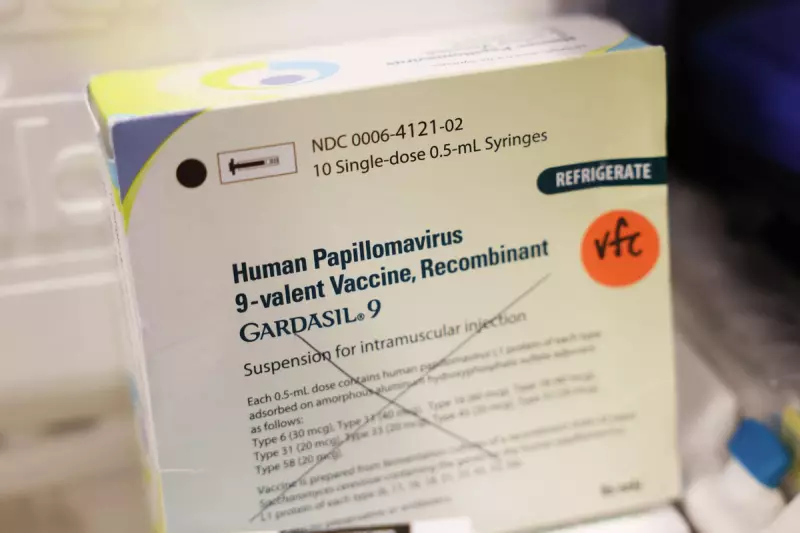
Leading scientists are urging a major shift in global immunisation strategy, calling for boys to be vaccinated against the human papillomavirus (HPV) to finally eradicate cervical cancer. A groundbreaking new study suggests that current programmes, which focus almost exclusively on girls, are insufficient to eliminate the disease that claims nearly 350,000 women's lives every year.
The Case for Expanding HPV Vaccination Programmes
HPV is the world's most common sexually transmitted infection. While it often clears naturally, persistent infection can lead to several cancers, with cervical cancer being the fourth most frequent cancer in women globally. HPV-induced cervical cancer results in approximately 660,000 new cases and 350,000 deaths annually. Although 147 countries currently recommend HPV vaccines for girls, researchers argue the optimal strategy for eradication remains hotly debated.
The new evidence comes from a mathematical model developed by scientists at the University of Maryland and detailed in the Bulletin of Mathematical Biology. The model assessed South Korea's National Immunisation Programme, which began in 2016. This programme successfully vaccinates about 80% of girls aged 12-17, with an additional 30,000 women aged 18-26 receiving catch-up jabs each year.

Why Girls-Only Vaccination Isn't Enough
Despite this relatively high coverage, the model concluded the policy is not enough to eliminate HPV and its related cancers from the population. "It's achieving the objective of reducing cases of cervical cancer, but it's not going to eliminate it. The objective is elimination," stated study author Abba Gumel.
To achieve complete eradication through a female-only programme, researchers estimate a staggering 99% of women in a country would need to be immunised—a logistically daunting target. This is where vaccinating boys becomes a game-changer. Immunising boys "reduces the pressure of having to vaccinate a large proportion of females," Dr Gumel explained.
The study's proposal is clear: by maintaining the current 80% vaccination rate for girls and additionally vaccinating 65% of boys in the 12-17 age group, HPV-related cancers could be eliminated in South Korea within 60 to 70 years. This approach creates a protective 'herd immunity' effect. "The way to protect them is to surround them with a sea of immunity," Dr Gumel emphasised.
A Global Call to Action
Lead author Soyoung Park highlighted the significance of the research, noting "Cervical cancer is one of the few cancers effectively prevented by vaccines." The study incorporated detailed demographic and cervical cancer data from South Korea spanning 1999 to 2020 to predict HPV transmission dynamics accurately.
The implications are global. With effective vaccines available, the enormous annual death toll from cervical cancer is now seen as preventable. "We don't have to be losing 350,000 people globally to cervical cancer each year," Dr Gumel asserted. "We can see an end to HPV and HPV-related cancers if we improve vaccination coverage." The research adds substantial weight to the argument for gender-neutral HPV vaccination policies worldwide, positioning it as a critical public health step towards consigning a major cancer to history.