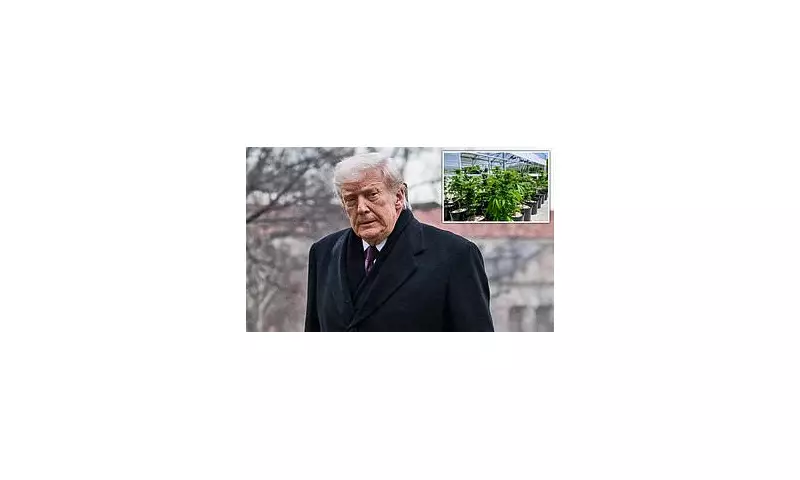
In a move that has split his political base, President Donald Trump signed a significant executive order on Thursday to reclassify marijuana under federal law, aiming to remove barriers to medical research.
A 'Common Sense' Move for Medical Research
Flanked by Health and Human Services Secretary Robert F. Kennedy and other federal medical officials, President Trump framed the decision as a pragmatic step. He insisted the order reclassifies marijuana from a Schedule I substance to Schedule III, which acknowledges a potential medical use and facilitates research, but does not legalise it for recreational purposes.
"I promised to be the president of common sense and that is exactly what we are doing," Trump stated. He revealed that "so many people," including those suffering from cancer-related pain, had urged him to support the change. However, he was adamant: "It doesn't legalize marijuana in any way, shape or form. And in no way sanctions its use for a recreational drug."

The president reiterated his personal opposition to illegal drug use, telling America's youth, "I always told my kids don't take drugs... just don't do it."
Political Fallout and Market Reaction
The decision immediately triggered a backlash from traditional conservatives and several prominent Republicans. Senior administration officials described it as Trump fulfilling a 2024 campaign promise, but the action has exposed a rift within the coalition that elected him.
A group of House Republicans, led by Rep. Pete Sessions of Texas and Freedom Caucus Chairman Andy Harris of Maryland, sent a letter of protest on Thursday morning. They warned that rescheduling "tells our youth that marijuana use is acceptable and safe, a dangerous falsehood" and could worsen the country's drug crisis.
Four Republican senators—Todd Budd, John Barrasso, Tom Cotton, and Shelley Moore Capito—joined the criticism. Their letter controversially claimed, "The only winners from rescheduling will be bad actors such as Communist China," and cited alleged links to mental health issues and violence.
Conversely, advocates for reform argue the change is long overdue, separating cannabis from deadly drugs like heroin and enabling crucial studies into its medical benefits. The financial markets reacted swiftly, with marijuana business stocks spiking on Wall Street following the announcement, as investors anticipated eased restrictions on banking and investment in the sector.
The Road Ahead for Cannabis Policy
The executive order represents a major shift in federal drug policy, albeit one with strict boundaries. The administration's stated focus is squarely on unlocking the potential of medical marijuana and CBD products for issues like chronic pain, particularly among seniors.
A senior official told the Daily Mail that the president was "very focused" on enabling research into both the health benefits and risks. This move also places the administration at odds with some pharmaceutical groups, who would prefer patients rely on conventional, legally prescribed medications.
While the order stops short of the broader legalisation many campaigners seek, it marks a pivotal moment in the national conversation around cannabis, setting the stage for further scientific and political debate in the years to come.