Goblet Squats Daily for a Month: Surprising Fitness Results Revealed
Described by its creator as one of the most revolutionary exercises ever invented, the goblet squat carries grand claims to live up to. Our senior fitness writer Harry Bullmore embarked on a 30-day challenge, performing this move every day to see if it truly matched the hype. The outcomes were impressive, with many benefits emerging in unexpected areas.
The Goblet Squat: A Transformational Exercise
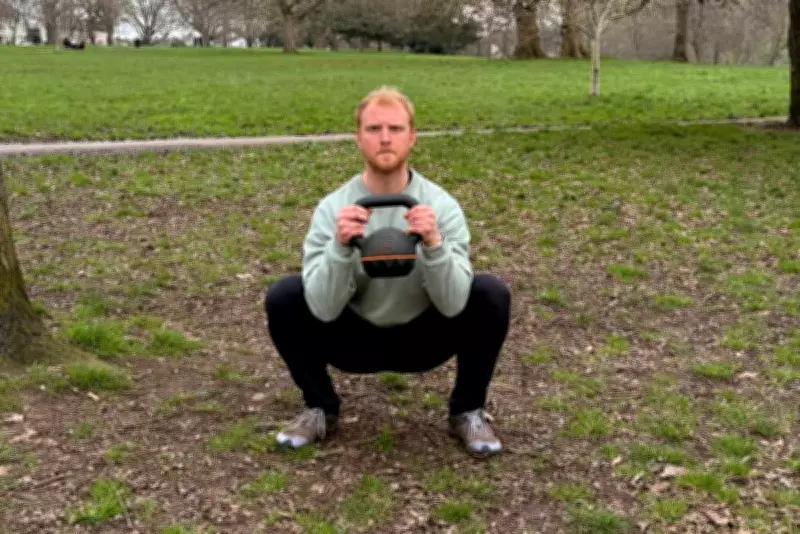
"The goblet squat is the single most important transformational exercise in the history of exercise," says leading strength coach Dan John, who invented the move. While he admits to a touch of hyperbole, as a fitness coach, he asserts it largely lives up to this billing. The exercise involves holding a weight with both hands in front of your chest, then sinking into a squat until your elbows touch the insides of your knees. The name "goblet" reflects how the weight is held, with a nod to John's love of Arthurian legend.
John explains his rationale: "I'm at the point where I don't recommend squatting with a barbell to practically anybody anymore because it's done so poorly. When you see something being done poorly over and over again, you sit back one day and you say, 'Maybe we can do better.'" Thus, the goblet squat was born—an exercise that automatically reinforces better squat technique. By holding the weight in front, you must keep your chest up and core tight; dropping hips and elbows between your legs pushes knees wider and tracks them over toes; achieving these ensures full depth. According to John, if you can perform one textbook goblet squat with a 24kg kettlebell, your lower body likely has the strength and mobility for daily life. If you can do 10, "you're doing great."

How to Perform the Goblet Squat
- Stand upright with feet just outside shoulder-width apart and toes pointed slightly outward. Adjust for comfort.
- Hold a dumbbell, kettlebell, medicine ball, or any weighty object in both hands in front of your chest.
- Brace your core as if anticipating a stomach strike, tightening midsection muscles.
- Keep your chest proud, push hips back, and lower them between your legs until elbows touch the insides of knees.
- Drive through your feet to return to the starting position, with weight between midfoot and heel—you should be able to wiggle your toes throughout.
The 30-Day Challenge: Methodology and Results
It's unwise to do the same exercise at maximum intensity daily. Instead, Bullmore varied his sessions by adjusting weight and tempo:
- Strength Days: Heavy weight for five sets of five repetitions.
- Muscle Building Days: Moderate weight for three sets of 15 repetitions to target legs and glutes.
- Cardiovascular Days: Incorporated into sweaty circuits.
- Mobility Days: Lighter weight, holding the bottom position for 30 seconds or more.
This approach proved fruitful, yielding several key benefits:
Enhanced Body Robustness
The SAID principle—Specific Adaptations to Imposed Demands—means your body improves at tasks you consistently perform. Conversely, neglect leads to loss. Squatting, one of five fundamental human movements (alongside pushing, pulling, hinging, and carrying), has declined due to chairs. Daily goblet squats, especially holding the bottom position, made the movement feel more natural. Hips, knees, and lower back became stronger and more limber, with improved tension translating to other exercises.
Increased Strength
While goblet squats have a ceiling due to weight limits, they foster better technique. John notes that passionate powerlifters might critique this, but for most people, barbell squats aren't necessary. Practice with good form, as in goblet squats, leads to permanent improvement. Bullmore found that after daily practice, his barbell squat personal best increased due to more efficient and effective movement.

Improved Mobility
Dr. Andy Galpin, a professor at Parker University and human performance coach, states: "The best way that we know to improve flexibility and range of motion is to load a stretch position safely." Strength training, like goblet squats, surpasses static stretches for flexibility. Over the month, mobility in hips, knees, and ankles improved. John recommends a simple daily protocol: hang from a pull-up bar for 30 seconds, sit in the bottom of a goblet squat for 30 seconds, and repeat one or two times.
Final Verdict on Goblet Squats
Every exercise impacts the body, often positively, especially if movement was previously limited—this is the SAID principle in action. While avoiding debates on "best" or "worst" exercises, the goblet squat stands out with a strong CV. It offers a low barrier for entry, can be performed safely by most, and builds a stronger, more robust, and mobile body. For those seeking to live life fully, these perks are highly attractive.