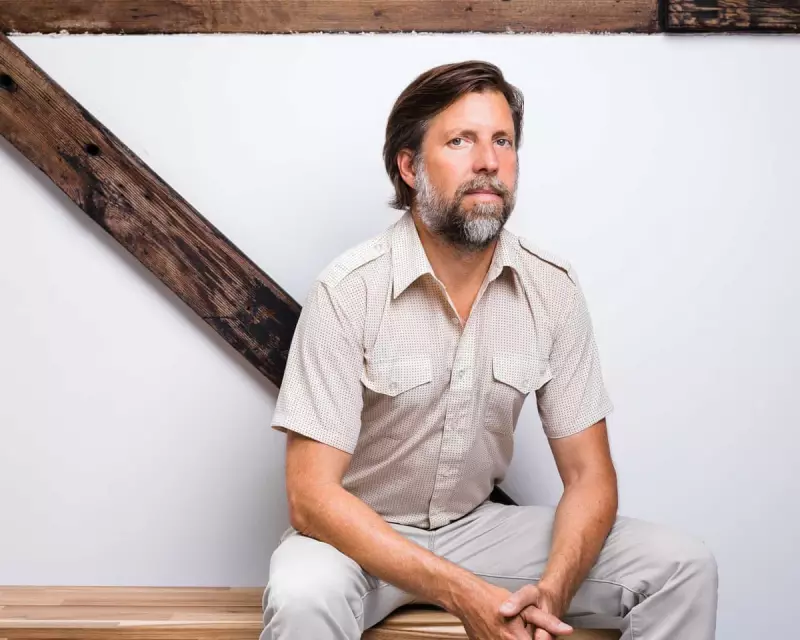
In the midst of a global respiratory pandemic, a book about the most fundamental human act became an unlikely publishing phenomenon. James Nestor's Breath: The New Science of a Lost Art has sold more than three million copies worldwide, tapping into a profound curiosity about how we inhale and exhale.
The Pandemic Bestseller No One Saw Coming
Nestor was filled with doubt as his publication date in May 2020 approached. The world was locking down, bookshops were closing, and traditional promotional tours were impossible. "I expected absolutely zero to happen," he admits. Financially strained after spending his advance on extensive research—including a trip to Parisian catacombs to examine ancient skulls—he felt he had no choice but to release it. The timing, however, proved uncanny. As Covid-19, a disease attacking the lungs, spread globally, Nestor's exploration of breathing's power resonated deeply. The book's success was, in his words, a surprise to everyone.
From Personal Struggle to Global Revelation
Nestor's journey began with his own health struggles. Living in San Francisco, he suffered from recurrent respiratory infections and mild pneumonia. A dinner with a doctor friend who noticed his laboured, mouth-based breathing led him to a breathwork class in the city's Haight-Ashbury district. The experience of Sudarshan Kriya, a rhythmic breathing technique, was "absolutely revelatory." He describes sweating profusely and feeling an intense, almost violent energy. The lasting effect was a profound sense of lightness and reduced anxiety, compelling him to investigate further.

His research expanded when writing about freedivers in Greece, individuals who could hold their breath for minutes while diving to incredible depths. "Watching these people do this thing that is supposed to be impossible" convinced him there was a deeper story to tell about human respiratory potential.
Breathing: The Missing Pillar of Health
Nestor positions breathing as the overlooked fourth pillar of wellness, alongside diet, exercise, and sleep. He argues that while essential, most people in the West breathe poorly. Good breathing is silent and subtle, he explains, with no visible chest movement, just a gentle expansion in the abdomen. Mouth closed, face relaxed. In contrast, common chest-based breathing is inefficient and signals stress to the brain, creating a vicious cycle.
He advocates for techniques like "coherent breathing"—inhaling and exhaling for 5.5 seconds each (roughly 5.5 breaths per minute)—to calm the nervous system. This pattern, he notes, echoes ancient chants and prayers across Buddhist and Native American cultures.
The Jaw-Dropping Link Between Diet, Teeth and Breath
One of Nestor's most striking findings links modern diets to our ability to breathe. Research suggests that soft, processed foods have changed the development of the human jaw. Without the rigorous chewing required by ancestral diets or the jaw exercise from breastfeeding, modern mouths are often too small. "All you have to do is look at ancient skulls. They have straight teeth," Nestor states. He connects widespread crooked teeth—a rarity in the animal kingdom—to constricted airways, snoring, and sleep apnoea.
To address his own issues, Nestor wore a palate-expanding device nightly for a year, a process he says "absolutely changed me" by opening his airways and building new facial bone. He points to early interventions like myofunctional therapy (tongue and facial muscle training) as potential solutions, though these remain on the fringes of mainstream medicine.
Navigating the Fringes of Breath Science
The field of breathwork attracts its share of unconventional figures, which Nestor openly chronicles. From the late choirmaster Carl Stough to Swedish researcher Anders Olsson, who inhales carbon dioxide, and the controversial orthodontists John and Mike Mew of "mewing" internet fame. Nestor acknowledges some, like the Mews, are "100%" fringe, largely due to their promotional methods rather than their core ideas.

He argues, however, that many proponents started on traditional medical paths before questioning established norms. "The vast majority of the actual researchers and doctors in that book are people who are very much a part of the medical community," he clarifies, suggesting the field is slowly moving from esoteric wellness trend towards legitimate science.
Five years after its initial release, Nestor has updated Breath with new material, including findings on alarming CO2 levels in planes and hotel rooms. Despite breathwork's growing popularity, he believes it has yet to hit the mainstream. For Nestor, it's not about achieving superhuman feats, but about reclaiming a natural, lost birthright: the simple, profound power of breathing well.