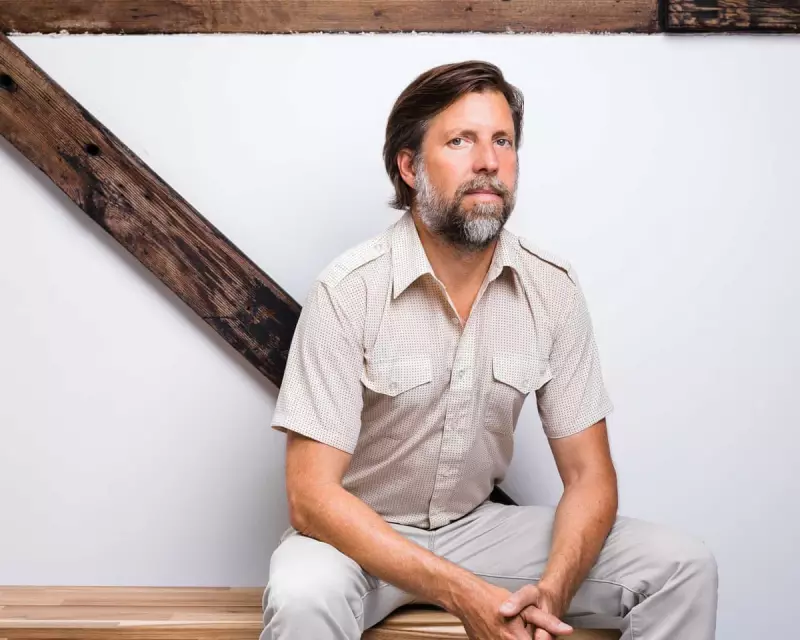
In the midst of a global respiratory pandemic, a book about the most fundamental human act became an unlikely publishing phenomenon. James Nestor's Breath: The New Science of a Lost Art has sold more than 3 million copies worldwide, tapping into a profound curiosity about how we inhale and exhale.
The Pandemic Bestseller No One Expected
Nestor was preparing for a quiet launch in May 2020, his finances stretched thin from extensive research that included examining ancient skulls in Parisian catacombs. The arrival of Covid-19 made him question the timing entirely. "I didn't want to release it," he admits, expecting little fanfare for a book about breathing when bookshops were closed and tours impossible.
Yet, the paradox proved powerful. A book exploring the science and history of respiration resonated deeply during a pandemic defined by a respiratory illness. The public's response was overwhelming, transforming Nestor's work from a niche interest into a mainstream guide for millions seeking to improve their health through their breath.

From Personal Struggle to Global Revelation
Nestor's journey began with his own recurrent respiratory issues, including annual bouts of mild pneumonia, while living in San Francisco. A dinner with a doctor friend who noticed his laboured, mouth-based breathing led him reluctantly to a Sudarshan Kriya breathwork class in Haight-Ashbury.
"It was absolutely revelatory," he recalls of the intense, sweat-inducing session. The immediate feeling of lightness and reduced anxiety hooked him. This personal experience, combined with later reporting on freedivers in Greece who held their breath for minutes, convinced him a deeper story about breathing needed to be told.
He argues that breathing is the "missing pillar of health," often ignored compared to diet, exercise, and sleep. Proper breathing, he describes, is subtle and silent—marked by a closed mouth, no chest movement, and a slight abdominal expansion. "It feels like your body is able to operate at peak efficiency," he says.
How Modern Life Changed Our Faces and Our Breath
One of Nestor's most striking findings links modern diets to our ability to breathe. Research suggests that soft, processed foods have altered the development of human jaws, leading to smaller mouths and crooked teeth—a condition rare in ancient skulls and in other species.
"All you have to do is look at ancient skulls. They have straight teeth... I have crooked teeth, [wore] braces, had extractions," Nestor notes, explaining how a constricted airway results. His own solution involved wearing a palate-expanding device nightly for a year, which he claims opened his airways and built new facial bone.
He advocates for early interventions like myofunctional therapy to retrain facial muscles, though such practices remain on the fringes of mainstream medicine. The book profiles various figures in this unconventional field, from the late orthodontist John Mew to Swedish researcher Anders Olsson, who experiments with inhaling carbon dioxide.
The Future of Breathwork and Conscious Breathing
Five years after publication, Nestor has updated Breath with new material, including investigations into alarmingly high CO2 levels in hotel rooms and aeroplanes. While breathwork has grown as a wellness trend, he believes it has yet to become truly mainstream.
He champions slow, "resonant" breathing—inhaling and exhaling for 5.5 seconds each, a pattern mirrored in ancient chants and prayers. This practice, he says, calms the nervous system and offers myriad health benefits.
Despite the eccentric characters that populate the world of breath study, Nestor stresses that many researchers are credible medical professionals who have simply begun to see things differently. "Your body being allowed to do what it's naturally designed to do," is how he frames the core philosophy, separating it from more esoteric claims.
As Nestor finishes his next book from his home in Portugal, the legacy of Breath is clear. It has sparked a global conversation, reminding millions that the simple, automatic act of drawing air might be the most powerful health tool they've neglected.