Guessing someone's age can be a social minefield, with modern beauty treatments like Botox and hair dye obscuring traditional clues. But a new scientific study suggests our eyes might be the ultimate giveaway, even when the rest of the face is hidden.
The Eye Test: What Gives Away Your Age?
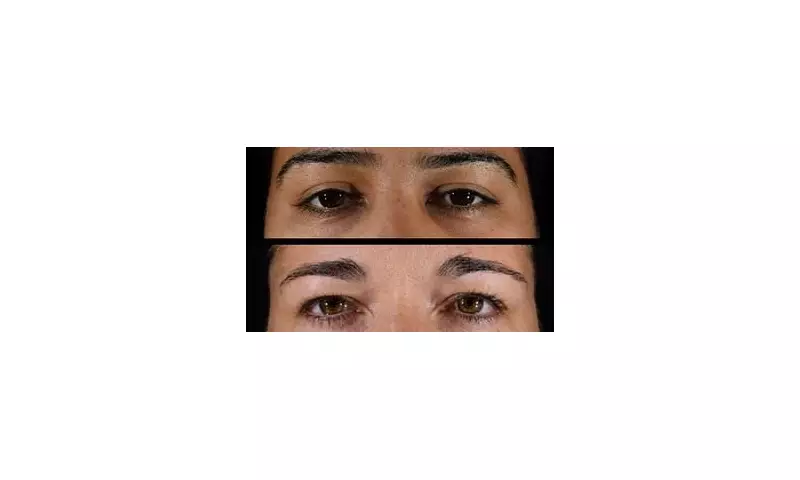
Researchers conducted a detailed experiment, gathering photographs of women from diverse ethnic backgrounds, including Chinese, Japanese, French, Indian, and South African participants. The images were tightly cropped to show only the eye and eyebrow region. A group of 600 people were then asked to judge the age, health, and attractiveness of the women based solely on these close-ups.
The analysis yielded clear results. Wrinkles around the eyes, commonly known as 'crow's feet', were the primary driver of age perception across all ethnic groups. Women with more pronounced and deeper lines were consistently judged as being older. This made identifying women over 50 relatively straightforward, but distinguishing between younger and middle-aged participants proved more challenging, especially for those with diligent skincare routines.

Can You Spot the Difference?
In the study, participants viewed images of women split into two groups: younger (aged roughly 20-35) and middle-aged (roughly 35-50). When shown three cropped photos (A, B, and C), the public often struggled. The answers revealed that picture A was from the middle-aged group, while B and C were from the younger group.
Armed with the knowledge that crow's feet are a critical clue, viewers were then tested with a second batch (D, E, F). Here, picture E belonged to the younger group, while D and F were from the middle-aged participants.
Why The Eye Area Is So Telling
Publishing their findings in the International Journal of Cosmetic Science, the research team explained the biological reasons. "The skin around the eye region is one of the most difficult to address," they wrote. This area has thinner skin and fewer oil glands, making it highly vulnerable to both genetic and lifestyle-related ageing.
"The dynamic lines, particularly the crow's feet wrinkles, which appear during muscle contraction are temporary at younger ages but become static over time and are a primary sign of ageing," the report states. This explains the high level of concern reported by women over 40 regarding their appearance.
The study also found ethnic variations: South African women exhibited the highest density of under-eye wrinkles, while Indian and Japanese women had the least in the crow's feet region.
Broader Perceptions: Health and Attractiveness
The implications went beyond just age. Faces with more eye wrinkles were also perceived as less healthy and less attractive. Differences in under-eye skin colour and radiance further influenced health ratings. Graphs from the study clearly showed that as wrinkle count increased, perceptions of age rose while ratings for health and attractiveness fell.
Dr Brendan Khong, a London-based aesthetic doctor, notes that people age in different ways, categorising them as 'sinkers', 'saggers', or 'wrinklers'. "Genetics plays a big role in early ageing," he says, influencing the breakdown of collagen and elastin. However, factors like UV exposure, pollution, diet, stress, and smoking can accelerate the process through oxidative stress.
Ultimately, this research confirms that in a world of cosmetic enhancements, the eyes remain a remarkably honest window to a person's years.