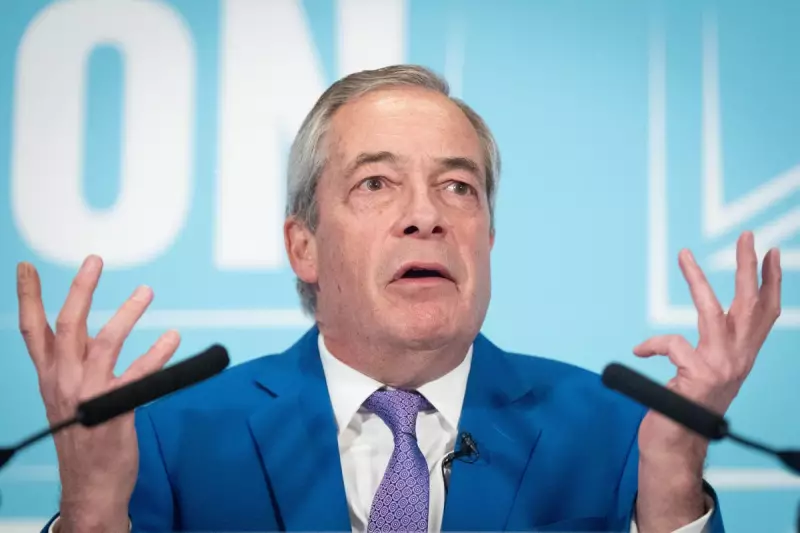
The European Union is pushing for a specific financial penalty clause to be included in any new post-Brexit agreement negotiated with Sir Keir Starmer's government, a provision already being called the 'Farage clause' by diplomats in Brussels.
What is the 'Farage Clause'?
According to reports, a draft veterinary agreement between the UK and the EU contains a significant termination clause. This stipulation, informally named after Brexit campaigner Nigel Farage, would require Britain to pay financial compensation if a future government decided to withdraw from the pact.
The penalty is designed to cover the EU's costs of reinstating border checks on animal and plant products. The clause emerges as Sir Keir Starmer signals a desire for closer alignment with the EU's single market to mitigate the economic harm caused by Brexit.

Political Outrage and Standard Practice
Unsurprisingly, the proposed clause has sparked immediate controversy. Nigel Farage has vehemently stated he would refuse to honour any such agreement, labelling it a 'democratic outrage'. He has invoked the constitutional principle that 'no parliament may bind its successor'.
However, officials from the Labour Party have countered these claims. They argue that exit provisions are a standard feature of international trade agreements and point out that such terms would apply equally to both sides. A Labour source dismissed the claims of outrage as 'exhausting', framing it as a normal part of treaty negotiations.
Dynamic Alignment and Domestic Opposition
The draft veterinary agreement goes beyond the termination clause. It also requires the UK to dynamically align with evolving EU rules on sanitary and phytosanitary standards for animal and plant products. This means British regulations would automatically change to match new EU laws in these areas.
This move towards dynamic alignment is strongly opposed by both Reform UK and the Conservative Party. Meanwhile, the current government is preparing its own legislation that would grant ministers the power to align UK law with EU regulations in specific sectors, indicating a complex and fragmented approach to future relations.
The inclusion of the so-called 'Farage clause' highlights the EU's cautious approach to resetting ties with the UK. It underscores a desire to protect against future political volatility, ensuring any British departure from a new deal comes with a tangible financial cost. The debate sets the stage for a fierce domestic political battle over the UK's future economic and regulatory relationship with its largest trading partner.