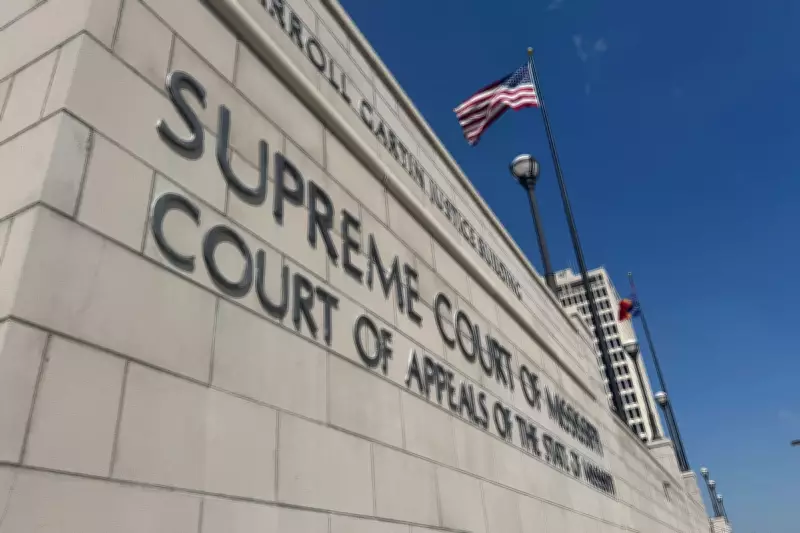
Mississippi Governor Tate Reeves announced on Friday that he will call a special legislative session for judicial redistricting once the U.S. Supreme Court issues a ruling in a pivotal Voting Rights Act case that carries significant implications for minority representation across the nation.
Background of the Case
During oral arguments held last autumn, the Supreme Court appeared inclined to strike down Section 2 of the Voting Rights Act, a provision historically used to combat racially discriminatory electoral practices. The case, Louisiana v. Callais, is anticipated to be decided before the court's term concludes in June.
If Section 2 is overturned, state legislatures and local governments would gain the ability to redraw electoral maps without the threat of legal challenges from minority voters who argue that such maps dilute their influence. A decision eliminating this pillar of the 1965 Voting Rights Act could potentially bolster Republican representation in the U.S. House of Representatives by eradicating Democratic-leaning districts that are predominantly Black or Latino, particularly in the southern states. However, most of these redistricting efforts are not expected to occur in time for this year's midterm elections.

Mississippi's Specific Situation
The special session proclamation, signed by Reeves on Thursday, pertains specifically to a case involving judicial districts for the Mississippi Supreme Court. In August of the previous year, a federal judge mandated that Mississippi redraw its Supreme Court electoral map after determining that it violated Section 2 by diminishing the voting power of Black citizens. In his proclamation, Reeves asserted that the absence of a ruling in the Louisiana case had "deprived the Mississippi Legislature of its undisputed federally recognized right" to address the Section 2 violation.
The governor expressed on social media his hope that the Supreme Court "will reaffirm the animating principle that all Americans are created equal." He further stated that the Legislature will convene the special session 21 days following the Supreme Court's decision in the Louisiana case.