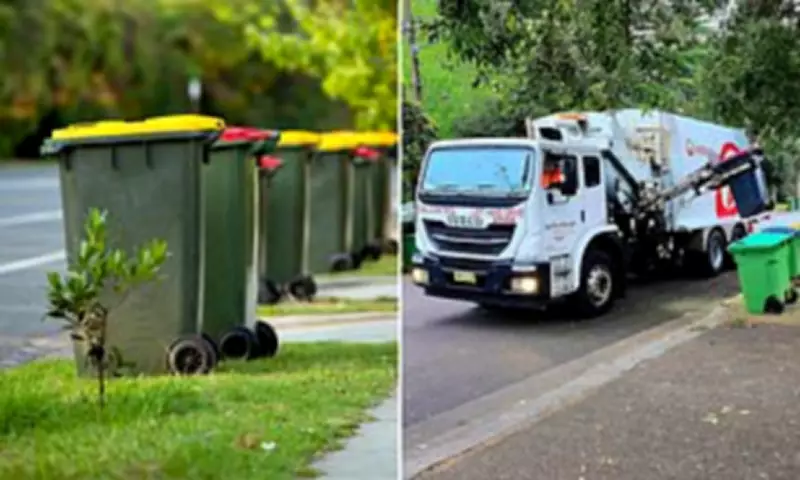
Council's Fortnightly Bin Collection Plan Ignites Community Fury
Wellington Shire Council in east Victoria has ignited a fierce backlash from residents over its controversial decision to reduce general waste collections from weekly to fortnightly. The council is simultaneously rolling out new Food Organics and Garden Organics (FOGO) bins to all households between April and mid-June, which will be collected weekly.
Residents Voice Health and Hygiene Concerns
The new schedule will see red-lid general waste bins emptied only once every two weeks, alternating with recycling collections. This shift has prompted immediate outrage, with local resident Danielle Azevedo launching a change.org petition that has rapidly gained traction.
'As a young family, we rely heavily on the weekly collection of our rubbish bin, particularly because we have nappies and our bin fills up quickly every week,' Ms Azevedo stated emphatically. 'The newly proposed collection schedule threatens to create a significant waste management issue in our homes and community.'

She warned that overflowing bins could attract pests and vermin, increase unpleasant smells, and potentially become serious health hazards. For families with babies, elderly residents, or people with disabilities, the sheer volume of waste generated weekly presents unacceptable risks when left uncollected for extended periods.
Council Defends Environmental and Economic Rationale
Wellington Shire Council Mayor Cindy Madeley defended the changes, highlighting substantial environmental benefits and compliance with Victorian Government legislation. 'In Wellington Shire, more than half of the average household landfill bin is made up of food and garden waste, and a further 15 per cent is items that belong in the recycling bin,' she explained.
'That's why it's so important each household sorts their waste efficiently to get the best use out of their bins. By separating these materials, we can significantly reduce landfill, cut greenhouse gas emissions and turn everyday food scraps into valuable compost that can be used on farms, parks and gardens.'
Mayor Madeley also pointed to escalating costs, noting that landfilling waste becomes more expensive annually under Environmental Protection Agency regulations. 'Over time, it will be more expensive to continue weekly collection of landfill bins. By removing food waste from the landfill bin, we can also extend the life of our existing landfill cells and reduce methane emissions.'
Petition Demands Compromise Solution
Ms Azevedo's petition, representing the municipality's 46,000 residents, urges the council to reconsider its approach. 'We propose maintaining the current weekly collection schedule for landfill bins alongside the organics collection,' she argued. 'This will ensure that no community member is left at a disadvantage and help the council fulfil its duty of care.'
The FOGO bins will accept food scraps, garden cuttings, meat, bones, seafood, citrus, and dairy products—materials typically uncompostable at home. This waste will be transported to a specialist facility for conversion into high-quality soil conditioner.
Broader Policy Context and Implementation
This transition forms part of the Victorian Government's Circular Economy (Waste Reduction and Recycling) Act 2021, representing a significant shift in municipal waste management strategies across the state. While environmental benefits are clear, the practical implementation has exposed tensions between sustainability goals and household convenience.
The council maintains that proper waste sorting will alleviate capacity issues, but residents remain unconvinced, citing practical challenges for vulnerable households. As the rollout progresses through spring, ongoing dialogue between council officials and the community will be crucial to addressing these concerns while advancing environmental objectives.