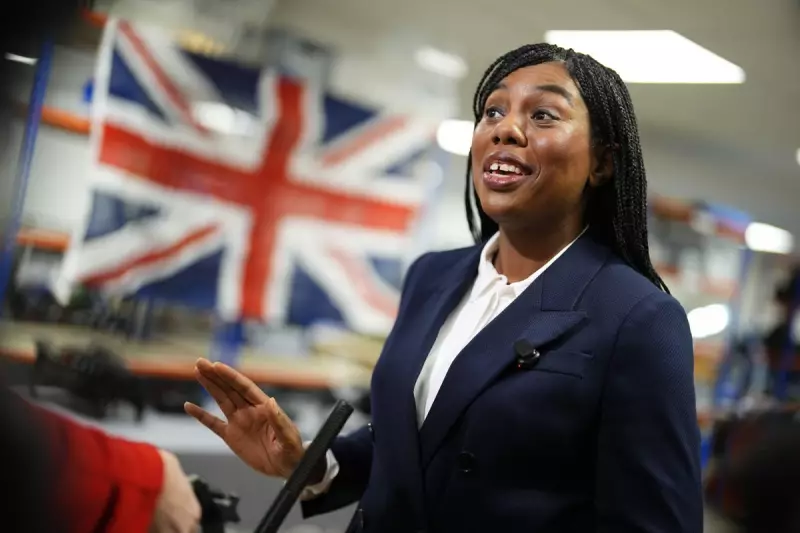
Conservative Party leader Kemi Badenoch has declared that young people cannot be expected to fight for Britain if the nation offers them little more than unemployment and a lack of opportunity.
Hope, Not Compulsion, is the Key
Speaking to the Press Association on Thursday 18 December 2025, Badenoch firmly ruled out a return to the mandatory national service policy championed by her predecessor, Rishi Sunak. She argued that compulsion is the wrong approach when many young people feel a profound absence of hope for their futures.
"What we’re looking at is making sure that young people actually believe in their country," Badenoch stated. "They feel that there’s no hope. A lot of young people are actually leaving."

She emphasised that the priority must be creating tangible prospects for the younger generation. "Putting on compulsory national service at a time when we’re not creating employment for young people, I think is the wrong way around," she said.
The Tory leader outlined a vision where young people are shown a path to securing jobs, starting families, and buying homes. "Show them that there is hope, then they’ll want to fight for their country," she asserted. "But if we’re not giving them anything except youth unemployment, why should they believe in us?"
A £50 Billion Pivot to Defence and Resilience
Badenoch made these comments during a visit to Farnham-based drone manufacturer Evolve Dynamics, where she unveiled a significant new economic plan. The Conservative proposal involves converting the existing National Wealth Fund into a National Defence and Resilience Bank.
The core of the plan is to redirect £11 billion currently earmarked for net zero projects into bolstering the UK's defence industry. This funding would be combined with £6 billion from the research and development budget and an anticipated £33 billion in private investment.
The party stated this would create a total defence fund of £50 billion. The money is intended to invest directly in UK defence firms and build more secure, sovereign supply chains, reducing reliance on foreign powers.
"We need sovereign capability. We need resilience. We can’t rely on China to look after our defence," Badenoch stressed, highlighting geopolitical concerns.
Political and Strategic Context
Badenoch's focus on national preparedness follows a warning from the head of the UK’s armed forces, Air Chief Marshal Sir Richard Knighton, who said "sons and daughters" must be ready to fight if necessary to deter aggression from nations like Russia.
Furthermore, several European allies, including France, Germany, and Belgium, have moved to reintroduce forms of national service this year in response to a more threatening global security landscape.
The announcement has drawn immediate criticism from the Labour Party, which has pledged to raise defence spending to 2.5% of GDP from 2027. A Labour spokesperson accused the Conservatives of "gaslighting the public on defence," pointing to past cuts.
"These are yet more fantasy figures from a Conservative Party that cut defence by £12 billion in their first five years in power," the spokesperson said. "Their time in office starved our forces of funding, drove down morale and left Britain less safe."
The debate sets the stage for a stark political choice on how best to ensure national security while also securing the loyalty and future of the country's youth.