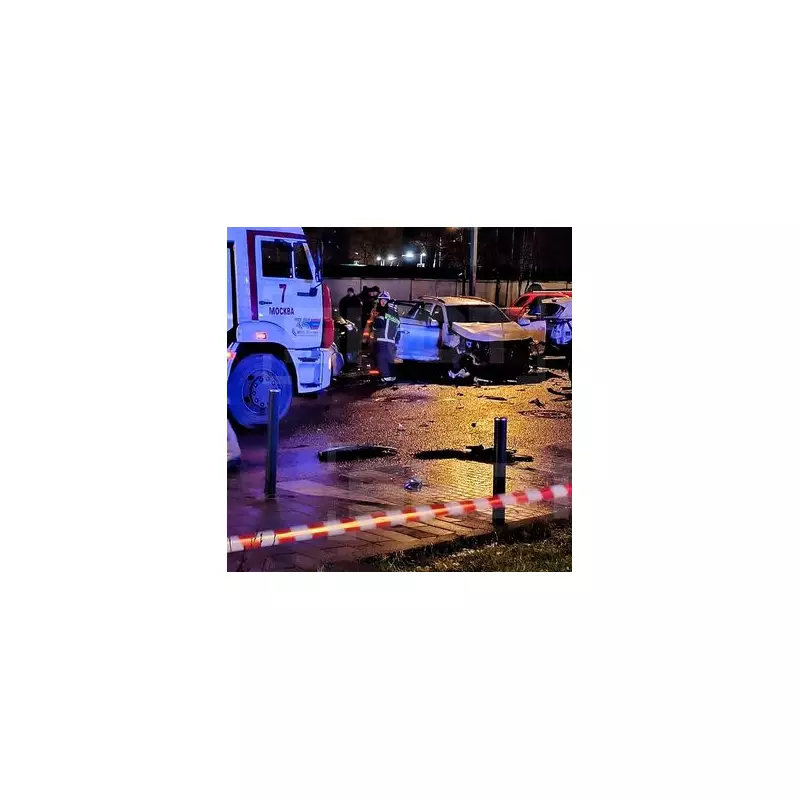
A high-ranking Russian military commander has been left in a very serious condition following a suspected car bomb attack in Moscow on Monday, 22 December.
Details of the Moscow Attack
The incident occurred in the Yasenevo district of the Russian capital as the officer, named as Lt-Gen Fanil Sarvarov, 56, was driving to work in his Kia Sorento. Witnesses reported a massive blast that severely damaged the vehicle and seven other cars in the vicinity.
Emergency services mounted a major operation to free the trapped general from the wreckage. He was found alive but with severe injuries, described as including multiple shrapnel wounds, closed fractures, leg injuries, and a fractured facial bone.

His wife reportedly rushed to the chaotic scene shortly after 7am but was prevented from seeing her husband while he remained trapped.
Investigation and Wider Context
The Russian Investigative Committee has launched an immediate criminal probe into the explosion. A spokesperson confirmed that investigators and forensic experts are examining the site, with a number of examinations, including explosive and medical tests, to be scheduled.
While officials have not officially named the victim, the attack has immediately sparked suspicion of a Ukrainian assassination bid. This incident follows a pattern of attacks on senior Russian military figures on home soil.
Last year, Lt-Gen Igor Kirillov, who led Russia's radiation, chemical and biological defence troops, was killed in an explosion outside his apartment. In April of this year, Major-General Yaroslav Moskalik died when a car erupted in flames near his residence outside Moscow.
Aftermath and Condition
Lt-Gen Sarvarov, who heads the Department of Operational Training within Vladimir Putin's armed forces, has been hospitalised and is said to be in a grave state. The blast caused significant disruption, with one local resident initially mistaking the explosion for a drone being shot down, noting there was no subsequent fire.
The attack underscores the escalating covert warfare that has reached the heart of Russia, targeting its military leadership and raising serious security questions for the Kremlin.