UK Defence Secretary Urges Allies to Make 2026 the Year Russia's War in Ukraine Ends
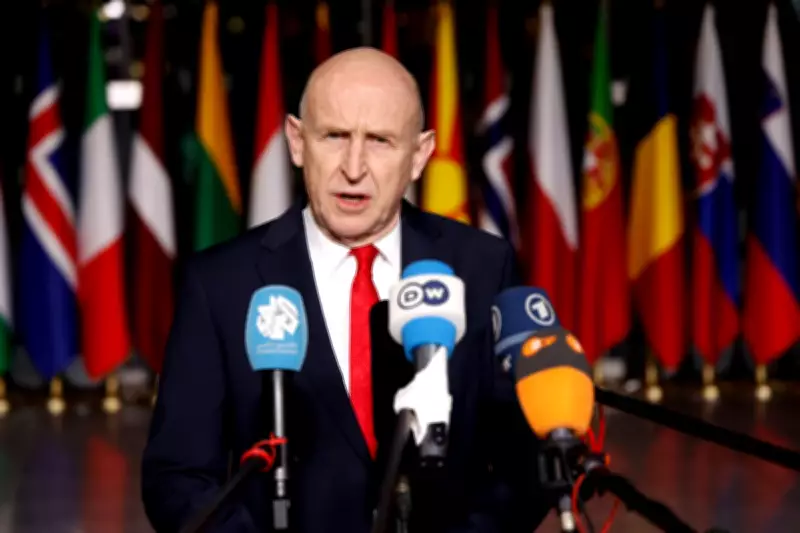
Defence Secretary John Healey has called on Ukraine's allies to ensure that 2026 becomes the year that Russia's brutal invasion of Ukraine is finally brought to a conclusion. Speaking at a press conference in Brussels following a critical meeting of the Ukraine Defence Contact Group, Healey emphasised the unwavering resolve of the international coalition supporting Kyiv.
Unified Resolve and Stepped-Up Support
"We are more united and more determined than ever," Healey declared, addressing the media after discussions with defence ministers from allied nations. He outlined a clear, two-pronged strategy: "We will step up military assistance to Ukraine. We will step up pressure on Russia. And we want to make 2026 the year this war ends, the year we secure peace."
This firm commitment comes as the war approaches its grim fourth anniversary at the end of February. The UDCG meeting resulted in allied nations pledging a substantial $35 billion (approximately £25 billion) in new military support for Ukraine, a significant boost aimed at turning the tide.

Substantial UK Contribution and International Coordination
The United Kingdom is contributing over £500 million of this total, specifically earmarked for new air defence systems—a top priority repeatedly highlighted by Ukrainian President Volodymyr Zelensky. This package includes the delivery of a further 1,000 lightweight multi-role missiles to bolster Ukraine's defensive capabilities.
Standing alongside Healey, German Defence Minister Boris Pistorius announced Berlin's pledge to donate five of its twelve Pac-3 interceptor missiles, contingent on other nations contributing an additional thirty. Pistorius described this as part of a collaborative "city dome project" designed to enhance air defence over Ukraine's major metropolitan areas, which have been relentlessly targeted.
"In 12 days, it will be exactly four years since Russia's brutal war and unlawful attack on Ukraine began, and one thing is certain – Ukraine can continue to count on our support," Pistorius affirmed.
Historical Context and Ongoing Aggression
Healey paid tribute to the "courage and defiance" of the Ukrainian people, placing the conflict in a stark historical perspective. He noted that Russia has now been fighting in Ukraine for a longer duration than the entire period the Soviet Union was engaged against Germany during the Second World War.
The urgency of the new support was underscored by the timing of the Brussels meeting. It followed another overnight barrage of Russian ballistic missiles and drones targeting Ukrainian cities. Kyiv has accused Moscow of weaponising the winter cold by deliberately striking civilian heat and power infrastructure during a period of extreme temperatures.
Broader Diplomatic Efforts
The meeting itself marked a continuation of the UK and Germany co-chairing the UDCG, a role previously held by the United States prior to Donald Trump's return to the White House last year. NATO Secretary-General Mark Rutte used the occasion to urge all allies to "step up their support," stressing that Ukraine "urgently needs more air defence."
The war is set to dominate discussions at the upcoming Munich Security Conference, which commences on Friday. UK Prime Minister Sir Keir Starmer is expected to lead the British delegation, where securing a path to peace will undoubtedly be a central theme.