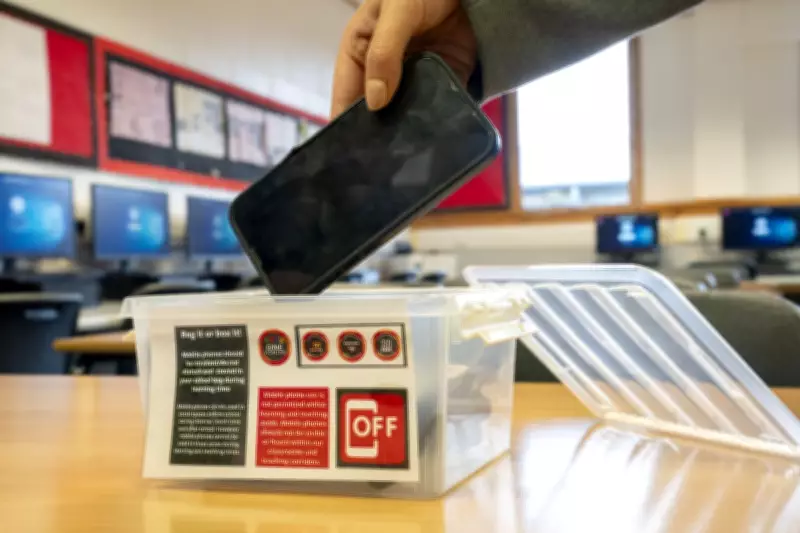
The Government is set to introduce a significant amendment to the Children's Wellbeing and Schools Bill, aiming to make mobile phone bans in schools statutory. This move will transform existing non-statutory guidance into legally enforceable rules, reinforcing the prohibition of phones throughout the school day.
Vote in the House of Lords
Peers will vote on Monday evening in the House of Lords on a Conservative amendment to the legislation concerning mobile phones. This amendment seeks to provide legal force to practices already adopted by many schools across England.
Government Statement on the Amendment
A Department for Education spokesperson emphasised the Government's stance, stating that mobile phones have no place in schools. The spokesperson noted that the majority of schools already prohibit phones, and this amendment will formalise that approach.

The spokesperson explained: "This amendment makes existing guidance statutory, giving legal force to what schools are already doing in practice. It builds on the steps we've already taken to strengthen enforcement, with Ofsted considering schools' mobile phone policies as part of inspection from this month."
Broader Child Safeguarding Context
The amendment is part of the Children's Wellbeing and Schools Bill, which is described as the most substantial piece of child safeguarding legislation in decades. The Bill includes measures such as laws to address profiteering in children's social care and a new unique identifier to prevent children from falling through gaps in the system.
The Education Secretary has previously communicated with head teachers in England, stressing the importance of maintaining phone-free environments throughout the entire school day. However, until now, guidance on mobile phones has remained non-statutory.
Support and Opposition
The teaching union NASUWT has expressed support for a statutory school phone ban, aligning with the Government's initiative. However, a Government source criticised opposition parties, accusing them of attempting to block critical child protection measures.
The source stated: "The repeated attempts by the Conservatives and Liberal Democrats to kill off some of the most far-reaching child protection legislation is an utterly abhorrent, and a dismal failure of some of the most vulnerable children in our country."
The source highlighted past child abuse cases, such as those of Arthur Labinjo Hughes, Star Hobson, and Sara Sharif, as examples of systemic failures that the Bill aims to address. The source also noted that blocking measures like free breakfast clubs and limits on branded school uniforms, which could save families hundreds of pounds, is seen as an affront to democracy.
Implications for Schools
With Ofsted now considering mobile phone policies during inspections, schools will face increased pressure to comply with the statutory ban. This change is expected to enhance child safeguarding efforts and create a more focused learning environment, free from digital distractions.
The Government's move underscores its commitment to prioritising children's interests, as outlined in the broader legislation. The outcome of the Lords vote will determine the future enforcement of mobile phone bans in educational settings across England.