Student's Death in Senegal Protests Crushes Hopes for Government Reform
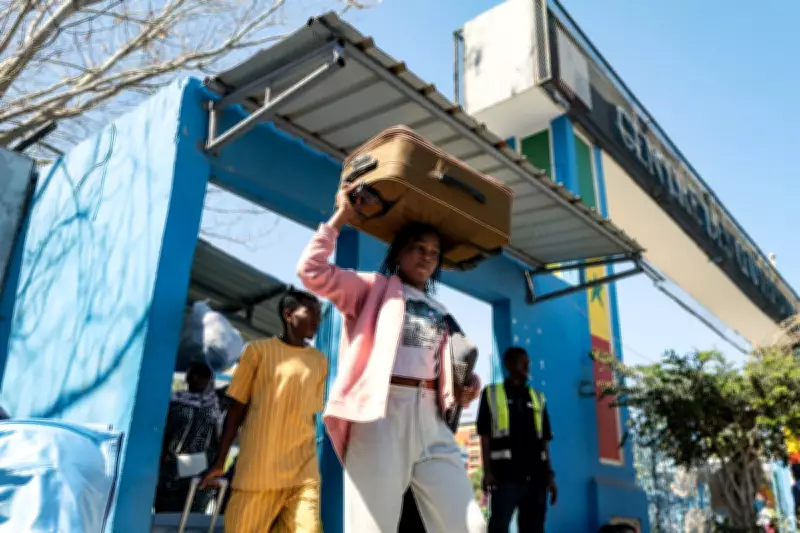
Thousands of students have been forced to leave Senegal's premier university after authorities indefinitely closed campus housing and suspended classes following the tragic death of a protester. The incident has extinguished hopes for meaningful change among the nation's youth, who feel betrayed by leaders they once supported.
Violent Clashes and a Fatal Incident
Abdoulaye Ba, a second-year medical student at Cheikh Anta Diop University in Dakar, died from severe head injuries in a nearby hospital during protests over unpaid financial aid. According to Cheilh Atab Sagne, president of the Student Association of the Faculty of Medicine, Pharmacy and Dentistry, Ba did not participate in the demonstrations but was brutally beaten by police in his room. Several other students have corroborated this allegation.
The university grounds remained littered with burned cars and broken barricades on Tuesday following violent clashes between students and security forces. Disturbing social media footage from Monday night showed flames and smoke billowing from a four-story student housing building as terrified students attempted to flee, some jumping from windows to escape.

Government Response and International Criticism
Senegal's government issued a statement on Monday acknowledging "serious events" had led to the student's death but provided no specific details. During a Tuesday news conference, Minister of the Interior Mouhamadou Bamba Cissé promised an investigation while expressing condolences to Ba's family. Notably, unverified video of a student throwing a Molotov cocktail played on a screen near him as he spoke.
"On the ground, there were acts of violence observed on both sides, including acts that were seen coming from the defense and security forces," Cissé stated. Amnesty International Senegal and several rights groups jointly denounced what they called a "disproportionate use of force by police" at the university.
Broken Promises and Deepening Disillusionment
The protests at Cheikh Anta Diop University, one of West Africa's largest institutions with approximately 80,000 students, began in early December over unpaid stipends. Student anger intensified when university authorities closed campus cafeterias after students refused to pay for meals typically covered by food stamps.
Many young Senegalese had placed their hopes in Prime Minister Ousmane Sonko and President Bassirou Diomaye Faye, who campaigned on promises to tackle corruption and improve natural resource management. However, when Sonko was arrested in 2021 and subsequently barred from the 2024 presidential election, massive protests erupted at the university, resulting in violent clashes that rights groups say left at least 65 people dead.
Khadija Ndiaye, a 19-year-old history student who hasn't received her stipend for three months, expressed profound disappointment: "We were just kids, but we were fighting for him. I can't believe he is doing this to us today. He said in his campaign videos that a student can no longer survive without a stipend. It is not normal today for him to stand before us and say that a student can survive without a stipend; it is contradictory."
Systemic Issues and Economic Pressures
Senegal's university calendar has been repeatedly disrupted in recent years by prolonged closures following periods of unrest, sometimes lasting more than nine months and causing academic years to overlap. Students frequently go months without receiving their monthly stipends of about 40,000 CFA francs ($73), which represents the only income source for many.
The unpaid stipends primarily result from delays in the academic calendar following several university closures in recent years. These disruptions were triggered by protests supporting Prime Minister Sonko, which caused payment schedule interruptions. A 2025 government audit revealed larger-than-reported debt inherited from the previous administration, while talks with the International Monetary Fund over a new financial program have stalled as public frustration mounts and the nation's fiscal outlook deteriorates.

Ibrahima Diatta, a 23-year-old literature student, emphasized the critical importance of these payments: "The stipends are de facto salaries for students, with many relying on them to support their families." Like numerous students, Diatta moved to the capital from rural areas for his studies and serves as one of his family's primary breadwinners.
A Generation Losing Faith
Diatta articulated the growing disillusionment among Senegal's youth: "Sonko and Faye were chosen by the youth who protested, and now they have done the same thing to us that their predecessor did. I think this serves as a lesson for us young people that we have to wake up to the fact that nobody is coming to save us."
David Célestin Faye, secretary-general of Senegal's main university professors' union, told The Associated Press that extended closures in recent years caused academic delays and stipend issues that ultimately contributed to the student's death. He criticized the authorities' decision to close student housing, which forced many students to leave the capital and return to rural areas, as repeating the same mistakes that led to academic calendar delays and unpaid stipends.
"Senegal has decided to grant stipends to all students. It must take responsibility for that choice," Faye asserted. "Students are not a burden, they are an investment that must be supported."
With approximately 75% of Senegal's population under 35, the government's response to student grievances carries profound implications for the nation's future stability and development.